
What Plotworks Means on a Housing Development
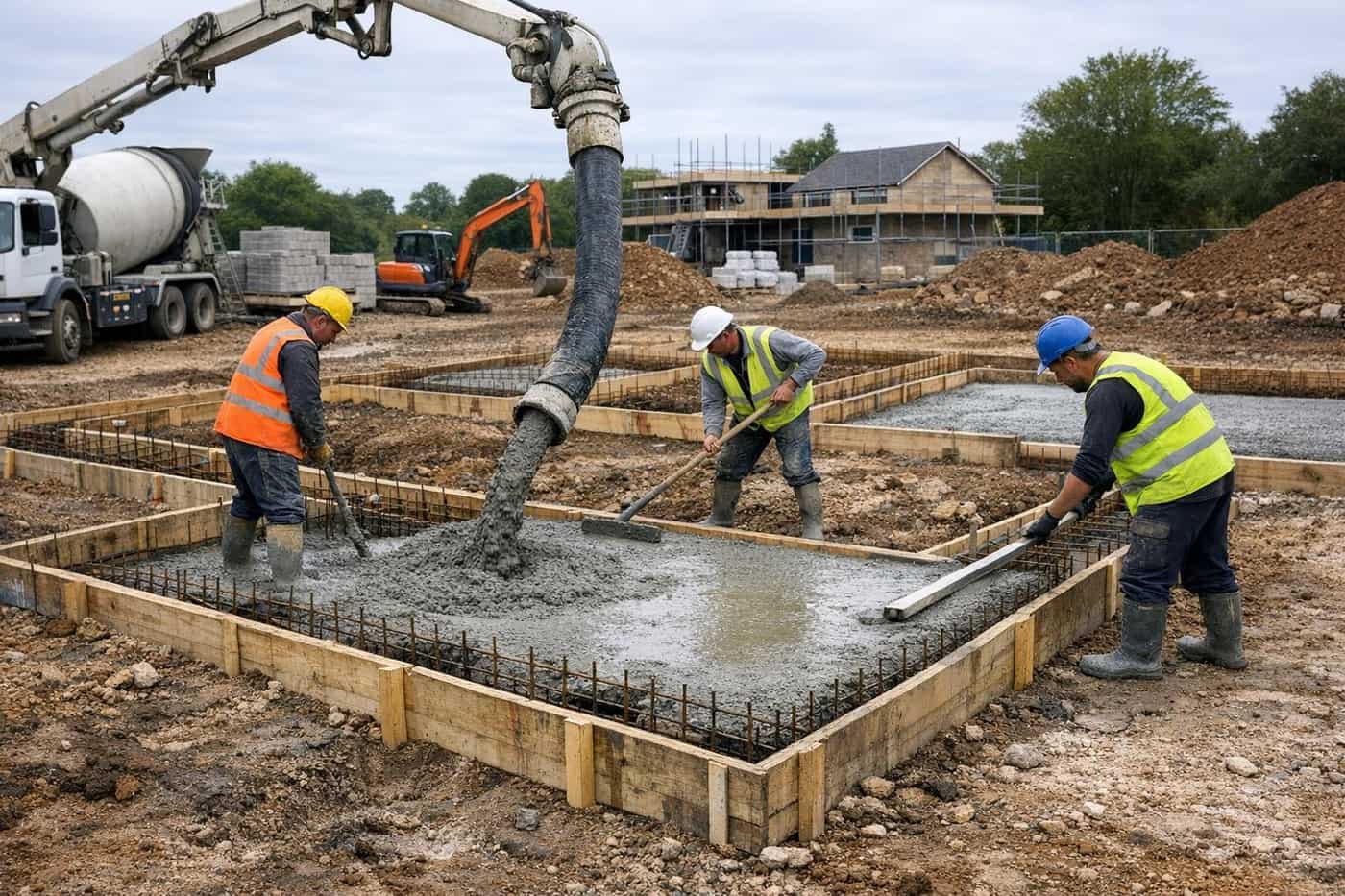
On housebuilder schemes, plotworks usually means the groundworks required to take an individual plot — or a small batch of plots — from formation through foundations and plot drainage connections, ready for brickwork, frame or other follow-on trades.
It is distinct from estate infrastructure: adoptable roads, main sewers, attenuation and highway works. Those packages must be coordinated with plotworks, but they are not the same commercial product. For adoption sequencing start with The S38 & S104 Programme Explained. For housebuilder packaging see groundworks for housebuilders.
Commercially, plotworks is a cycle-time business. Sales and valuations assume plots start on dates that only exist if access, wet connections, foundation design status and Building Control hold points are real. Digging plots into a blocked corridor creates motion without release.
This guide stays inside the plot package. Multi-parcel wave control lives on managing multiple plot programmes. Procurement of housebuilder splits lives on groundworks procurement for housebuilders.
Why the Plotworks Split Matters Commercially
When infrastructure and plotworks are procured separately without an interface matrix, delay hides in the boundary: plots cannot connect until laterals exist; infrastructure cannot finish snagging if plots are still excavating across corridors; shared haul routes become contested dayworks.
Combined packages simplify accountability but still need internal gates — which plots may start, who owns formation, what “handover” means. Combined does not mean uncontrolled.
The cheapest tender that leaves laterals, soft spots and handover criteria undefined is not cheap; it is an invitation to first-month disputes that consume the float sales programmes never had.
What a Plotworks Package Typically Includes
Scope varies by housebuilder and contract split. Plotworks commonly covers plot excavation or reduced dig to formation; foundations (strip, trench fill, raft, piled — as designed); ground beams and pile caps where required; plot drainage connections to the estate network; oversite or ground-floor preparation interfaces where defined; and backfill, compaction and tidy handover of the working area.
Items often outside a narrow plotworks package — unless expressly included — include adoptable carriageways, S278 works, main sewer runs, attenuation basins, and utility diversions in the highway. Confirm the split in writing before tender. Related delivery: foundation contractors, commercial drainage, roads and sewers.
Foundation strategy must be tenderable. Incomplete GI or provisional recommendations produce incompatible returns — see soil bearing capacity explained and foundation design strategy.
Plotworks Versus Infrastructure
Infrastructure creates the estate network and access logic. Plotworks consumes that network plot by plot. If the network is not ready, plotworks becomes stranded excavation and concrete that cannot hand over cleanly.
Write ownership for laterals, connection readiness, temporary drainage, haul damage on shared corridors, and reinstatement of shared areas. Ambiguity here is the most common commercial pain on split packages.
Overall sequencing context (catalogue depth deferred): new-build groundworks sequence. Adoption process depth: S38/S104 and drainage adoption process.
| Scope area | Typically plotworks | Typically infrastructure | Interface to write down |
|---|---|---|---|
| Excavation | Plot reduced dig / formation | Road box, sewer trenches, bulk earthworks | Who digs shared corridors; spoil ownership |
| Foundations | Strip, raft, piles, caps, ground beams as designed | Rarely — unless combined package | Formation ownership; soft-spot rules |
| Drainage | Plot laterals / connections to estate network | Adoptable mains, manholes, attenuation | Invert certainty; connection readiness gate |
| Roads / access | Temporary plot access only if specified | Adoptable roads, S278, footways | Haul damage; when plots may use corridors |
| Records / inspections | BC hold points, plot photos, tickets | Adoption tests, CCTV, as-builts | Which pack sits on which critical path |
Typical Plot Sequence and Gates
Exact order depends on foundation type, drainage design and site constraints. A common commercial pattern is: confirm GI and foundation design status plus Building Control notice requirements; confirm access and connection gates for the batch; set out and excavate to formation; complete foundation works and required inspections before pour or backfill; install plot drainage connections to agreed invert and position; backfill, compact and leave the plot in the agreed handover condition; pass as-built and photographic records to the site team.
Inspection hold points sit inside that cycle — see Building Control inspection stages. Do not treat “handover” as permission to skip uncleared hold points.
Batching matters. Opening every plot in a phase without gate discipline creates idle plant and neighbour impact without faster release. Wave logic belongs with multi-plot programme control.
| Stage | Commercial control | If skipped… |
|---|---|---|
| Design / GI readiness | For-construction foundations; known limitations | Method flips mid-phase; incompatible tenders |
| Infra / connection gate | Access and wet connections available for the batch | Stranded plots; double-handling |
| Formation / BC hold points | Notices booked; designer referral path clear | Rework; idle concrete plant |
| Plot drainage connection | Invert and position match estate design | Re-dig; follow-on trade delay |
| Handover | Written criteria + records issued | Brickwork disputes; valuation arguments |

Interfaces That Most Often Cause Programme Pain
Drainage invert certainty. Plot connections fail when estate drainage design is incomplete or laterals are not where drawings show. Re-dig after follow-on trades are mobilised is among the most expensive plotworks failures.
Access and phasing. Plant routes, material storage and occupied plots constrain how many plots can run in parallel. Logistics discipline — site logistics planning — is part of plotworks readiness, not an afterthought.
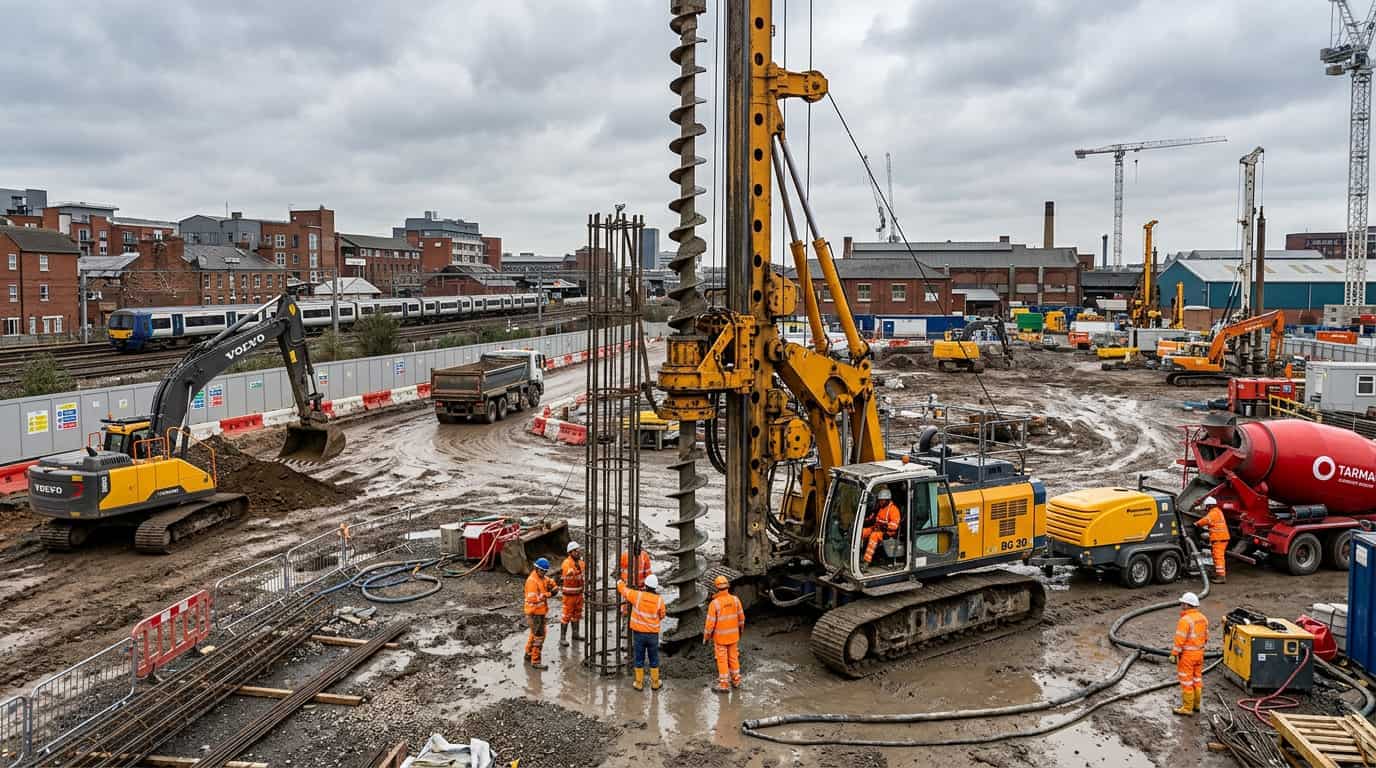
Foundation strategy changes. Late moves from shallow foundations to piling change plant, programme and inspection evidence. See when is piling required? and mini piling vs traditional foundations.
Utilities and plot service entries. Live services and service trenches need coordination so connections are not buried twice and so formation work does not damage newly laid laterals.
Quality drift across parcels. Different gangs produce different record quality. Evidence standards should match groundworks QA and inspection records without turning this guide into a close-out manual.
Hypothetical: 90-Plot Phase With Split Packages
A hypothetical 90-plot housebuilder phase awards infrastructure and plotworks separately. Plotworks starts wave one on sales pressure before spine laterals are confirmed. Mid-wave, connections cannot complete; plots are partly founded; haul routes cut across unfinished sewer corridors; remobilisation and standing time land in both packages’ valuations.
Recovery: stop stranded starts; close the connection and access gates; restart only releasable plots; reset sales dates honestly. The lesson is gate discipline, not “more diggers.” Illustrative pattern, not a Mainline case study.
What Ready for Follow-On Trades Should Mean
Agree handover criteria in the package: formation levels, cleanliness, protection of completed work, temporary barriers, and what records are issued. Vague handover language creates disputes about whether brickwork can start and who pays for re-dig.
Where Building Control hold points apply, handover should confirm they were completed or formally deferred with the design team’s agreement — not imply they were skipped.
Handover is also a valuation event. If criteria are unclear, interim applications become arguments rather than measurement.
Common Mistakes
Starting plots before connection and access gates are real.
Tendering plotworks without foundation design status or GI limitations understood.
Leaving laterals and soft-spot rules undefined between packages.
Treating Building Control attendance as optional when hold points are required.
Calling a messy formation “handed over” because the digger has moved on.
Confusing plotworks scope with the full S38/S104 adoption programme.
Questions for Housebuilders and Contractors
What exactly is in and out of plotworks versus infrastructure?
Which plots are releasable this month — not merely diggable?
Who owns formation soft spots and connection invert certainty?
What are the written handover criteria and record requirements?
How do Building Control notices sit on the plot cycle programme?
Plotworks Information Pack for Tender
A plotworks tender without plot layouts, foundation status, GI limitations, connection details, phasing and exclusions relative to infrastructure is not ready. Contractors will invent assumptions; returns will not be comparable; award will select optimism.
State whether foundations are for-construction or still provisional. Provisional design priced as firm is how strategy flips arrive as claims — foundation design strategy.
State connection readiness assumptions plot by plot or wave by wave. “Drainage to follow” without dates is not a gate; it is a hope.
State access and spoil logic. Plotworks on a live estate competes for corridors with infrastructure and follow-on trades — site logistics planning.
State Building Control notice ownership. Hold points inside plot cycles need calendar owners — Building Control inspection stages.
Housebuilder award discipline for these packs sits in groundworks procurement for housebuilders.
Plotworks Readiness Checklist
1. Foundation design status confirmed for construction — not only for tender optimism.
2. GI assumptions and limitations available to the site team.
3. Estate drainage and lateral positions confirmed for the plots in phase.
4. Building Control notice process agreed for foundation and drainage hold points.
5. Access, spoil and storage routes agreed for the phase.
6. Interface with roads/sewers package written down — laterals, damage, reinstatement.
7. Handover criteria and record requirements agreed with follow-on trades in mind.
8. Wave/batch logic aligned with managing multiple plot programmes.

Related commercial services
Related infrastructure guides
- Managing multiple plot programmesMulti-parcel sequencing once plotworks packages are defined.Read guide
- Building Control inspection stagesHold points that often sit inside plot foundation and drainage cycles.Read guide
- S38 & S104 programme explainedEstate adoption programme that plot release depends on.Read guide
- Procurement for housebuildersPackage splits and award discipline for residential delivery.Read guide
Frequently asked questions
Is plotworks the same as enabling works?
Not usually. Enabling works typically prepare the site — clearance, temporary access, sometimes remediation interfaces. Plotworks delivers plot excavation, foundations and plot drainage for housebuilding. Some housebuilders combine them; define the split in the tender pack.
Does plotworks include adoptable roads and sewers?
Usually not, unless the package is explicitly a combined infrastructure-and-plots contract. Adoptable roads and sewers are typically a separate infrastructure package with S38/S104 interfaces.
When can follow-on trades start on a plot?
When the agreed handover criteria are met — including any required inspections — and the working area is safe and accessible. Exact triggers should be written into the package and programme.
What information do contractors need to price plotworks?
Plot layouts, foundation drawings and specs, GI, drainage connection details, phasing, access constraints and clear exclusions relative to infrastructure. Incomplete packs produce wide tender spreads.
How does plotworks relate to multi-plot programme management?
Plotworks defines what happens on a plot. Multi-plot programme management defines how many plots release, in what waves, behind which infrastructure gates. Use both — do not treat one as a substitute for the other.
Who decides foundation type on plotworks?
The appointed designer and geotechnical input. Contractors price and build the designed method and flag unexpected ground for instruction — they should not improvise strategy on site.
Plotworks succeeds when plot packages and estate infrastructure are planned as one delivery system — even when contracts are split. Structure the package around gates and handover, then dig.
Discuss housebuilder plotworks packages
If you are planning plot release, foundation packages or drainage connections on a housing scheme, share drawings and phasing and we will help identify the most useful next step.