
What Multi-Plot Programme Control Means
On housebuilder sites, groundworks is rarely one continuous trench. It is a sequence of parcels, access corridors and infrastructure milestones that must release plots in a commercially useful order. Managing that system is different from explaining what happens on a single plot.
For single-plot scope — excavation, foundations, plot drainage and handover — use plotworks explained. This guide focuses on programme control across many plots: waves, gates, haul logic, quality consistency and recovery when a batch slips.
Commercial consequence is direct: sales, valuations and trade follow-on assume plot starts that only exist if access and wet connections are real. Optimism without gates produces partially started parcels that consume cash without releasing revenue.
Why Housebuilder Phasing Breaks Groundworks Plans
Sales-led phasing often wants early show homes and frontage plots while infrastructure is still incomplete. Groundworks-led phasing wants continuous corridors, protected adoptable works and logical muck-away. The programme must reconcile both without pretending they are the same.
Adoption-led estates add S38/S104 constraints. Road openings, sewer testing and maintenance-period reality affect when parcels can be treated as “open.” Process depth sits in the S38 & S104 programme explained; here the point is gating plot batches to those milestones.
Service company works and temporary haul routes cut across parcels. A plot that is diggable on paper may be unreachable without crossing unfinished sewers or blocking another gang’s concrete window.
Infrastructure Gates Before Plot Waves
Define gates in plain language: what must be true before a batch of plots may start. Typical gates include temporary or permanent access, drainage laterals available, formation platforms ready, and inspection capacity booked.
Do not start stranded plots to “show progress.” Stranded plots create double-handling, damaged corridors and incomplete records while looking busy on a progress photo.
Align gates with Groundworks for Housebuilders packaging so infrastructure and plotworks contractors — whether combined or split — share the same gate definitions.
| Dependency | Why it gates plot release | Programme control |
|---|---|---|
| Infrastructure milestones | Access, laterals, drainage connections, road openings | Align plot batches to adoption / access gates |
| Access corridors | Plant and muck-away routes across live parcels | Freeze haul routes per wave; protect adoptable works |
| Foundation / BC hold points | Plots cannot hand over until inspections clear | Batch notices; protect concrete windows |
| Service coordination | Plot service entries vs estate utilities | Coordinate before backfill races start |
| Quality consistency | Different gangs / parcels drift from standard detail | Shared checklists, records and supervisor cadence |
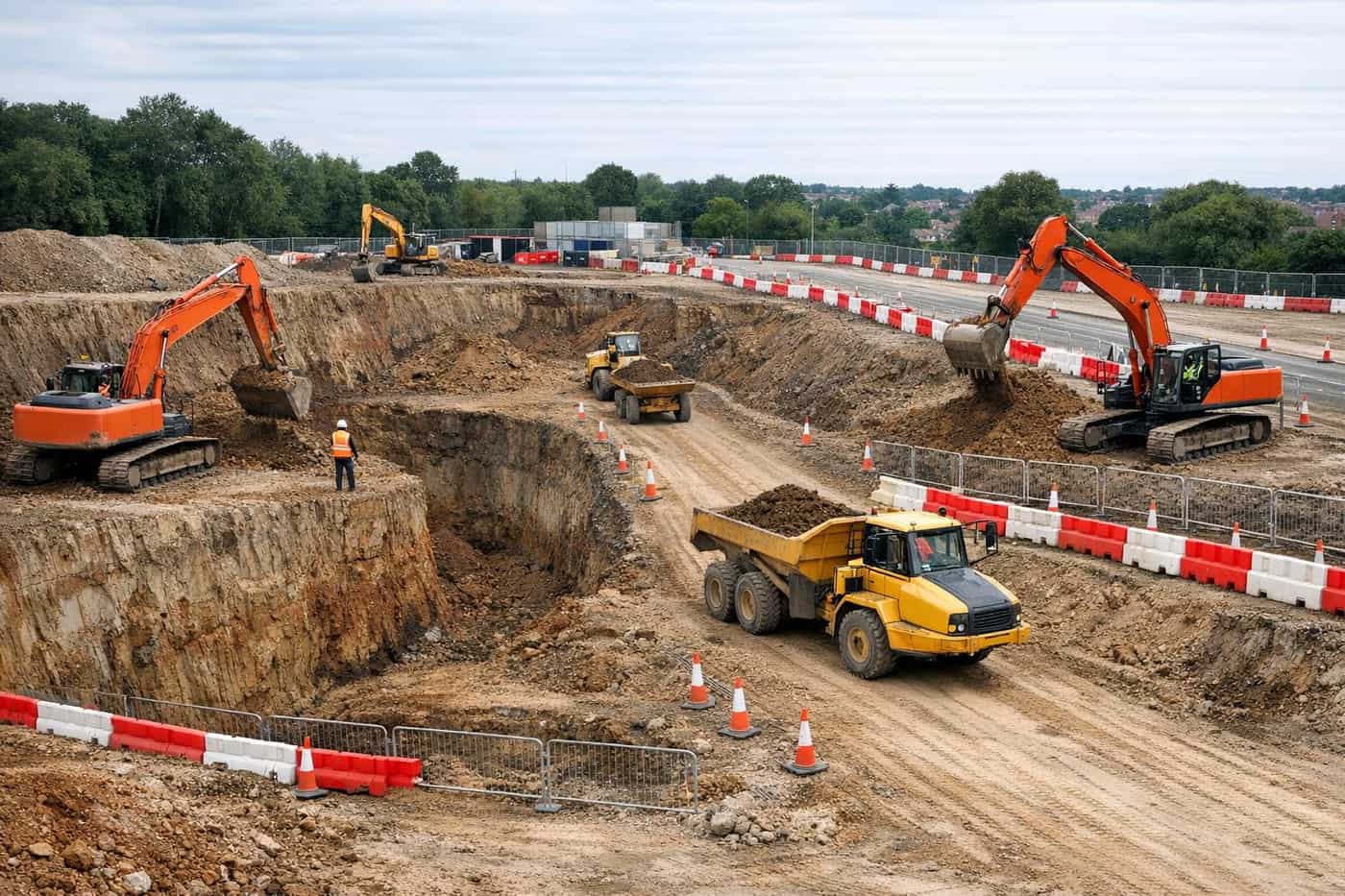
Wave and Batch Programme Design
Waves group plots into deliverable batches with shared access and shared inspection rhythm. Batch size should match plant, supervision and follow-on trade capacity — not only the sales map. A sales-led wave of forty plots means little if only twelve can be accessed without crossing unfinished sewers or blocking the only concrete pump route.
Within a wave, sequence to protect haul routes and concrete windows. Digging every plot simultaneously on a constrained corridor usually creates idle plant and neighbour impact without faster handover. Better programmes open a spine of plots that keep wagons moving, then fill behind once formation and inspection capacity are real.
Inspection rhythm matters as much as dig rhythm. Building Control notices, formation checks and concrete windows need calendar capacity. Over-opening plots without inspection bandwidth produces covered work arguments and rework — see Building Control inspection stages for hold-point mechanics, while keeping programme control here.
Between waves, reset corridors: move stockpiles, repair haul damage, confirm next infra gate. Skipping the reset is how wave two inherits wave one’s mess. The reset is a planned activity with duration, not a weekend hope.
Commercial reporting should show releasable plots, not merely open excavations. Stakeholders who only see dig counts will push for more starts into blocked corridors. Releasable-plot metrics keep the conversation honest.
| Wave control | What “done” means | Recovery if late |
|---|---|---|
| Infra gate | Access and wet connections available for the batch | Re-sequence plots; do not start stranded parcels |
| Plotworks gate | Foundations and plot drainage ready for follow-on | Protect critical plots; surge resources with quality controls |
| Handover gate | Records and inspections complete for the batch | Close evidence first — rushing cover creates rework |
| Sales / valuation gate | Commercial release assumptions still true | Reset stakeholder dates; avoid silent optimism |
Access Corridors and Live Parcel Interfaces
Freeze haul routes per phase and show them on a logistics plan — see site logistics planning. Changing haul mid-wave damages partly built roads and sewers and creates chargeable remobilisation.
Protect adoptable works from construction traffic. Temporary running surfaces and dedicated haul roads often cost less than rebuilding inspected layers.
When housebuilders’ follow-on trades enter early parcels, groundworks needs rules for shared access: who controls the gate, who repairs damage, who owns standing time when routes conflict.
Quality Consistency Across Parcels
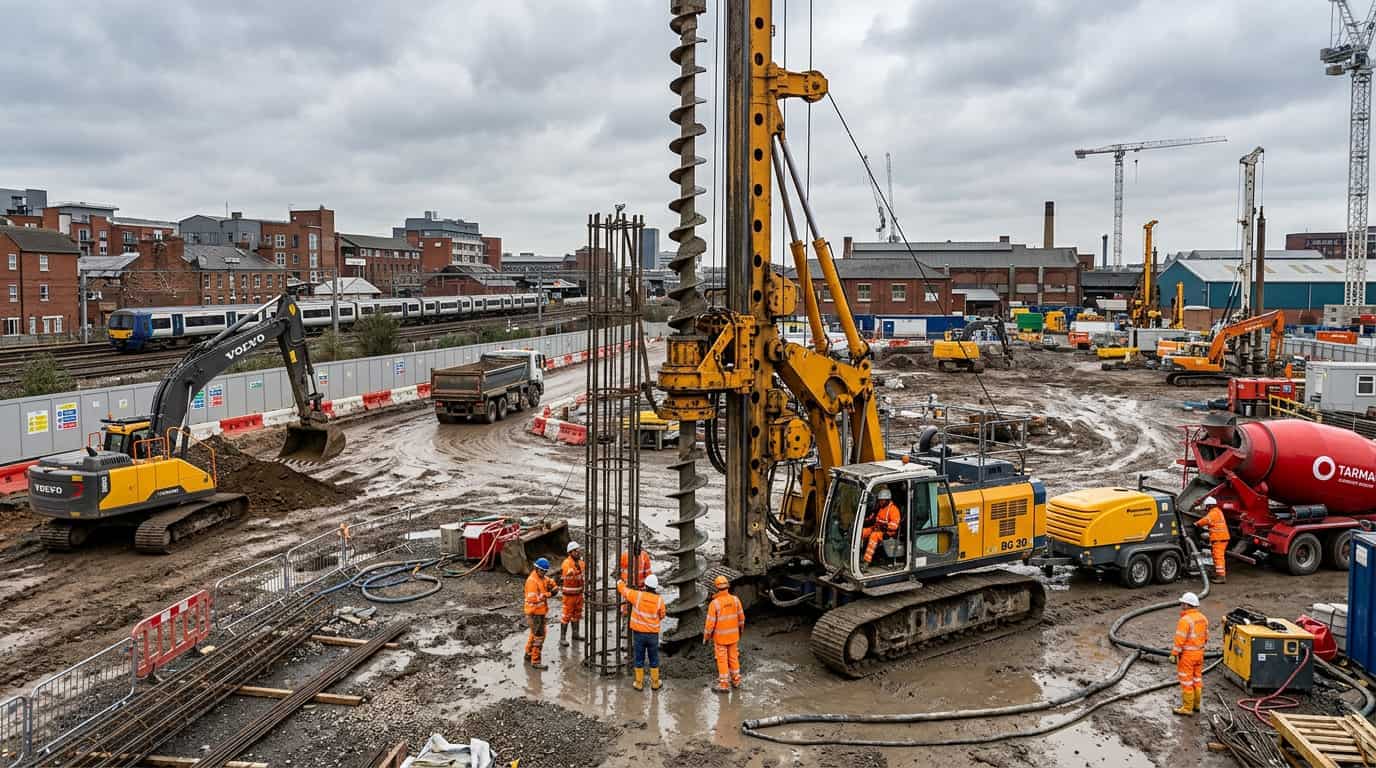
Multi-gang delivery drifts. Parcel A gets careful formation records; Parcel F gets rushed cover. Warranty and Building Control exposure follows the weak parcel, not the average.
Use shared checklists, photo standards and supervisor cadence across waves. Evidence ownership belongs with groundworks QA and inspection records; programme managers must schedule time to produce that evidence.
Foundation strategy changes mid-site — shallow on some plots, piled on others — need explicit quality and package controls. See foundation design strategy.
Hypothetical: 120-Plot Three-Wave Recovery
A hypothetical 120-plot scheme plans three waves of forty. Wave one starts before the spine sewer test gate is truly clear. Mid-wave, testing fails; remobilisation blocks the haul route for wave two. Sales had already promised wave-two starts.
Recovery playbook: stop stranded starts; re-open only plots with real access; surge records and remedial works on the sewer gate; re-baseline wave-two dates with commercial stakeholders; protect show-home plots only if they sit behind a true gate. Restarting everything at once usually deepens the hole.
This pattern is common on adoption-led estates. It is an illustrative programme pattern, not a Mainline case study.

Procurement and Package Splits That Affect Programme
Combined infra-plus-plots packages simplify accountability but still need internal wave controls. Split packages need written gate ownership between infrastructure and plotworks contractors — see groundworks procurement for housebuilders.
ECI can help set realistic wave logic before award — link early contractor involvement without turning this into an ECI guide.
Sales, Valuation and Gate Honesty
Sales and valuation pressure will always ask for more plot starts. Programme control must answer with releasable-plot counts, not open-excavation counts. The two metrics diverge the moment gates fail.
Commercial reporting should show the next infra gate in one sentence, who owns it, and which plots sit behind it. Without that transparency, stakeholders push starts into blocked corridors and then blame groundworks for “slow output.”
Show-home and early-release plots need special gate discipline: they attract the most political pressure and the least tolerance for stranded work. Protect them only when access and connections are real — see plotworks explained.
Adoption milestones belong on the same programme board as plot waves. Treating S38/S104 as a parallel admin track is how sales dates detach from infrastructure truth — process depth on the S38 & S104 programme explained.
Supervision, Quality and Records Across Waves
Overlapping waves demand supervision density that single-wave tenders often understate. When wave two starts before wave one has handed over cleanly, quality and records drift unless cadence is enforced.
Shared checklists and photo standards are programme tools, not bureaucracy. They keep parcel F from becoming the warranty weak link while parcel A looked exemplary.
Inspection capacity — Building Control notices and adoption call-offs — must be booked into the wave. Over-opening plots without inspection bandwidth creates covered-work arguments — see Building Control inspection stages and groundworks QA and inspection records.
Logistics resets between waves are mandatory: repair haul damage, move stockpiles, confirm the next corridor. Skipping resets imports wave-one chaos into wave two — site logistics planning.
Common Mistakes
Starting plots to create the appearance of progress.
Letting sales dates drive gates without infrastructure truth.
No frozen haul routes across live parcels.
Different quality standards between early and late parcels.
No recovery playbook when a wave misses its infra gate.
Treating plotworks scope documents as a substitute for programme control.
Questions for the Site and Commercial Team
What is the next infra gate in one sentence, and who owns it?
Which plots are truly releasable this month versus photographable only?
Where is the haul route for the current wave, and what damages it?
If wave N slips two weeks, what is the written recovery sequence?
Linking Waves to Plotworks Scope Without Confusing the Two
Plotworks explains what happens on a plot. Multi-plot control explains how plots release in waves behind gates. Teams that merge the documents lose both: scope becomes vague and gates disappear into bullet lists.
Keep plotworks packages crisp — dig, foundations, connections, handover — via plotworks explained. Keep this guide focused on gates, corridors, recovery and quality cadence across parcels.
Procurement should reference both: package content and wave logic. Awarding a plotworks scope without wave gates invites stranded starts — groundworks procurement for housebuilders.
When recovery is needed, fix gates first, then surge plotworks resources. Surging diggers into a blocked corridor only increases stranded work.
Multi-Plot Programme Checklist
1. Wave map aligned to sales and infrastructure reality.
2. Gate definitions shared across packages and stakeholders.
3. Haul and access corridors frozen per wave.
4. Inspection and records capacity booked into the wave, not afterthought.
5. Quality cadence identical across parcels.
6. Recovery playbook agreed before the first slip.
7. Plotworks scope clear via plotworks explained without confusing it with programme control.
8. Adoption milestones visible on the same programme as plot starts.

Related commercial services
Related infrastructure guides
- Plotworks explainedSingle-plot scope: dig, foundations, plot drainage, handover.Read guide
- S38 & S104 programmeAdoption milestones that gate estate production.Read guide
- Site logistics planningCorridors, compound, muck-away and wet-weather control.Read guide
- Procurement for housebuildersPackage splits and award discipline for residential programmes.Read guide
Frequently asked questions
How is this different from Plotworks Explained?
Plotworks Explained covers what happens on a plot. This guide covers how many plots are sequenced, gated and recovered across a housebuilder programme.
Should every plot start as soon as diggers are free?
No. Starts should follow access and connection gates. Ungated starts create stranded work and damage corridors.
How do S38/S104 milestones affect plot waves?
They often control access, testing and when roads/sewers can be treated as open for production. Align waves to those milestones rather than ignoring them.
What is a practical recovery first step when a wave slips?
Stop stranded starts, close the failed gate, re-baseline dates, then restart only releasable plots behind a true access path.
Who owns haul damage between packages?
It must be defined in the package interface matrix. If undefined, it becomes a dayworks argument that slows every wave.
Run multi-plot groundworks as a gated wave system. Protect corridors, close evidence, and recover through gates — not through opening more stranded plots.
Planning a multi-plot groundworks programme?
Share your phasing plan and infrastructure status and we can discuss how waves and gates typically protect plot release — without confusing programme control with single-plot scope.