
Who This Guide Is For
This guide explains the drainage adoption process for foul and surface water systems offered to a sewerage undertaker under a Section 104 agreement. It is written for commercial and technical stakeholders who need to de-risk programmes, protect cash flow and avoid late-stage vesting failure — not for generic drainage theory.
Developers and land promoters need to understand when S104 bites on feasibility, how adoption affects sales packs and lender due diligence, and where bond exposure sits relative to plot release and project close-out.
Quantity surveyors need visibility of adoption-related scope in civils tenders: inspection liaison, testing, CCTV, as-built production, remedial works and defects-period liability. These items are easy to exclude or underprice if the tender pack is thin.
Procurement managers must decide whether adoptable drainage sits inside a wider groundworks package or a specialist Section 104 contractors appointment — and align contract form with design maturity and undertaker approval status.
Project managers should treat S104 milestones as critical path items alongside construction: pre-planning enquiry, technical approval, agreement execution, inspection windows, testing, provisional vesting and bond release.
Housebuilders running phased plot delivery need adoption sequencing that supports building control sign-off and buyer confidence. Late vesting does not always block occupation, but it creates conveyancing friction and funder questions.
Main contractors carrying civils packages need clear allocation of undertaker liaison, change control and record-keeping. Adoption delay after demobilisation is a common commercial dispute trigger.
This guide complements the S38 and S104 Programme Explained, Adoptable Roads Explained, Infrastructure Bonds & Sureties, Utility Diversions, Groundworks Tendering, NEC vs JCT, Ground Conditions and Groundworks Costs resources — use them where your scheme needs deeper detail on interfaces.
What Drainage Adoption Means
In UK development, drainage adoption is the process where newly constructed sewers and associated assets transfer from private developer ownership into the permanent ownership and maintenance of the sewerage undertaker (water company).
Once adopted and vested, the water company becomes responsible for operation, maintenance, and future replacement costs, while the developer's obligation typically ends aside from any defects period defined in the agreement.
For developers, successful adoption delivers four commercial outcomes. First, no long-term liability for sewer maintenance on adoptable assets. Second, easier plot sales and mortgageability — lenders and conveyancers check adoption status. Third, reduced risk of future disputes with residents or management companies over who maintains what. Fourth, cleaner project close-out when bonds release and infrastructure drops off the risk register.
Drainage adoption is not the same as planning approval or building control sign-off. A consented layout can still fail S104 technical vetting. A built sewer can still fail vesting if testing, records or easements are incomplete. Commercial teams should track adoption as a live delivery workstream from feasibility, not a handover task at the end of construction.
This process interacts tightly with road adoption under Section 38, highway works under Section 278, utility diversions, ground conditions and bond strategy. Treating foul and surface water adoption in isolation is one of the most common causes of programme rework on UK schemes.
Section 104 Agreements — The Legal Backbone
Section 104 of the Water Industry Act 1991 allows developers to enter into a legal agreement with the sewerage undertaker for the construction and future adoption of sewers.
The Section 104 (S104) agreement sets out the works to be built and adopted through plans and schedules. It defines technical standards via the Design and Construction Guidance (DCG). It establishes inspection and defects procedures. It details bonds or sureties, triggers, and vesting arrangements.
In practice, no connection to the public sewer is normally permitted until the S104 is in place, so delay here can stall both construction and statutory connection dates. For programme and commercial teams, that makes agreement execution a gate — not a parallel paperwork exercise.
The agreement binds the developer (and typically their contractor in practice) to build to approved standards, permit inspections, rectify defects, and maintain security until vesting completes. Undertakers may refuse connection or adoption if works proceed outside agreed procedures.
Legal completion of the S104 runs alongside technical approval. Developers should not assume that approved drawings alone are enough to start adoptable construction — signed agreements and bonds are usually required before undertakers will treat works as adoptable.
On multi-phase sites, the S104 may cover phased adoption schedules. Commercial teams should understand which assets vest per phase and how bond reductions align with plot release and sales programmes — see Infrastructure Bonds & Sureties for cash-flow forecasting.
Sewerage Sector Guidance And DCG
The historic Sewers for Adoption documents have been replaced by Sewerage Sector Guidance and the Design and Construction Guidance (DCG) for sewers offered for adoption.
The DCG applies to adoptable foul and surface water sewers in England offered under S104. It sets standards for pipe materials, gradients, manholes, pumping stations and certain SuDS components. It is supplemented by local water company addenda, which can add or tighten requirements.
For programme and commercial teams, non-compliance with DCG or local addenda is a common cause of redesign, rework, and late adoption. Undertakers apply their addenda during technical vetting; assumptions based on an outdated guidance set are a recurring source of post-tender variation.
Water companies can adopt certain SuDS components listed in the DCG, such as specified attenuation tanks and associated pipework, provided design and maintenance criteria are demonstrated. Arch-shaped attenuation structures and other non-standard SuDS may be adoptable where DCG criteria and undertaker maintenance requirements are satisfied — but early dialogue is essential.
Some undertakers promote S104 agreements for new sewers and pumping stations as the default route, even where historical practice may have been more flexible. Developers should confirm the undertaker's current policy at pre-planning stage rather than rely on precedent from earlier schemes.
DCG compliance affects procurement as well as design. Tender documents should reference DCG and relevant addenda explicitly so contractors price inspection regimes, testing and documentation correctly — not as provisional guesswork.
Adoptable Foul And Surface Water Systems
On a typical residential development, foul sewers serving multiple plots and ultimately connecting to the public system will usually be offered for adoption under S104. Surface water systems may be adoptable where they meet DCG criteria, including some SuDS elements such as certain tanks and attenuation structures. Private drains serving a single dwelling within its curtilage remain private and are not adopted.
Typical adoptable foul and surface water assets include gravity sewers in various diameters and materials; manholes and access chambers; rising mains and pump stations where gravity discharge is not possible; and some attenuation tanks, oversized pipes, and flow-control chambers compliant with DCG.
| Asset type | Typical adoption route | Commercial note |
|---|---|---|
| Foul sewers serving multiple plots | Section 104 — sewerage undertaker | Usually core adoptable infrastructure on residential schemes |
| Surface water sewers and compliant SuDS | Section 104 where DCG criteria met | Confirm adoptability at concept — non-standard SuDS may need early dialogue |
| Pumping stations and rising mains | Section 104 with additional scrutiny | Longer approval track; surety and O&M requirements affect programme |
| Road gullies and highway drainage | Section 38 — highway authority | Must align levels and outfalls with S104 network |
| Private drains within single-dwelling curtilage | Private — not adopted | Boundary between private and adoptable must be clear on drawings |
| Estate drainage retained by management company | Private | Affects sales packs, service charges and long-term liability |
Developers should clarify at concept stage which elements are to be adopted by the sewerage undertaker under S104, adopted by the highway authority under S38 for road drainage and gullies, or retained and managed privately — often via a management company or internal estate drainage.
The boundary between adoptable and private drainage affects sales documentation, service charges and maintenance messaging. Conveyancers will ask which sewers are vested. Management companies need clarity on what remains private before handover.
Integrated design with Adoptable Roads Explained and Utility Diversions for Development Sites prevents carrier drains, highway outfalls and service corridors from conflicting with adoptable sewer routes.
Sewerage Undertaker Requirements
Each sewerage undertaker follows the DCG but typically publishes its own developer guidance and addenda. Requirements vary by company and region, so a strategy that worked on a previous scheme with a different undertaker is not automatically transferable.
Common requirements include pre-planning or early engagement enquiries to confirm capacity and connection strategy; submission of detailed design drawings, long sections, manhole schedules, and hydraulic calculations; evidence of ground conditions, infiltration tests, and flood risk assessments where relevant; confirmation of ownership, easements, and rights of access for pipelines outside adopted highway; and agreement of the construction programme and phasing, especially for multi-phase sites.
Capacity and connection strategy should be confirmed before fixed drainage design is taken to tender. Undertakers may require off-site reinforcement, pumping, or restricted discharge rates that change attenuation sizing and cost — use groundworks pricing calculator to sense-check feasibility implications.
Ownership and easements are frequent late-stage blockers. Off-site sewers, connections across third-party land, and pipelines outside the adopted highway need legal access before the undertaker will adopt. Land teams should work in parallel with drainage engineers, not after technical approval.
Multi-phase programmes need explicit phasing in undertaker submissions. Which sewers are built and adopted per phase affects bond reductions, inspection sequencing and plot release. Housebuilders should align S104 phasing with sales and build programmes.
Ground conditions evidence supports hydraulic and infiltration design. Where GI is weak, undertakers may query SuDS performance or bedding assumptions — see Ground Conditions Explained.
Design Approval Process
Best practice is to engage with the sewerage undertaker before or at outline planning, via a pre-planning enquiry. At this stage, the focus is on feasibility of discharge locations for foul and surface water; capacity constraints in the existing network; requirements for on-site attenuation, pumping, or off-site reinforcement; and early alignment with highway drainage and utility corridors.
Aligning this early drainage strategy with the S38 and S104 Programme Explained guide and Utility Diversions for Development Sites significantly reduces later clashes and redesign.
For formal S104 technical vetting, the developer — usually via a consulting engineer — submits location and layout plans showing foul and surface water networks, easements, and connection points; longitudinal sections of sewers and any rising mains; hydraulic design calculations covering capacity, self-cleansing velocities, and surcharge levels; manhole schedules, details, and construction drawings; pumping station design information where applicable; and a surface water strategy including attenuation volumes and outflow controls.
The sewerage undertaker checks compliance with DCG and its addenda. This review often involves iterative comments and revisions before technical approval is granted. Programme float should assume at least one comment cycle; complex pumping or SuDS schemes may need several.
Once design is approved in principle, legal teams complete the S104 agreement using a standard form, and the developer provides the required bond or surety. No works should start on adoptable sewers until the agreement is signed and the security is in place, as many undertakers use S104 as a condition for allowing physical connection to the public system.
Construction Inspections
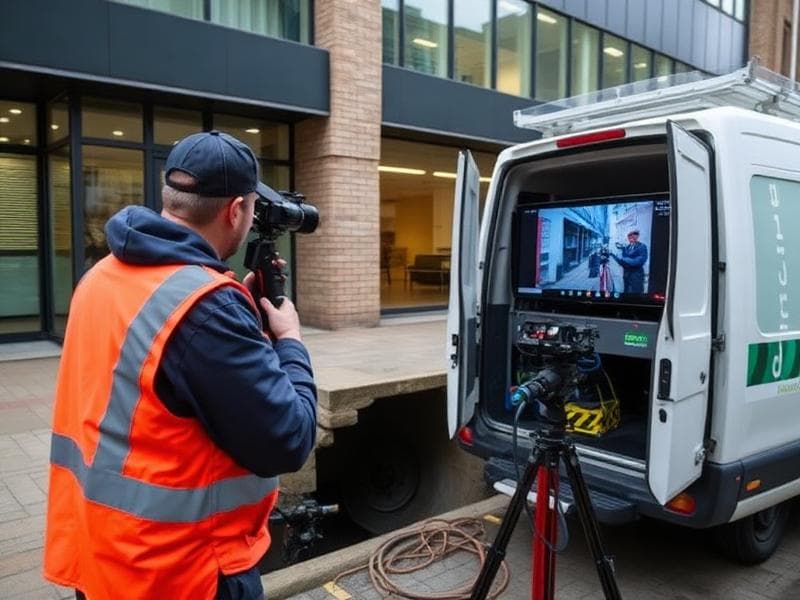
During construction, the sewerage undertaker or its representatives inspect works at key stages. Typical inspection activities include verification of line, level, and pipe bedding before backfilling; inspection of manholes, chambers, and flow control units; witnessing of air or water pressure tests on pipelines; and CCTV surveys prior to vesting and sometimes at intermediate stages.
Developers are usually required to give notice before each inspection stage; provide as-built drawings and updated manhole schedules; and rectify any defects identified, potentially including re-excavation.
Failure to coordinate inspections with the build programme is a very common source of delay and rework. Inspections are not optional hold points that can be caught up later — failed bedding checks or premature backfilling can require strip-out and re-inspection.
Contractors with proven S104 experience understand notice periods, witness requirements and record formats. Procurement teams should verify this capability at tender — see the Groundworks Tendering Guide and Roads & Sewers Contractors Guide.
Testing quality affects vesting directly. Failed pressure tests or unsatisfactory CCTV surveys delay provisional vesting and keep bond value locked. Include explicit testing standards and re-test responsibilities in the contract.
Vesting Process And Defects Period
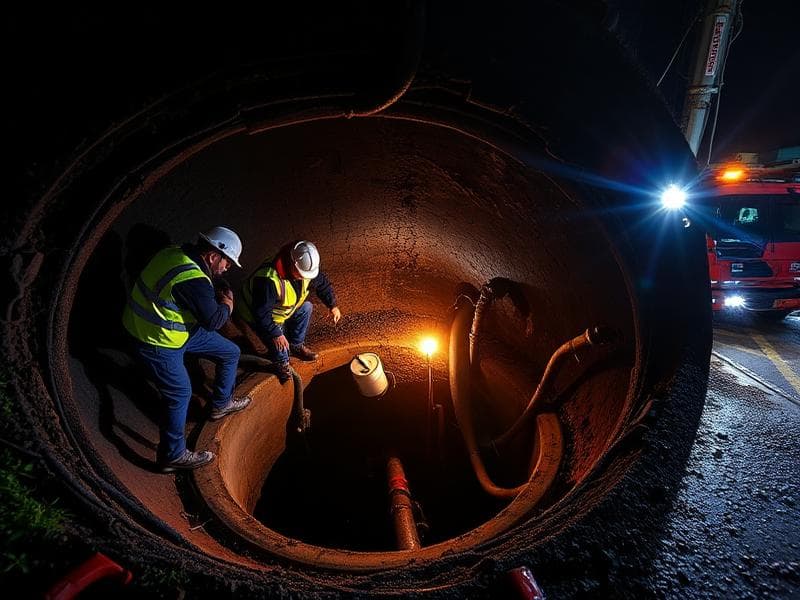
Once construction is substantially complete, tested, and approved, the sewers can be provisionally vested, meaning the water company takes ownership subject to a defined maintenance and defects period.
| Stage | What happens | Commercial impact |
|---|---|---|
| Construction complete and tested | Inspections, CCTV, pressure tests and as-built submission | Failed tests delay vesting and trap contractor resources |
| Provisional vesting / initial certificate | Undertaker takes ownership subject to defects period | Partial bond reduction may be possible depending on agreement |
| Maintenance / defects period | Developer liable for defects; undertaker may operate assets | Snagging and remedials can affect final account and close-out |
| Final certificate and bond release | All obligations discharged; security released | Cash returns to group; lender covenants and investor reporting update |
The typical stages are: provisional certificate or initial vesting — issued after satisfactory inspection and testing; maintenance or defects period — usually 12 months, during which the developer remains liable for defects but the undertaker may take on day-to-day operation; final certificate and bond release — on expiry of the defects period and after any outstanding defects have been remedied.
The exact terminology varies by undertaker, but the structure — initial vesting, maintenance period, final vesting — is broadly consistent.
Defects discovered during the maintenance period can affect final accounts, subcontractor retentions and bond release timing. Developers should not demobilise adoption coordination until final certificate is issued.
Provisional vesting may allow partial bond reduction depending on agreement terms. Coordinate reduction milestones with S38 and S278 bonds for a single cash-flow view — Infrastructure Bonds & Sureties covers multi-agreement bond strategy.
Bonds And Sureties
S104 agreements are backed by a bond or other acceptable surety — often from a bank or insurer — to protect the sewerage undertaker if the developer fails to complete the works.
The bond typically covers the cost of completing outstanding works to the approved specification, and the cost of remedying defects during the maintenance period if the developer does not act.
Common features include bond value expressed as a percentage — often around 10% — of the estimated construction cost of the adoptable sewers; requirement to maintain the bond until final vesting and expiry of the defects period; and ability for the undertaker to call on the bond if the developer defaults or becomes insolvent.
The bond or surety tied to the S104 agreement is normally reduced or released once the final certificate is issued and all obligations have been discharged. Close alignment with Infrastructure Bonds & Sureties and broader programme planning is essential for cash-flow forecasting.
Project and commercial teams should coordinate S104 bond strategy with roads and structures bonds under S38 and S278. Multiple securities running in parallel affect group cash reports and lender covenants. A single bond calendar per scheme is basic commercial hygiene.
Bond negotiation lead time is often underestimated. Legal drafting, surety underwriting and undertaker approval can run to weeks. Treat bond execution as a pre-start milestone alongside S104 agreement signing.
Common Causes Of Delay
Across UK water companies, the same themes tend to appear when S104 adoption is delayed. Late engagement with the sewerage undertaker — no pre-planning enquiry and S104 applications submitted after construction has effectively begun. Incomplete technical submissions, missing calculations, or non-compliant details requiring multiple design revisions. Unclear ownership and easements for off-site sewers or sewers in private land, delaying legal completion.
Construction deviations from the approved design — changed pipe materials, levels, or alignments not agreed in advance. Poor testing and survey quality, such as failed pressure tests or unsatisfactory CCTV surveys. Inadequate record keeping, with missing as-built information and manhole referencing. Misalignment of drainage with highways adoption under S38, where invert levels, outfalls, or carrier drains differ from what the undertaker can adopt.
| Delay cause | Why it happens | Mitigation |
|---|---|---|
| Late undertaker engagement | No pre-planning enquiry; S104 after construction starts | Pre-planning drainage enquiry at or before outline planning |
| Incomplete technical submission | Missing calculations, schedules or non-compliant details | DCG-aligned pack with local addenda checked before submission |
| Easement and ownership gaps | Off-site sewers without defined access rights | Legal and land strategy aligned before technical approval |
| Construction deviation | Changed materials, levels or alignments not agreed | Change control with undertaker before site variation |
| Poor testing and records | Failed pressure tests or unsatisfactory CCTV | Inspection milestones in construction programme and contract |
| S38 / S104 misalignment | Road drainage levels conflict with sewer adoption boundary | Integrated adoption design from concept — single programme workstream |
These are all points where good programme management and early coordination with road adoption, roads and sewers contractors, groundworks packages and utility design can significantly de-risk outcomes.
Delays cost more than time. Extended bonds tie cash. Plot sales slip. Contractors claim for standing time and re-inspection. Funders ask for updated adoption schedules. Prevention is cheaper than recovery.
Utility And Highway Interfaces
Drainage rarely exists in isolation. It interacts with highway drainage and S38 or S278 works — highway authorities may adopt road drainage, which must still interface with the foul and surface water strategy and the sewerage undertaker's network.
Diversions of existing sewers and utilities may be needed where existing assets run through the site. Some undertakers integrate diversions into the S104 agreement; others use separate processes. Either way, diversion programme affects trenching and connection sequencing — see Utility Diversions for Development Sites.
SuDS and attenuation under highways require dual satisfaction. DCG recognises certain SuDS elements, including arch-shaped attenuation tanks, which can sit under roads and must satisfy both the water company and highway authority in terms of loading and maintainability.
S278 Agreements Explained covers works on the existing public highway that may be prerequisites to drainage connections and access. Adoptable Roads Explained covers how S38 road drainage must align with S104 levels and adoption boundaries.
Principal contractors should coordinate utility, highway and undertaker interfaces as one system. Splitting responsibility without a single programme owner is how carrier drains end up outside adoption boundaries with no easement.
Programme Management For Drainage Adoption
From a programme perspective, S104 is not just a technical formality. It is a critical path item for commencement of certain groundworks, connection to public sewers, and plot occupations where building control sign-off and lender confidence depend on drainage status.
Key programme actions include building pre-planning drainage enquiries into the early feasibility stage; scheduling S104 design submission and approval well ahead of site start; including inspection milestones and testing windows in the construction programme; and factoring in the defects or maintenance period before final bond release.
There is direct overlap with the S38 and S104 Programme Explained guide, where integrated adoption programmes for roads and sewers are managed as a single workstream.
Effective programme management will identify long-lead items such as pumping station packages, attenuation structures, and flow control devices; seasonal constraints including testing and CCTV during high groundwater or adverse weather; and dependencies on third parties such as highway authority approvals, utility diversions, or off-site reinforcement by the sewerage undertaker.
Mitigation tools include early contractor involvement, framework agreements with specialist drainage contractors, and clearly defined information release schedules to design teams. NEC-style early warning processes can help where the contract supports collaborative notice of undertaker delay — see NEC vs JCT for Groundworks Projects.
Risk and contingency should be explicit in the master programme. If S104 technical approval is shown as a two-week activity without float, the programme is not adoption-ready.
Procurement Considerations
For procurement and commercial teams, a key decision is whether adoptable drainage is let as part of a larger groundworks and infrastructure package, or procured separately with a specialist drainage contractor.
Factors to weigh up include technical complexity — deep sewers, major attenuation, or complex pumping stations; the contractor's track record with S104 inspections, testing, and documentation; and interface with other works including roads, utilities, and structures.
Aligning procurement with the Groundworks Tendering Guide helps ensure S104 requirements are embedded in tender documents, including clear responsibilities for S104 inspections and liaison with the undertaker; explicit quality standards and testing criteria referencing DCG and local addenda; and requirements for as-built drawings, CCTV and O&M manuals.
Contract terms should address liability for failed tests and rework; responsibility for defects discovered during the maintenance period; and performance security, which may relate closely to Infrastructure Bonds & Sureties.
Being explicit about adoption outcomes in the scope — for example, delivery to S104 vested status — helps avoid disputes later. Vague civils scope with adoption assumed invites final-account arguments.
Contract form affects how undertaker delay and design change are managed. NEC vs JCT should be chosen with S104 approval status and employer capability to administer notices in mind.
Specialist commercial drainage contractors and combined roads and sewers packages both work when scope and interfaces are clear. The wrong model is splitting adoption accountability across siloed subcontractors without a programme owner.
Developer Checklist Before S104 Start
Use this checklist before S104 technical submission, agreement execution, or adoptable sewer construction mobilisation.
Related project scenarios
Housing development — late S104 approval
Phased foul and surface water network on a residential scheme, with plot occupations targeted before the maintenance period ends on estate roads.
Procurement challenge: Groundworks progressed under programme pressure before S104 technical approval was fully secured. The sewerage undertaker then required alterations for compliance with an updated DCG clause and additional hydraulic calculations.
Commercial outcome: Programme: connection to the public sewer delayed; early plot occupations slipped by several weeks. Cost: partial re-builds, repeat testing and extended contractor preliminaries. Procurement: contract scope did not tie payment milestones to S104 approval status. Delivery: resequenced works and buyer negotiations — lesson: treat S104 technical approval as a hard pre-start milestone.
Mixed-use commercial development — S38 and S104 misalignment
Adoptable road drainage under S38 designed separately from the S104 foul and surface water network serving the wider site.
Procurement challenge: Levels changed during construction. Carrier drains fell outside the highway adoption boundary with no clear easement route. The sewerage undertaker was reluctant to adopt assets without defined access; the highway authority could not accept revised gully outfalls.
Commercial outcome: Programme: legal agreements and easement negotiations delayed both highway and sewer vesting. Cost: redesign, additional legal fees and bond value tied up for months. Procurement: integrated design responsibility was not assigned in the civils contract. Delivery: eventual adoption only after combined S38/S104 resubmission — integrated design from day one would have protected close-out.
Infrastructure scheme — SuDS adoption uncertainty
Large attenuation tanks under estate roads using an arch-type system, with foul network tie-ins to an existing undertaker main across third-party land.
Procurement challenge: The water company initially questioned whether the arch attenuation system was adoptable. Off-site connection required easements not finalised at technical submission. Ground conditions affected infiltration assumptions in the surface water strategy.
Commercial outcome: Programme: protracted design dialogue added three months before construction of adoptable SuDS could be confirmed. Cost: revised construction details, jetting access provisions and additional loading evidence for highway interface. Procurement: early contractor involvement with SuDS and S104 experience reduced rework during inspection. Delivery: undertaker agreed adoption after DCG-aligned evidence — early engagement and GI clarity were decisive.
Related commercial services
Related infrastructure guides
- S38 & S104 Programme ExplainedIntegrated adoption programme for roads and sewers.Read guide
- Adoptable Roads ExplainedS38 road adoption and highway drainage interfaces.Read guide
- S278 Agreements ExplainedHighway works affecting drainage connections and access.Read guide
- Utility Diversions for Development SitesStatutory undertakers and sewer diversion sequencing.Read guide
- Infrastructure Bonds & SuretiesS104 bonds, vesting and cash-flow exposure.Read guide
- Roads & Sewers Contractors GuideProcuring adoptable infrastructure delivery.Read guide
- Groundworks Tendering GuideEmbedding S104 scope in civils tender packs.Read guide
- Ground Conditions ExplainedGI, infiltration and trenching risk for drainage design.Read guide
- NEC vs JCT for Groundworks ProjectsContract risk on adoption-led civils packages.Read guide
- Groundworks pricing calculatorBudget drivers for drainage and adoption works.Read guide
Frequently asked questions
When should S104 discussions start on a new development?
Ideally at or before outline planning, via a pre-planning enquiry to the sewerage undertaker to confirm feasible discharge points and capacity. Early engagement reduces redesign and protects the wider S38 and S104 programme.
What information is needed for a Section 104 application?
Typically location plans, drainage layouts, long sections, hydraulic calculations, manhole schedules, construction details, surface water strategy, and an indicative programme. Local undertaker addenda may require additional items.
How long does it take to secure S104 technical approval?
Timeframes vary between undertakers and depend on submission quality, but several weeks to a few months is common, with longer durations if multiple design revisions are required.
What is the Design and Construction Guidance (DCG)?
The DCG sets standards for adoptable foul and surface water sewers in England offered under S104, covering materials, gradients, manholes, pumping stations and certain SuDS components. It replaces the historic Sewers for Adoption documents and is supplemented by local water company addenda.
Can SuDS features be adopted under S104?
Certain SuDS elements listed in the DCG, such as some attenuation tanks and associated structures, may be adoptable if they meet design and maintenance requirements. Non-standard solutions need early undertaker dialogue.
What is the difference between adoptable and private drainage?
Adoptable sewers transfer to the sewerage undertaker under S104. Private drains — including single-dwelling curtilage drains and some estate systems — remain with the developer or management company. The boundary must be clear on drawings and sales packs.
What happens if constructed sewers differ from the approved design?
Changes should be agreed with the sewerage undertaker in advance. Unapproved deviations can lead to failed inspections, demands for remedial works, or refusal to adopt until issues are resolved.
How is the S104 bond amount calculated?
Bonds are usually based on a percentage of the estimated construction cost of the adoptable sewers — often around 10% — as set out in the S104 agreement and undertaker guidance. See Infrastructure Bonds & Sureties.
When is the S104 bond released?
After initial vesting, completion of the maintenance or defects period, and issue of final certificates confirming all defects have been rectified. Bond reduction milestones may apply earlier depending on the agreement.
What are the main reasons a water company refuses or delays adoption?
Common reasons include non-compliance with DCG, incomplete or inaccurate as-builts, failed tests or poor CCTV surveys, unresolved easements, or outstanding remedial works.
How does drainage adoption interact with road adoption?
Drainage under or serving adoptable highways must align with S38 design and adoption criteria as well as S104 requirements, including levels, structures, and access. Integrate both from concept — see Adoptable Roads Explained.
Can works start before the S104 agreement is signed?
No works should start on adoptable sewers until the agreement is signed and required security is in place. Many undertakers treat S104 as a condition for physical connection to the public system.
What inspections are required during construction?
Typical stages include bedding and line-and-level checks before backfill, manhole and chamber inspections, witnessed pressure testing, and CCTV surveys. Notice periods and record requirements vary by undertaker.
What is provisional vesting?
Provisional vesting — or initial certificate — is when the undertaker takes ownership subject to a defects period, after satisfactory construction, testing and inspection. Final vesting follows defects clearance.
How long is the S104 defects or maintenance period?
Usually around twelve months after provisional vesting, during which the developer remains liable for defects while the undertaker may operate the assets.
How do utility diversions affect S104 adoption?
Existing sewers and other utilities through the site may need diversion before adoptable construction proceeds. Programmes must align — see Utility Diversions for Development Sites.
Should adoptable drainage be procured separately or with groundworks?
It depends on complexity and interfaces. Combined roads and sewers packages suit integrated adoption; specialist contractors suit complex pumping or SuDS. Embed S104 duties in either case — see Groundworks Tendering Guide.
How do ground conditions affect drainage adoption?
Ground conditions inform bedding, trench support, infiltration and SuDS performance. Weak GI creates approval and construction risk — see Ground Conditions Explained.
How can developers reduce drainage adoption risk overall?
Start engagement early, follow DCG and local addenda closely, ensure high-quality submissions, integrate S38/S104 and utility coordination, appoint contractors with proven S104 experience, and track vesting milestones against bond release.
Does planning approval guarantee S104 adoption?
No. Planning consent and S104 technical approval are separate. Hydraulic capacity, DCG compliance, easements and construction quality must all be satisfied before vesting.
Drainage adoption is rarely the headline risk at feasibility stage. It becomes the headline risk when completions approach, bonds remain locked, conveyancers flag unvested sewers, and the undertaker will not sign final certificates because as-builts or tests do not stack up. That pattern is predictable — and largely preventable.
The schemes that vest on programme treat S104 as a continuous commercial workstream: pre-planning enquiry at the right time, DCG-aligned submissions, agreement and bond before adoptable construction, inspection milestones in the master programme, integrated S38 and utility design, and contractors who understand that adoption is a documentation and quality discipline as much as a civils task.
For developers, quantity surveyors, procurement managers, project managers, housebuilders and main contractors, the commercial prize is straightforward. Vested adoptable sewers remove long-term maintenance liability, support sales and lender confidence, and release security back to the group. Delayed adoption does the opposite — tying cash, slipping occupations, and turning close-out into a negotiation.
Use the checklist and related guides in this resource to stress-test your adoption strategy before tender and before the first adoptable pipe is laid. Then procure delivery with S104 milestones, testing duties and vesting targets written into scope — not assumed in the margin.
Mainline Groundworks supports S104-led drainage adoption across residential, commercial and infrastructure schemes — from pre-planning strategy and technical submissions through to inspection coordination, Section 104 construction and bond release. Share your undertaker status, programme and scope and we will advise on delivery and procurement options that protect vesting and close-out.
Discuss drainage adoption on your scheme
Share your S104 status, undertaker requirements and programme — we will advise on design coordination, procurement and delivery.