
What Logistics Planning Is — and Is Not
Site logistics planning decides how plant, materials, people and arisings move through a live site without destroying the works they are meant to deliver. It is a commercial and programme control, not a decorative traffic sketch.
This guide is not an enabling-works scope definition and not temporary-works design. Structural temporary works remain with allocated designers. Enabling package content belongs with site preparation and related services. Here the focus is movement, space and weather resilience that make those packages deliverable.
CDM interfaces matter in practice: clients and contractors need coherent construction-phase thinking about access and segregation. This is commercial guidance, not legal advice — engage your dutyholders for compliance.
Why Logistics Moves Cost and Programme
Groundworks is a materials-handling business as much as a dig business. Peak muck-away, concrete deliveries and pipe laydown compete for the same narrow corridors. Weak logistics shows up as idle plant, double-handling and neighbour escalation.
On adoption-led estates, haul damage to partly built roads and sewers creates remobilisation and inspection risk. Logistics therefore couples to the S38 & S104 programme explained even when the logistics plan itself is “only” temporary.
Multi-plot production multiplies conflict — see managing multiple plot programmes. Without frozen haul routes, every wave invents its own mess.
Core Logistics Elements
Access and haul routes: entry points, one-way systems, highway constraints, and protection of finished or adoptable layers.
Compound and welfare: sized for peak supervision, relocatable as the site shrinks, never casually parked on a future adoptable carriageway without a restoration plan.
Storage and laydown: segregation of pipes, aggregates and reinforcement; theft and damage control; re-handling minimisation.
Muck-away: gate capacity, classification, tip availability, peak wagon rates. Excavation stops when the chain stops — no invented haul rates here; price from real constraints.
Wet-weather plan: platforms, haul maintenance, stop criteria. Churned sites lose weeks of recovery.
Neighbour and traffic management interfaces: hours, routes, consents. Practice and consent requirements vary by highway authority and site context.
| Logistics element | Typical decisions | Programme implication if weak |
|---|---|---|
| Access / haul routes | Entry points, one-way systems, highway constraints | Plant idle time; neighbour complaints; damaged adoptable works |
| Compound & welfare | Location, size, phasing as site shrinks | Double moves; lost working area |
| Storage / laydown | Pipes, aggregates, reinforcement segregation | Damage, theft, re-handling cost |
| Muck-away | Gates, tip locations, classification, peak rates | Excavation stops when wagons cannot turn |
| Wet-weather plan | Platforms, haul maintenance, stop criteria | Site churned; recovery weeks lost |
| Neighbour / TM interfaces | Hours, routes, consents, communication | Stop notices; political delay |

Phase-by-Phase Logistics Story
Enabling and set-up establish compound, first access and haul. Mistakes here — compound on the spine road line, single gate for peak muck-away — haunt every later phase. The cheapest compound location on day one is often the most expensive once adoptable road construction needs the same footprint.
Bulk earthworks and infrastructure create peak wagon demand. Protect formation corridors and partly installed sewers from haul abuse. Temporary running surfaces are often cheaper than rebuilding inspected work, and they keep authority relationships intact when adoption inspections begin.
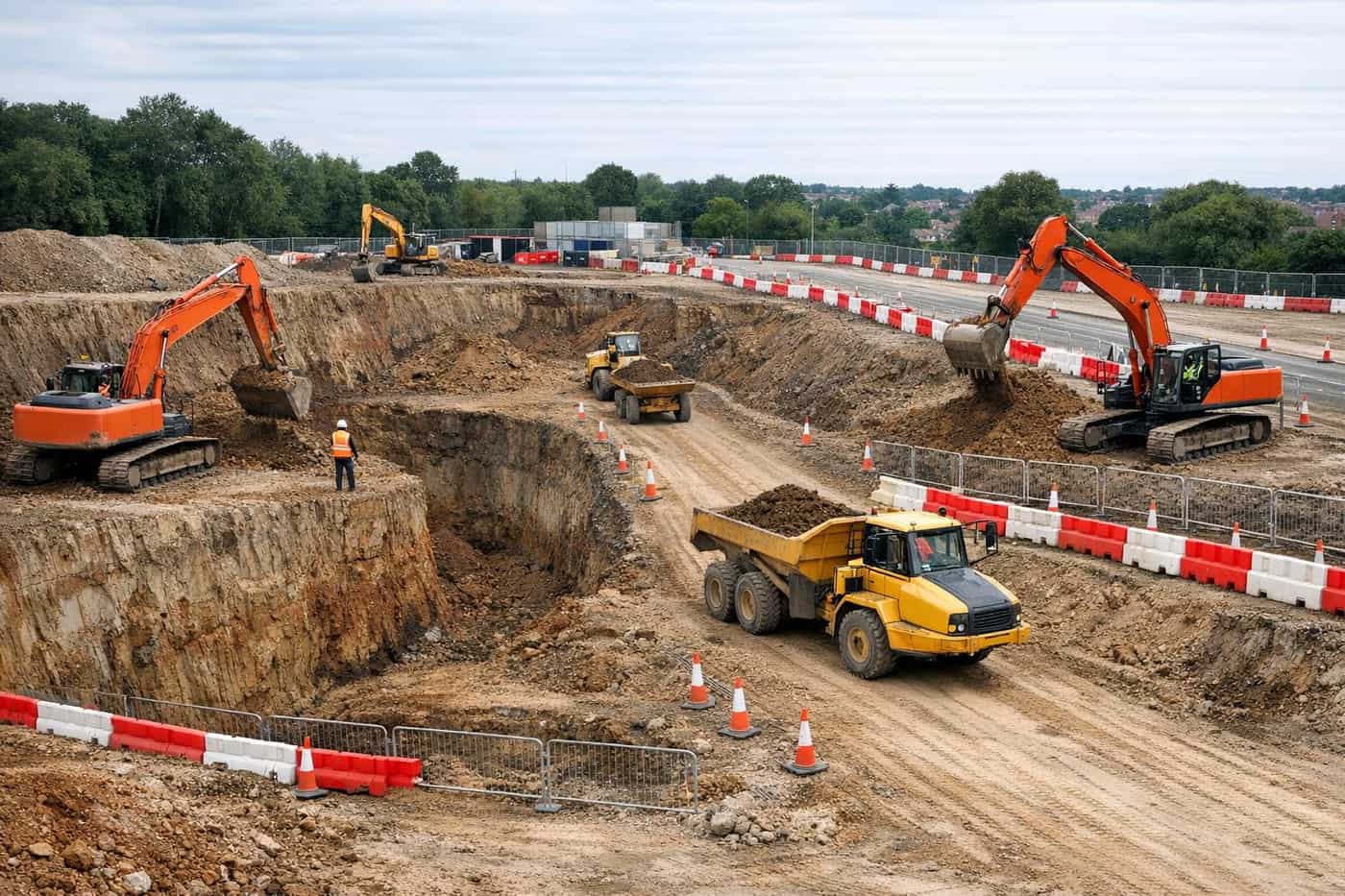
During peak dig, logistics is a queueing problem: tip turnaround, gate throughput, on-site passing places and holding areas where lawful. If any link in that chain is undersized, excavation output collapses regardless of digger count. Price prelims from that chain, not from a hoped wagon cycle time.
Plot production shares corridors with housebuilder trades. Concrete windows fail when access is blocked by unrelated deliveries. Rules of shared control must be written into packages — see groundworks procurement for housebuilders. Without rules, the loudest trade wins the gate and the critical pour loses.
Close-out and surfacing shrink the compound and protect finished works. Late damage is a classic cash and vesting killer: remobilisation to repair an adoptable layer can reopen inspection sequences and extend bond exposure long after marketing photos look complete.
| Phase | Logistics focus | Common failure |
|---|---|---|
| Enabling / set-up | Compound, first access, haul establishment | Compound on future adoptable road line |
| Bulk earthworks / infra | Peak muck-away; protect formation corridors | Haul damage to partly built sewers/roads |
| Plot production | Shared corridors with housebuilders’ trades | Blocked access; concrete windows missed |
| Close-out / surfacing | Shrink compound; protect finished works | Late damage forcing remobilisation |
Wet Weather and Ground Conditions
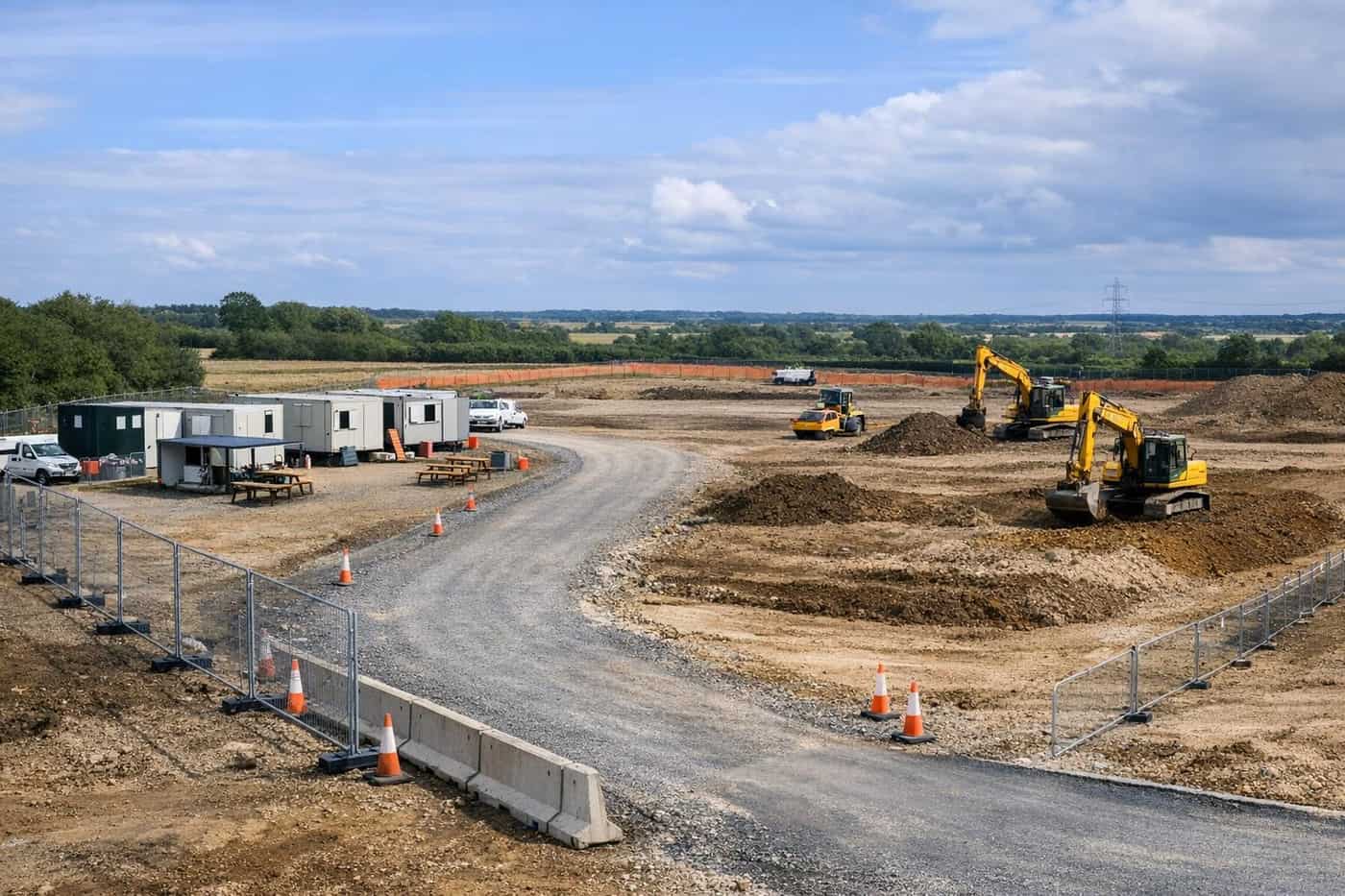
Wet weather turns weak haul into a programme event. Define stop criteria and recovery actions before the first storm — not during it.
Platforms, trackway and dedicated haul maintenance are logistics costs that protect earthworks and pavement quality. Cutting them is a false economy that shows up in remediation and delay — related thinking in groundworks value engineering.
Groundwater and soft ground amplify logistics failure. Couple logistics planning to GI reality from ground conditions risk explained.
Neighbour and Traffic Management Constraints
Urban and edge-of-town sites often face delivery hour limits, route restrictions and neighbour scrutiny. Requirements vary; confirm with the relevant highway authority and planning conditions rather than assuming a standard national rule.
Communication plans matter commercially: unexplained early-morning wagons create stoppages that no BOQ line recovers.
Where works affect the existing public highway, S278-related traffic management can dominate prelims — see S278 agreements explained and cost framing in roads and sewers costs.
Hypothetical: Constrained Urban Plot Logistics Failure
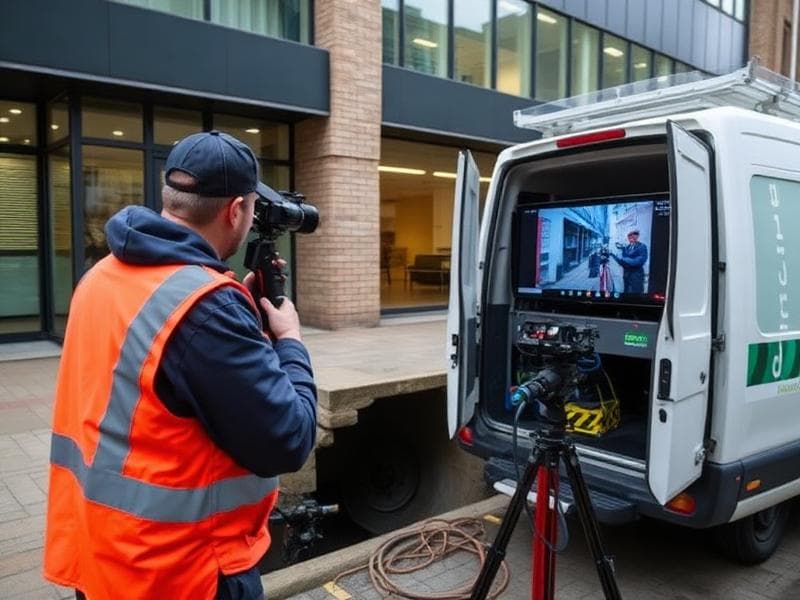
A hypothetical constrained urban commercial plot prices excavation aggressively but plans a single gate shared with an occupied neighbour’s access. Peak muck-away coincides with concrete pours; wagons queue on the highway; a temporary restriction follows; the dig pauses; concrete windows slip; standing time lands in the first valuation argument.
Recovery requires a revised logistics plan: staggered peaks, temporary holding arrangements where lawful, possible temporary compound relocation, and reset pour dates. The “cheap” dig price did not include the logistics system the site actually needed. Illustrative pattern, not a Mainline case study.
Logistics as a Prelims and Valuation Problem
Weak logistics does not only delay digs; it burns prelims and creates valuation noise. Standing time, double-handling, compound moves and haul repairs appear as disputed costs when the tender never described the movement system the site actually needed.
On adoption-led corridors, haul damage can reopen inspection sequences and extend bond conversations. That is why logistics sits beside roads and sewers costs and the S38 & S104 programme explained even when the logistics plan itself is temporary.
Price prelims from peak constraints: gate throughput, tip turnaround, passing places, wet-weather platforms and compound migration. Optimistic wagon cycle times are a common false economy — related thinking in groundworks value engineering.
Multi-package sites need a single logistics owner. If infrastructure, plotworks and housebuilder trades each invent routes, the corridor becomes a daily negotiation. Write ownership into groundworks procurement for housebuilders interface matrices.
Designing Logistics Before Award
Include a logistics drawing and narrative in the tender pack: access points, one-way logic, compound location and relocation stages, laydown zones, muck-away peaks, and rules for running on partly built adoptable layers.
Ask tenderers to state assumptions about delivery hours, tip availability and neighbour constraints. Returns that are silent on those assumptions are not comparable — they are incomplete.
Where S278 or live highway interfaces exist, traffic management can dominate prelim duration. Flag that early and keep process depth on S278 agreements explained.
After award, lock the logistics plan at pre-start and update it when waves change. An outdated logistics plan is as dangerous as an outdated drawing issue.
Common Mistakes
No logistics plan in the tender pack.
Compound on future adoptable road without restoration logic.
Single gate for peak muck-away.
No wet-weather stop/recovery rules.
Haul over partly built adoptable works.
Ignoring neighbour/TM constraints until the first complaint.
Inventing wagon rates without tip and gate reality.
Questions for Contractors and PMs
Where does peak muck-away turn and wait?
What is the wet-weather stop criterion?
How will the compound migrate as plots complete?
Who authorises haul over adoptable layers?
What neighbour or TM constraints are priced into prelims?
Integrating Logistics With Plot and Infrastructure Programmes
Logistics plans fail when they are drawn once at start and never updated as waves and packages change. Each major phase — enabling, bulk infra, plot production, close-out — needs a logistics refresh.
Plot production especially stresses shared gates: concrete, brick deliveries, muck-away and infrastructure remobilisation compete. Without rules, the loudest trade wins and critical pours lose — coordinate with plotworks explained and managing multiple plot programmes.
Infrastructure adoption works need protection rules written into the logistics plan: no haul on finished binder without temporary running surfaces; no stockpiles on manhole lines; repair responsibility named.
Wet-weather contingency should be rehearsed, not invented in the storm. Platforms, stop criteria and recovery sequencing belong in the plan before the first deep dig.
Logistics Readiness Checklist
1. Access and haul plan on drawings for each major phase.
2. Compound and welfare sized and relocatable.
3. Laydown segregation and security considered.
4. Muck-away chain matched to peak dig rates.
5. Wet-weather platforms and stop rules written.
6. Neighbour/TM constraints confirmed with caveats for local variation.
7. Protection rules for adoptable and finished works.
8. Logistics ownership stated in package interfaces.
Related commercial services
Related infrastructure guides
- Managing multiple plot programmesWave and corridor control on housing sites.Read guide
- Roads & sewers costsPrelim and TM cost centres linked to logistics.Read guide
- Common delay reasonsInsight on interfaces that move programmes.Read guide
- S38 & S104 programmeWhy haul damage to adoptable works matters.Read guide
Frequently asked questions
Is a logistics plan the same as temporary works design?
No. Logistics plans movement and space. Temporary works design for structural support remains with allocated designers where required.
Who should own the logistics plan?
Typically the principal contractor or lead groundworks package, coordinated with the client’s programme and any split packages. Ownership must be explicit.
Can we skip a formal plan on a small site?
Small sites still need access, spoil and neighbour logic. Informal assumptions fail when the first concrete and muck-away peak collide.
How does wet weather get priced?
Through prelims, platforms, haul maintenance and realistic float — not through pretending weather never happens. Exact mechanisms depend on the contract.
What about highway delivery restrictions?
They vary by authority and conditions. Confirm early and price prelims accordingly; do not assume unrestricted daytime access.
Plan logistics as hard as you plan dig quantities. Movement, space and weather resilience decide whether the programme survives contact with the site.
Planning logistics on a groundworks package?
Share access constraints, phasing and peak dig assumptions and we can discuss how logistics plans typically protect programme — without substituting for temporary works design.