
Who This Guide Is For
This guide explains contractor design responsibility on UK groundworks and infrastructure packages — what it means in practice, how it is allocated under common contract forms, and where ambiguity creates programme delay, variation disputes and adoption failure.
Developers must decide early which elements are contractor-designed, consultant-designed, or approval-dependent on third parties. Relying on the contractor to sort out adoption, utilities and highway comments without a clear matrix is a common source of final-account pain.
Quantity surveyors should price and administer contracts against an explicit design responsibility schedule — not assumptions inferred from generic design-and-build labels.
Procurement managers need employer's requirements, Scope and tender documents that align planning commitments, adoption strategy and design allocation before award.
Project managers must coordinate design submissions, authority approvals, temporary works control and CDM interfaces with the same clarity as physical construction.
Housebuilders on phased estates need to know whether the civils contractor owns detailed drainage and road design or only construction to consultant layouts — plot release depends on it.
Main contractors carrying subcontract design portions need PI cover, warranties and Scope flow-down that match what each party actually designs.
This guide links to NEC vs JCT, Groundworks Tendering, ECI, S38 & S104, S278, Utility Diversions, Drainage Adoption, Attenuation Systems, Ground Conditions, Infrastructure Bonds, Roads & Sewers Contractors and Groundworks Costs.
What Contractor Design Responsibility Means
Contractor design responsibility in UK groundworks sits anywhere from a narrow contractor-designed portion to full design-and-build liability, depending on the contract, scope, and amendments. In practice, the biggest risk is ambiguity: if the employer's requirements, technical approvals, and statutory interfaces are not clearly allocated, the contractor, developer, and design team can all end up arguing over who owns the problem.
Contractor design responsibility means the contractor is responsible for preparing, completing, coordinating, and often warranting the design of specified parts of the works. Under JCT design and build, the contractor designs the works it is required to design, but the unamended form does not automatically make it responsible for the adequacy of all employer-provided design. Under NEC ECC, the contractor designs only the parts of the works the Scope says it must design, and the wording of the Scope is critical.
In groundworks, that can include temporary works, permanent works, drainage layouts, earthworks profiles, pavement build-ups, retaining structures, site-wide levels, attenuation systems, and utility coordination where the contract transfers that risk.
Design responsibility is not the same as obtaining statutory approval. A contractor may design adoptable drainage but the developer may still own S104 agreement execution, bond provision and land rights — see Infrastructure Bonds & Sureties.
| Work element | Typical employer / consultant | Typical contractor | Commercial risk if unclear |
|---|---|---|---|
| Strategic drainage concept | Developer / drainage consultant | Detailed design if Scope allocates | Contractor prices build-only but asked to redesign for adoption |
| Temporary works | Specialist designer only if retained | Design, check, coordinate per BS 5975 practice | Platform or trench support failure; redesign cost disputes |
| Adoptable roads (S38) | Consultant layout; authority approval strategy | Detailed highway build-up and construction compliance | Level clashes with drainage; adoption rejection |
| Adoptable sewers (S104) | Strategic outfall and capacity | Construction to DCG; detailed design if transferred | Non-adoptable assets discovered late |
| Attenuation / SuDS | Planning performance requirements | Engineered solution if performance spec used | Concept vs adoptable finished solution dispute |
| Utility diversions | Strategy and agreements with undertakers | Coordination, protection, sometimes diversion design | Provisional sum vs fully designed diversion scope |
A written design responsibility matrix attached to the contract beats generic design-and-build labels in tender documents.
Procurement Routes And Design Allocation
Design and build procurement is common on groundworks-heavy schemes because it creates a single point of responsibility for design completion and construction. That approach can help with programme, buildability, and cost certainty, but only if the employer's requirements are clear enough to define what is included and what remains a developer or consultant risk.
By contrast, a traditional route keeps most design with the employer's consultants, while the contractor builds to the issued design. Even then, groundworks contractors often carry discrete design duties for temporary works, excavation support, piling, shoring, access roads, or specialist systems such as attenuation tanks and drainage components.
| Route | Design allocation | When it suits groundworks |
|---|---|---|
| Design and build | Contractor completes specified design portions; single point for design completion and construction | Buildability-led packages where employer's requirements are clear |
| Traditional | Consultant design; contractor builds to issued drawings | Mature employer design with discrete contractor duties for temporary works / specialists |
| Performance specification | Contractor engineers means to achieve defined outcomes | Attenuation, pavement, settlement or discharge criteria where contractor best placed to solve |
| Two-stage / ECI | Design development during Stage 1 before construction commitment | Complex utilities, adoption and ground risk before design freeze |
Two-stage and ECI routes develop design allocation during Stage 1 before construction commitment — useful when adoption, utilities and ground risk are not frozen at tender.
The Groundworks Tendering Guide supports evaluation of design capability and scope clarity — not only price.
Performance Specifications
A performance specification defines the outcome rather than prescribing every detail. For groundworks, that often means requirements such as carriageway load capacity, allowable settlement, discharge rates, water quality performance, infiltration limits, adoptable standards, or finished levels rather than a fully drawn solution.
This is useful where the contractor is better placed to engineer the solution, but it also shifts risk. If the spec says the system must achieve a set performance and the contractor designs the means, the contractor may bear the cost of making the design work, unless the contract says otherwise.
Performance specs are common for attenuation systems, pavement design and settlement criteria. Tender returns must state what investigations and assumptions underpin the proposed solution.
Employers should attach minimum information — GI summary, levels, discharge rates, adoption intent — so contractors price performance rather than guess.
Contractors should flag underdefined performance criteria as commercial risk at tender, not discover them at authority comment stage.
Temporary Works Design
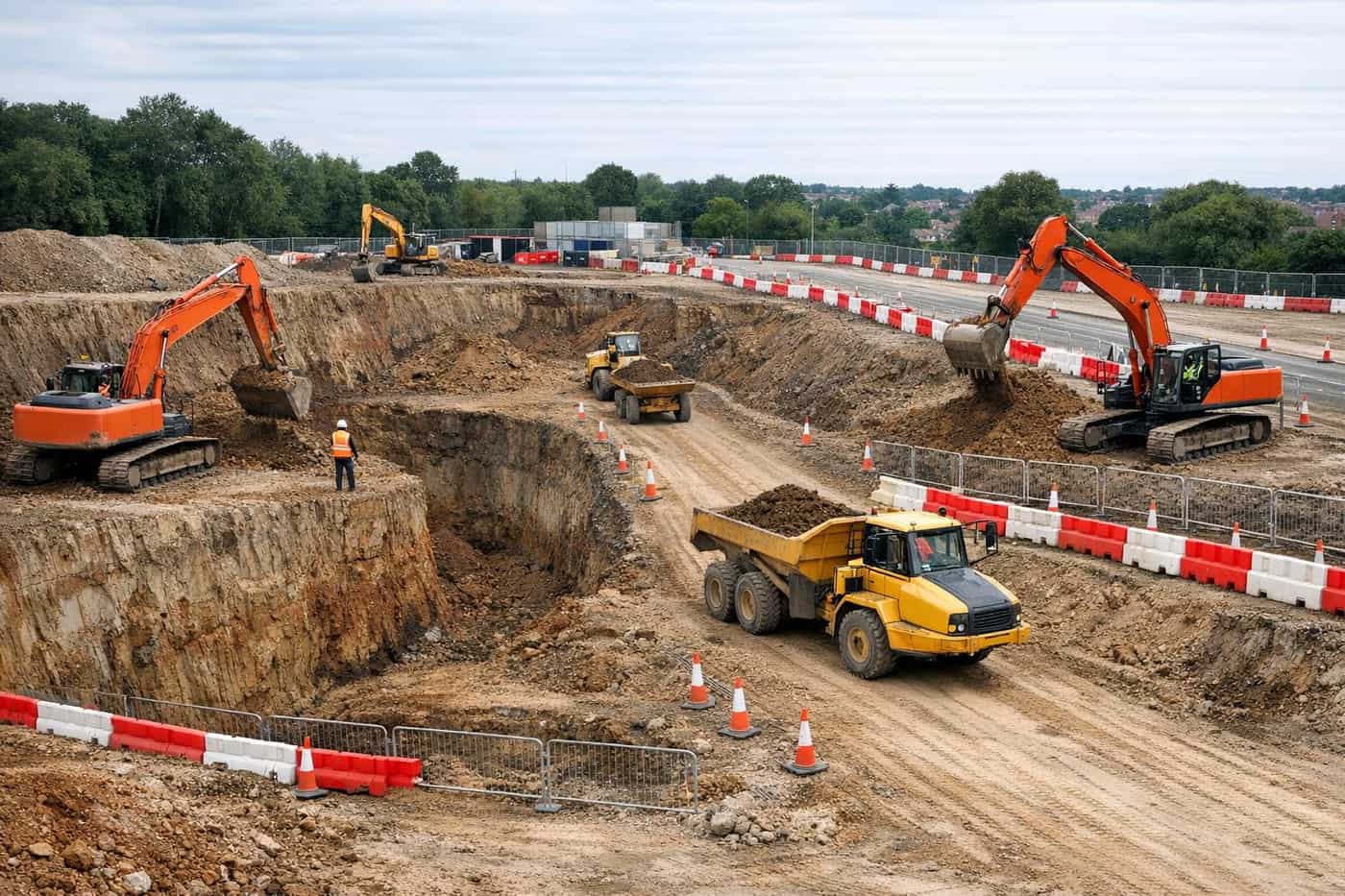
Temporary works are the short-term arrangements needed to build the permanent works, such as excavation support, propping, falsework, working platforms, haul roads, temporary drainage, and access arrangements. HSE and BS 5975-based practice make clear that temporary works require careful design, checking, and coordination, even where they will later be removed.
On groundworks projects, temporary works are often the contractor's responsibility unless the employer retains a specialist designer. That includes sequencing and stability during deep excavations, trench support, dewatering interfaces, and platform design for cranes, piling rigs, and plant.
Temporary/permanent overlap creates disputes when haul roads, platforms or support later form part of finished works — define transition and who pays for redesign and checking.
CDM duties require coordination of temporary works with the permanent design. Design responsibility matrix should name temporary works designer, checker and approver.
Permanent Works Design
Permanent works are the parts intended to remain in place for the long term, such as foundations, roads, retaining walls, drainage assets, and completed earthworks. Where the contractor has design responsibility, it must ensure those works satisfy the Scope, statutory requirements, and the relevant adoptable or technical standards.
In groundworks, permanent works design can overlap heavily with civil engineering design, especially where roads, sewers, site levels, earthworks, retaining structures, and drainage are all interdependent. This is where design coordination matters most, because changing one element can affect many others.
Latent ground conditions can force permanent works redesign — contract must state whether that is employer risk, compensation event, or variation.
Contractors should maintain a design coordination register linking earthworks, drainage, roads and structures with revision status and approval milestones.
Drainage Design Duties
Drainage responsibility is one of the most disputed areas on development projects. Section 104 adoption is relevant to sewers and related drainage assets intended for adoption by the water company, while assets mainly serving highway drainage, land drainage, or groundwater are not automatically covered in the same way.
Design responsibility should be split clearly between the drainage consultant, contractor, and adopting authority. The contractor may be responsible for construction to an adopted standard, but the employer often retains strategic design risk unless the contract transfers it expressly.
The Drainage Adoption Process guide covers S104 technical approval — contractor design duty should include producing submission-quality details if Scope allocates detailed design.
Highway drainage under S38 may sit with a different approval track than foul and surface water under S104 — integrated design coordination is not optional.
Employers retaining strategic outfall and capacity risk should not imply contractor owns hydraulic redesign when undertaker comments arrive.
Attenuation Systems Design
Attenuation systems are often at the centre of groundworks design risk because they combine drainage, storage volume, maintenance access, structural loading, and adoption considerations. Recent guidance has expanded the practicality of adopting certain below-ground attenuation forms, including arch-shaped structures, provided the design satisfies the relevant standards and water company requirements.
If the contractor is required to design the attenuation system, it must prove hydraulic capacity, cleaning access, groundwater protection, and compatibility with any highway loading or adopted asset requirements. If those requirements are only partly defined, disputes often arise over whether the contractor was pricing a concept or a finished adoptable solution.
Read Attenuation Systems for Developers for planning, adoption and maintenance interfaces that should appear in the design brief.
Performance specs for discharge rate and storage without maintenance access detail are a common dispute trigger.

Roads And Sewers Design
Roads and sewers are usually split between highway and drainage regimes, which creates a classic responsibility trap on mixed-use or housing schemes. Section 38 and Section 278 works affect adoptable roads and works in the highway, while Section 104 governs sewer adoption for qualifying drainage assets.
The contractor may be asked to design and build all or part of the roads and sewers package, but the developer still needs the technical approvals, land rights, programme coordination, and adoption strategy aligned from the outset. A common problem is assuming a drainage layout approved in principle will also satisfy road levels, services, and adoptability without redesign.
The S38 and S104 Programme Explained, S278 Agreements Explained, Adoptable Roads Explained and Roads & Sewers Contractors Guide support integrated planning — design responsibility should mirror the same integration.
Contractor-designed pavement build-up must meet authority standards — employer concept levels alone do not discharge design duty if Scope transfers detailed highway design.
Utility Coordination And Diversion Design
Utility diversions are a frequent groundworks interface risk because existing services can constrain foundations, drainage runs, roads, and excavations. Asset owners retain ownership of the apparatus, but the contractor is normally responsible for coordinating safe construction, verification, and avoidance of service strikes during the works.
Good practice is to identify utilities early, confirm records with detection and verification, and allocate diversion design and execution responsibilities before starting on site. Where the contract makes the contractor responsible for diversions, the scope should define whether that includes design, permits, outage planning, protection, and third-party approvals.
The Utility Diversions for Development Sites guide maps undertaker processes — scope must state whether contractor designs diversion layouts or only builds undertaker-approved designs.
Provisional sums for diversions without design status create scope creep when the contractor is assumed to own detailed design.
Service protection and verification during excavation are normally contractor coordination duties even when diversion design sits with undertakers.
Insurance And Warranties
Professional indemnity insurance is relevant where the contractor or its designers are carrying design risk, because the policy is commonly the first financial backstop for design negligence claims. On design-and-build groundworks, contractors should check that PI cover extends to the actual design scope, including drainage, temporary works, and specialist civils elements.
Design warranties and collateral warranties matter because funders, purchasers, and future owners often want direct rights against the designer or contractor. Warranties should match the design responsibility matrix; otherwise, a party may give a warranty for work it did not actually control.
Employers should require PI evidence for design portions at tender and renewal confirmation during the works.
Collateral warranty schedules should follow the matrix — warranting adoptable drainage design requires the party who actually produced and approved that design.
NEC And JCT Design Allocation
Under JCT Design and Build, the contractor is responsible for completing the design of the works it undertakes, but the detail of liability depends heavily on the employer's requirements and amendments. In amended forms, contractors are often made the single point of design responsibility, including for errors or inadequacies in employer-provided information.
Under NEC ECC, responsibility follows the Scope: the contractor designs only the items the Scope allocates to it, and if X15 is used, that can alter the design obligation toward reasonable skill and care. For groundworks, NEC can work well if the Scope cleanly separates drainage, roads, earthworks, temporary works, and utility interfaces.
| Topic | JCT Design and Build | NEC ECC |
|---|---|---|
| What contractor designs | Works required to design per employer's requirements; unamended form does not automatically make contractor responsible for adequacy of all employer-provided design | Only parts of the works the Scope says contractor must design |
| Employer information | Amended forms often make contractor single point including employer information errors | Scope must cleanly separate employer vs contractor design portions |
| Design standard | Depends on contract amendments and requirements | X15 option can alter obligation toward reasonable skill and care |
| Groundworks implication | Employer's requirements quality drives dispute risk | Scope must separate drainage, roads, earthworks, temporary works, utilities |
Read NEC vs JCT for Groundworks Projects for wider compensation event and change mechanics when design development continues on site.
Amended JCT clauses that transfer employer information risk need explicit tender disclosure — contractors price unknown design liability into contingency or exclusions.
Commercial Risks
The main commercial risk is scope creep: a contractor prices one design burden, then ends up carrying another after approvals, adoption comments, utility conflicts, or statutory changes emerge. The next biggest risk is delay, because drainage approvals, utility diversion agreements, and highway authority sign-off can sit on the critical path.
Other common risks include latent ground conditions, differing site levels, contaminated land, groundwater, and the need to redesign to meet adoption or loading criteria. If the contract does not define who owns those risks, the project team often discovers the gap after excavation has already started.
Design responsibility ambiguity inflates groundworks costs through redesign, standing time and repeat submissions — model the risk at feasibility.
Bond and adoption delay from redesign sits on the developer cashflow even when the contractor carries design duty — programme risk is shared commercially.
Developer Duties
Developers should define the procurement strategy early and make sure the employer's requirements, planning commitments, and adoption strategy are aligned. They also need to secure land rights, technical approvals, and third-party interface agreements for highways, drainage, and utilities before relying on the contractor to sort it out.
In practice, the developer should decide which elements are meant to be contractor-designed, which remain consultant-designed, and which depend on external approval. That allocation should be reflected in the contract, schedules, and design responsibility matrix.
Planning conditions and LLFA submissions should be consistent with the design split — do not commit to adoptable SuDS in planning if the contract only requires contractor to build a concept.
Land rights and easements for off-site sewers remain employer duties even when the contractor designs the pipe alignment.
Contractor Duties
Contractors should check the scope carefully, price the actual design burden, and identify ambiguities before contract award. They should also confirm who is producing the drainage, highways, temporary works, and utility diversion design, and whether they are required to obtain adoption-ready approvals.
During delivery, the contractor must coordinate design, construction, inspections, temporary works control, and statutory compliance under CDM and any relevant highway or water company requirements. If the scope is unclear, the contractor should treat that as a commercial and technical risk issue, not an assumption.
Maintain design trackers, submission logs and approval comment closure registers alongside physical progress.
Flow-down design duty to specialist subs with matching PI and warranties where subs produce portion designs.

Common Disputes
Typical disputes involve whether the contractor was responsible for design adequacy or only construction to an employer-issued concept. Others arise over whether drainage or attenuation schemes were meant to be adoptable, whether highway works were included in the price, or whether utility diversion works were provisional or fully designed.
Another frequent issue is the split between temporary and permanent works, especially where a temporary platform, haul road, or excavation support later becomes part of the finished works. That overlap can create arguments about who should pay for redesign, checking, and sign-off.
Employer's requirements inconsistencies — planning drawings versus tender Scope — are a root cause. QS teams should reconcile before award.
Late undertaker or authority comments are often argued as employer change versus contractor design duty — contract change mechanisms (NEC vs JCT) need to be used early.
Why disputes happen so often: employer's requirements, adoption criteria, approvals, and construction risk are often not aligned before tender, so the parties later disagree about what the contractor actually priced.
Developer And Procurement Checklist
Use this checklist before tender issue and contract award on groundworks packages with contractor design elements.
Related project scenarios
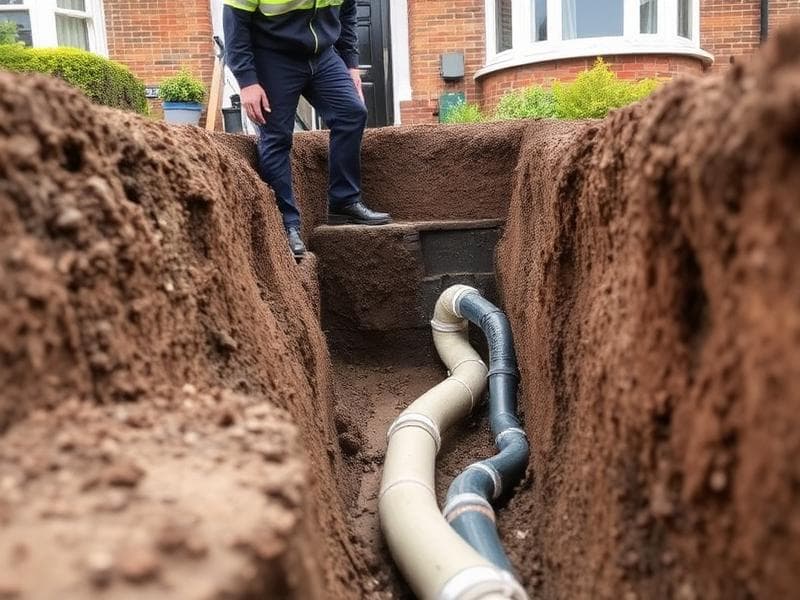
Housing development — contractor-designed drainage
Contractor-designed attenuation, gullies, adoptable foul and surface water sewers with S104 coordination on a phased residential scheme.
Procurement challenge: Employer's requirements described a planning-level concept but tender assumed the contractor would deliver an adoption-ready detailed design. Water company comments required hydraulic revisions after mobilisation.
Commercial outcome: Programme: eight-week slip on first phase drainage while detailed design was reworked for DCG compliance. Cost: redesign, extra testing and contractor variation claim disputed as included scope. Procurement: design responsibility matrix missing at award — [groundworks tendering](/guides/tendering-groundworks-packages) evaluation did not score design depth. Delivery: clarified split between strategic consultant concept and contractor detailed design before phase two.

S278 road improvement — contractor highway design
Section 278 works requiring detailed highway design, phasing, temporary traffic management and construction to highway authority satisfaction.
Procurement challenge: Contractor priced construction to concept drawings but scope silently included detailed design to authority standards. TM interfaces and service protection were underdefined in employer's requirements.
Commercial outcome: Programme: authority comment cycles extended pre-start by ten weeks. Cost: additional designer resource and TM revisions not in original lump sum. Procurement: NEC Scope amended mid-Stage 1 after [ECI](/guides/early-contractor-involvement) clarified allocation. Delivery: separate design deliverable schedule with authority submission milestones prevented repeat dispute on phase two.

Industrial logistics site — utilities and temporary works
Utility diversions, piled retaining edges, heavy-duty slab and deep excavation with buried services across a brownfield plot.
Procurement challenge: Contractor responsible for temporary works and permanent works coordination but utility diversion design sat with undertakers. Temporary haul road later formed part of finished access — overlap blurred cost allocation.
Commercial outcome: Programme: service strike near-miss triggered redesign of trench support and diversion sequencing. Cost: latent [ground conditions](/guides/ground-conditions-risk-explained) drove retaining redesign — ground risk not allocated in contract. Procurement: performance spec for slab settlement without GI appendix produced competing design assumptions at tender. Delivery: design responsibility matrix and PI warranty schedule aligned before main civils start.
Related commercial services
Related infrastructure guides
- NEC vs JCT for Groundworks ProjectsDesign liability, Scope and change control.Read guide
- Groundworks Tendering GuideEvaluating design capability and scope at award.Read guide
- Early Contractor InvolvementDeveloping design allocation before fixed price.Read guide
- Drainage Adoption ProcessS104 design vs adoption approval duties.Read guide
- Attenuation Systems for DevelopersPerformance specs and adoptable SuDS design.Read guide
- S38 & S104 Programme ExplainedIntegrated roads and sewer design coordination.Read guide
- S278 Agreements ExplainedContractor highway detailed design on public works.Read guide
- Adoptable Roads ExplainedS38 design and authority compliance.Read guide
- Roads & Sewers Contractors GuideProcuring design-and-build infrastructure packages.Read guide
- Utility Diversions for Development SitesDiversion design vs coordination scope.Read guide
- Ground Conditions ExplainedGround risk and redesign allocation.Read guide
- Infrastructure Bonds & SuretiesApprovals and bonds alongside design duty.Read guide
- Groundworks pricing calculatorPricing design burden and redesign risk.Read guide
Frequently asked questions
Who usually owns design risk in groundworks?
It depends on the contract. Design-and-build or amended JCT/NEC forms often push more risk to the contractor for specified design portions. The design responsibility matrix should state the split explicitly.
Is the contractor responsible for adoptable drainage?
Often yes for construction and sometimes for detailed design, but the allocation must be stated clearly and aligned with Section 104 adoption requirements — see drainage adoption guide.
Are attenuation tanks always adoptable?
No. Adoption depends on drainage standards, water company requirements, and the specific system design. Contractor design duty should match the adoption intent defined in the brief.
Does the contractor design temporary works?
Usually yes for the parts needed to build the works, unless the contract says otherwise. HSE and BS 5975-based practice require design, checking and coordination.
Where do utility diversions sit in design responsibility?
Often a shared risk area. Safe coordination and verification during construction are generally the contractor's responsibility; diversion design, permits and undertaker agreements must be allocated in Scope.
Why do design responsibility disputes happen so often?
Because employer's requirements, adoption criteria, approvals, and construction risk are often not aligned before tender, so parties later disagree about what the contractor priced.
What is the difference between JCT and NEC design allocation?
JCT Design and Build makes the contractor responsible for completing design of works it undertakes, subject to employer's requirements and amendments. NEC ECC follows Scope — contractor designs only what Scope allocates.
What is a performance specification in groundworks?
A spec defining required outcomes — discharge rate, load capacity, settlement limits, adoptable standards — rather than a fully prescriptive drawn solution. Means-and-methods risk usually sits with the contractor unless contract states otherwise.
Does JCT Design and Build make the contractor liable for all employer drawings?
Not in the unamended form. Amended contracts often transfer more employer information risk — tender and contract must state which version applies.
What is NEC Option X15 relevance to design?
If used, X15 can alter the contractor's design obligation toward reasonable skill and care. Scope and option structure must be read together on groundworks packages.
Who obtains S38 and S104 technical approvals?
Often shared: contractor may produce detailed design submissions while the developer holds agreements, bonds and land rights. The matrix should name submission ownership and approval milestones.
Is contractor design the same as design and build procurement?
Not exactly. Design and build is a procurement route; contractor design responsibility describes which portions the contractor must design within any route, including some traditional contracts with specialist design duties.
What insurance is needed for contractor design?
Professional indemnity insurance covering the actual design scope — drainage, temporary works, civils elements — is commonly required where design risk is transferred.
What are collateral warranties for?
They give funders, purchasers or future owners direct rights against the designer or contractor. Warranties should match who controlled the relevant design.
How does ground conditions affect design responsibility?
If the contractor designs foundations, earthworks or drainage without adequate GI, redesign from latent conditions becomes a major dispute area — allocate ground risk in contract and investigation appendices.
Can ECI clarify design allocation before award?
Yes. Stage 1 can develop the design responsibility matrix, Scope content and target price before Stage 2 construction — see early contractor involvement guide.
What is a design responsibility matrix?
A schedule listing each work element, who designs it, who approves it, who warrants it, and who obtains statutory consents — attached to employer's requirements or Scope.
Who designs S278 highway details?
Depends on contract. Contractor may design detailed highway layout, phasing and TM interfaces to authority satisfaction, while the developer holds the S278 agreement.
What happens when temporary works become permanent?
Define in contract whether redesign, checking and sign-off for permanent use are contractor or employer cost. Overlap without rules is a frequent dispute source.
What should contractors check before signing a design-and-build civils contract?
Scope of design portions, employer information reliance, adoption duties, utility diversion design, temporary works, PI cover, approval milestones, and ambiguities flagged as tender qualifications or Stage 1 risks.
Contractor design responsibility is not a label you paste on a civils package. It is a precise allocation of who prepares, coordinates, warrants and submits each part of the works — from temporary platforms and trench support through to adoptable drainage, attenuation and highway details. When that allocation is vague, every undertaker comment, utility clash and ground surprise becomes a commercial argument.
For developers, quantity surveyors, procurement managers, project managers, housebuilders and main contractors, the preventive work happens before tender: a design responsibility matrix aligned with planning, adoption strategy and contract form; employer's requirements that match what you will actually procure; and tender evaluation that scores design depth, not only construction rate.
NEC Scope and JCT employer's requirements are the documents that decide who owns the problem. BS 5975-based temporary works practice, S104, S38 and S278 interfaces, and utility diversion scope all need named owners — not assumptions buried in a design-and-build header.
Use the checklist and related guides to stress-test allocation before award. Then administer changes through the contract when approvals reveal what the tender documents left silent — rather than discovering design duty at final account.
Mainline Groundworks delivers groundworks and infrastructure with clear scope on design-and-build, adoptable roads and sewers, drainage and utility interfaces. Share your employer's requirements, adoption status and procurement route and we will advise on design allocation and delivery structures that reduce ambiguity from day one.
Discuss design responsibility on your package
Share your procurement route, adoption scope and employer's requirements — we will advise on design allocation and delivery options.