
This guide is written for commercial and technical teams who need a practical understanding of bond mechanics without losing the legal and adoption context. Use it when scoping infrastructure, negotiating agreements, or reviewing contractor and consultant proposals.
Property developers
Understand how bond exposure affects viability, funding, and when capital returns after adoption.
Housebuilders
See how roads, sewers and highway bonds interact with plot release, occupation and phased sales.
Principal contractors
Manage adoption interfaces, inspection records and subcontractor performance against bond milestones.
Commercial managers
Treat bonds as programme and cash-flow controls, not one-off legal tasks at agreement stage.
Quantity surveyors
Structure allowances for bond values, release assumptions and risk on infrastructure cost plans.
Civil engineers
Align technical approval, defects liability and adoption documentation with bond reduction criteria.
Development managers
Coordinate S278, S38 and S104 workstreams so adoption delays do not extend security unnecessarily.
What Is An Infrastructure Bond?
An infrastructure bond is a form of financial security provided to a third party—typically a highway authority or sewerage undertaker—to guarantee that infrastructure works will be completed to an adoptable standard.
Its core purpose is risk transfer. If a developer or contractor fails to complete the works, the bond provider (usually a surety or bank) steps in financially so the authority can complete or rectify the infrastructure.
Key functions: provides performance security against incomplete works; protects public assets and ensures infrastructure meets adoption standards; guarantees funding for completion if the developer defaults.
From a commercial perspective, the bond underwrites the developer's obligations under statutory agreements. It is not insurance in the traditional sense; it is a callable financial guarantee tied to specific delivery outcomes.
Typical scenarios where bonds become critical: contractor insolvency during infrastructure works; developer cashflow issues halting construction; works completed but failing inspection or adoption criteria.
Why Authorities Require Bonds
Local authorities and utility providers cannot rely solely on contractual commitments or developer intent. Infrastructure tied to public use—roads, sewers, drainage—must be completed to a standard that protects long-term users and taxpayers.
Authorities require bonds to mitigate: public safety risks from incomplete or substandard infrastructure; long-term maintenance liabilities; financial exposure if a developer fails mid-project.
Without bonds, authorities would risk inheriting partially completed assets with no guaranteed funding to rectify them. Bonds ensure that adoption standards are enforced and that infrastructure can be completed independently of the developer's financial position.
On schemes where commercial groundworks and adoptable infrastructure are procured together, bond requirements should be visible in the feasibility model before land purchase — not discovered at technical approval.
Types Of Infrastructure Bond
Different bonds protect different beneficiaries and outcomes. The table below summarises the forms most commonly encountered on UK development sites.
| Bond type | Purpose | Required by | Trigger | Release |
|---|---|---|---|---|
| S278 highway bond | Secures off-site highway works | Highway authority | Works affecting existing highway | Post-completion and inspection |
| S38 road bond | Secures adoptable estate roads | Highway authority | New road construction | After maintenance period |
| S104 sewer bond | Secures adoptable drainage systems | Sewerage undertaker | Sewer construction | After adoption and defects period |
| Utility security | Covers connections and diversions | Utility providers | Service installation | Upon completion and sign-off |
| Performance bond | Protects employer from contractor failure | Employer / developer | Contractor default | On completion or expiry |
| Parent company guarantee | Corporate backing for obligations | Employer or authority | Contractual requirement | At completion |
Performance bonds and parent company guarantees often sit alongside adoption bonds on the same scheme. Commercial teams should track each instrument separately because triggers, beneficiaries and release dates differ.
S278 Highway Bonds Explained
S278 agreements apply where works are required on the existing public highway to facilitate a development. This includes site access junctions, traffic signals, pedestrian crossings, highway widening or improvements.
The highway authority requires a bond before works commence to ensure delivery.
Commercial considerations: bond value is typically linked to estimated construction cost plus contingency; approval of technical design is required before bond execution; delays in approval can push programme critical milestones.
Programme impact: no bond = no start on highway works; delayed highway works can restrict site access and occupations.
For a detailed breakdown of agreement mechanics, see S278 agreements explained. Delivery is often led by specialist Section 278 contractors with authority inspection experience.

S38 Road Adoption Bonds Explained
S38 agreements govern the construction and adoption of new estate roads.
Key components: roads must be built to adoptable standards; a maintenance (defects) period typically follows completion; the bond remains in place until the authority adopts the road.
Release structure: partial reduction after practical completion; remaining value held through maintenance period; final release after defects are resolved.
Commercial risks: delays in inspections extend bond duration; poor record-keeping can prevent adoption sign-off.
Related guidance: roads and sewers delivery and Section 38 contractors with adoption-track record.
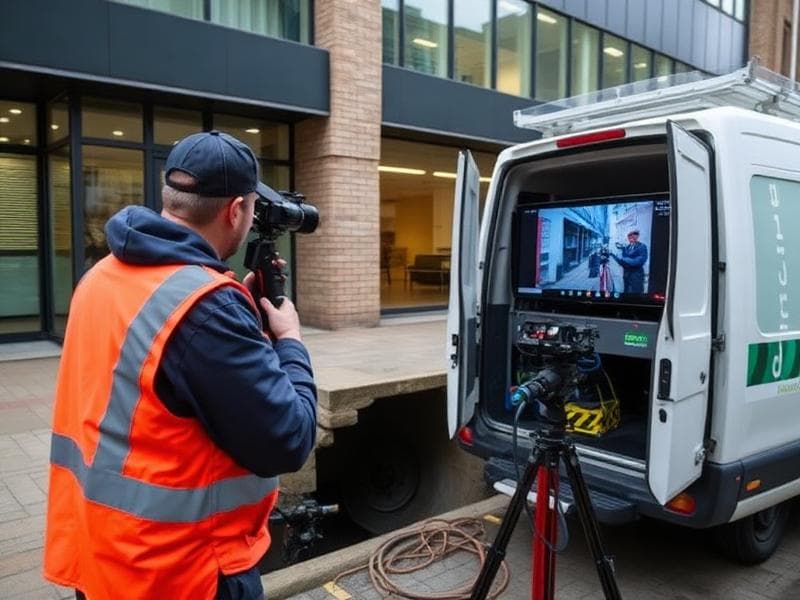
S104 Sewer Adoption Bonds Explained
S104 agreements relate to the construction and adoption of drainage infrastructure, including foul water systems, surface water drainage and pumping stations.
The sewerage undertaker requires a bond to ensure systems are completed and compliant.
Key stages: technical approval of drainage design; inspection during construction; vesting (transfer of ownership); maintenance period before adoption.
Programme sensitivity: drainage often precedes other works; delays in approval or inspection can cascade into site-wide delays.
Further reading: Section 104 contractors and commercial drainage contractors for wet infrastructure coordination with roads and highway tie-ins.
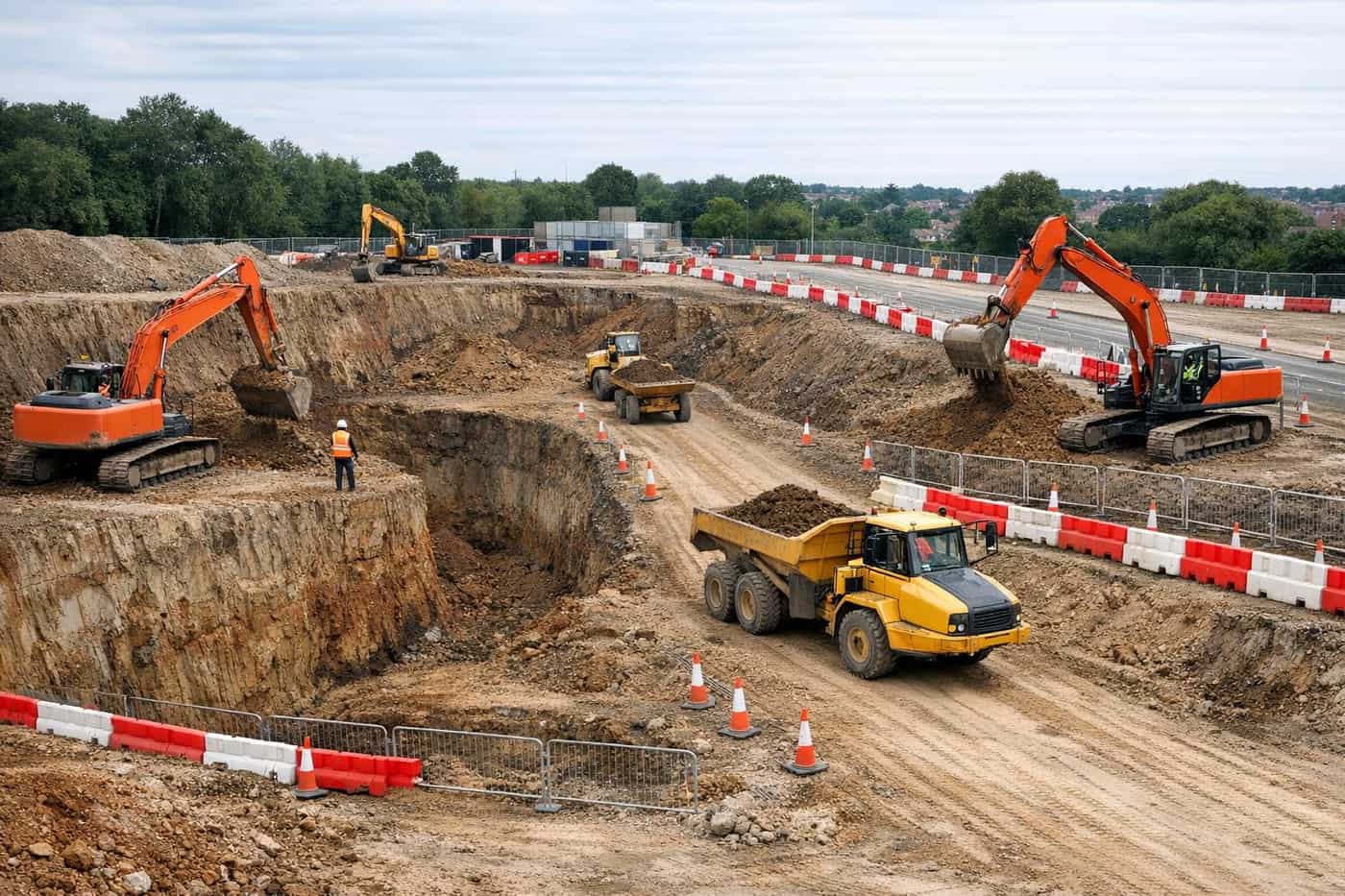
Performance Bonds Vs Adoption Bonds
Performance bonds and adoption bonds serve different stakeholders and risks.
Performance bonds protect the employer (developer), are triggered by contractor failure, and are linked to construction contracts.
Adoption bonds protect authorities or utilities, ensure infrastructure completion and compliance, and are linked to statutory agreements.
The key distinction is beneficiary and purpose: performance bonds protect project delivery, while adoption bonds protect public infrastructure outcomes. Both can affect liquidity if called or if release is delayed.
How Infrastructure Bonds Are Calculated
Bond values are not arbitrary — authorities and undertakers set security by reference to the cost and risk of completing the approved works if the developer fails. This section explains the factors typically considered. It does not quote percentages or formulae, which vary by authority, scheme and bond provider.
Estimated construction values form the starting point. The approved design, bill of quantities or contractor pricing sets the base cost of delivering the infrastructure to adoption standard.
Risk allowances reflect complexity — traffic management on live highways, deep sewers, pumping stations, poor ground, or constrained access can increase the security required beyond bare construction cost.
Authority requirements may include minimum security levels, staged bond values for phased schemes, or additional cover where previous performance on the network is weak.
Phased developments may need separate bonds per phase, or a single bond with staged reductions tied to adoption milestones. Cash-flow models must reflect overlapping bonds, not only the largest single value.
Inflation adjustments can apply where design approval and construction are separated by long periods — particularly on large infrastructure programmes reviewed annually by the authority.
Contingencies for unknown utilities, redesign after road safety audit, or extended defects liability are often implicit in the bond discussion even if not labelled as contingency in the agreement.
Quantity surveyors and development managers should reconcile bond assumptions with the S38 and S104 programme and any parallel S278 highway scope so the total secured exposure is visible to lenders.
Bond Reduction And Partial Release
Bond release is rarely a single event at practical completion. Most adoption routes include interim reductions, a retained balance through defects or maintenance, and final cancellation only after adoption or vesting. Understanding the pattern for each agreement type is essential for cash-flow forecasting.
Practical completion is usually the first major milestone. Authorities and undertakers may agree to reduce the bond to reflect that the works are substantially built, while retaining enough security to cover outstanding defects and completion items.
Defects periods — especially under S38 estate roads — keep a portion of the bond active while the authority monitors performance through seasonal cycles. Snagging and minor non-compliance during this window can delay reduction.
Interim reductions should be documented with clear criteria: which inspections are satisfied, which records are lodged, and what remains outstanding. Teams that treat reduction as automatic often discover months of delay when a single inspection item is open.
Final adoption or vesting is the commercial end point for adoption bonds. Until the asset is adopted (roads) or vested and accepted (sewers), the authority or undertaker has reason to maintain security.
Vesting processes under S104 require completed construction, testing, as-built information and undertaker sign-off. Bond reduction tracks those steps — not only the contractor's view of completion.
| Agreement | Typical reduction trigger | What remains secured | Final release driver |
|---|---|---|---|
| S278 | Practical completion and satisfactory highway inspections | Defects, snagging, outstanding authority conditions | Final sign-off of highway works under the agreement |
| S38 | Practical completion of adoptable estate roads | Maintenance period defects and adoption records | Road adoption by highway authority after maintenance |
| S104 | Completion of drainage works and testing milestones | Vesting conditions, defects and undertaker sign-off | Sewer adoption after vesting and defects clearance |
S278 example: a junction upgrade reaches practical completion and passes staged highway inspections. The authority agrees to reduce the bond by an agreed proportion, retaining cover for snagging, traffic signal commissioning and final surface course.
S38 example: estate roads are substantially complete and the maintenance period begins. The bond reduces after practical completion but a significant balance remains until adoption — often twelve months or more after the last house is built.
S104 example: sewers are built and tested; vesting is progressing but a pumping station record or CCTV survey is outstanding. The undertaker withholds final bond release until vesting conditions are met, even if above-ground works look finished.
Projects that align roads and sewers delivery with a single adoption tracker generally achieve faster partial release than those managing highway and drainage bonds in isolation.
What Happens If A Bond Is Called?
A bond call is the enforcement mechanism when the developer fails to meet obligations under the agreement. It is relatively rare on well-managed schemes but commercially severe when it happens. Teams should understand the process before signing, not after a default.
Contractor failure mid-package can leave the authority with incomplete highway or drainage. If the developer does not appoint a replacement and complete works, the authority may call the bond to fund completion or remediation to the approved standard.
Developer insolvency is the classic trigger. Lenders, administrators and authorities interact under tight timelines; bond providers require evidence that the developer has defaulted on the agreement before paying out.
Incomplete infrastructure — works stopped short of adoption standard, or abandoned after partial construction — exposes the public network. The authority or undertaker uses the bond to secure funds to finish or make safe.
Authority intervention follows published procedures: notice to the developer, opportunity to remedy within agreed periods, then call on the bond provider if remedy does not occur. The developer remains liable for any shortfall if completion costs exceed the bond value.
Financial consequences include loss of bond facility headroom, reputational impact with authorities, potential delay to other schemes in the same area, and legal recovery action against the developer or guarantor. Parent company guarantees may also be invoked where they underpin the bond.
Prevention is commercial: integrated delivery through commercial groundworks contractors, competent Section 278, Section 38 and Section 104 teams, and disciplined inspection records reduce call risk far more than negotiating bond wording alone.
How Bonds Affect Development Cash Flow
Infrastructure bonds directly affect liquidity by tying up capital or requiring financial backing.
Key impacts: bond values can represent a significant proportion of infrastructure cost; lenders may factor bond exposure into funding decisions; cash tied in bonds cannot be deployed elsewhere in the scheme.
In phased developments: multiple bonds may run concurrently; delayed release can restrict funding for later phases.
Early planning is essential: align bond values with cost plans; sequence works to enable staged release; engage lenders early on bond exposure.
Typical Bond Release Process
The release process is consistent in principle across S278, S38 and S104, although each authority and undertaker applies its own checklist.
| Stage | What happens | Commercial note |
|---|---|---|
| Design approval | Authority or undertaker approves technical design | Bond value is usually linked to approved scope |
| Agreement execution | S278, S38 or S104 agreement signed | Legal and security run in parallel where possible |
| Bond issued | Security validated by authority or undertaker | Works on public infrastructure typically cannot start without this |
| Construction | Infrastructure built to approved standard | Inspection hold points affect programme and cost |
| Practical completion | Works substantially complete | Often triggers first partial bond reduction |
| Maintenance / defects | Defects period runs; snagging addressed | Remaining bond value held through this window |
| Adoption / vesting | Asset adopted or vested to authority / undertaker | Documentation and as-built records are critical |
| Bond release | Final security returned or cancelled | Capital released back into the scheme or facility |
Delays at any stage—especially inspections or defect resolution—extend bond duration and financial exposure. A live programme tracker shared between the developer, engineer and contractors is the most reliable way to prevent drift.
Common Bond Problems
Recurring issues across projects include: incorrect bond valuations leading to disputes; delays in technical approvals; missing inspection records; unresolved defects preventing adoption; misalignment between contractor and developer responsibilities; utility provider delays or disagreements; bonds expiring before works are complete; poorly integrated programme planning.
These issues are rarely isolated—they often compound, affecting both delivery and commercial outcomes.
Incorrect valuations create rework when the authority requests higher security after design development, squeezing facility limits mid-construction.
Missing inspection records are a frequent cause of stalled reduction — particularly where main contractors subcontract adoptable works without a single records owner.
Infrastructure Bonds During Housing Developments
In residential schemes, bonds directly influence sales and occupation.
Key considerations: roads and sewers must be operational for plot handovers; delays in adoption can restrict mortgage approvals; phased developments require careful bond structuring.
Risks: occupation delays due to incomplete infrastructure; cash tied up across multiple phases; increased pressure on final phase delivery.
Related: groundworks for housebuilders and commercial groundworks packages that include adoption-aware programming.
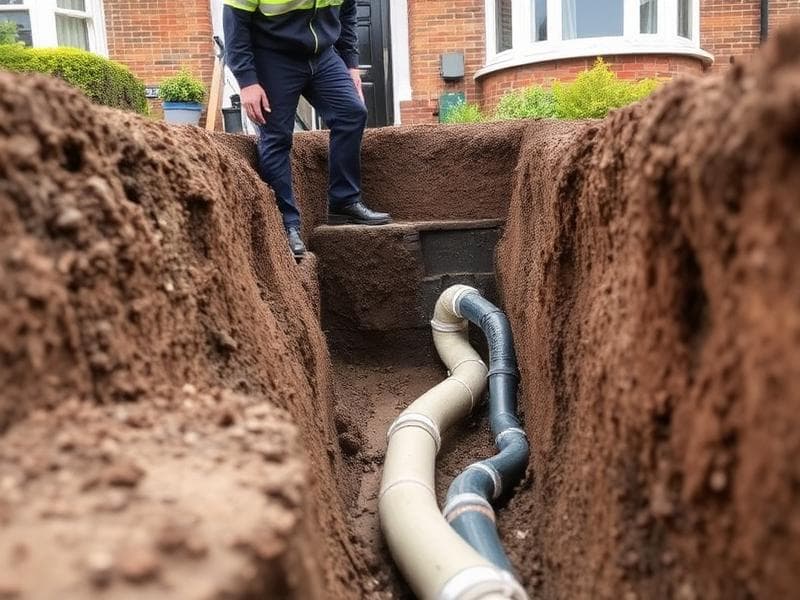
Infrastructure Bonds For Main Contractors
Main contractors must manage bond-related risks even when not directly providing them.
Key responsibilities: coordinating infrastructure packages; managing subcontractor performance; aligning delivery with adoption requirements.
Risk areas: interface between groundworks and utilities; programme ownership for adoptable works; ensuring records and inspections are complete.
Further guidance: groundworks for main contractors and commercial groundworks contractors with adoption and inspection discipline built into scope.
What Developers Should Ask Before Signing A Bond
What is the total bond value and how is it calculated? What are the exact release criteria? What triggers partial reductions? What is the duration of the maintenance period? What inspection regime applies? What defects must be resolved before release? How does the bond align with the programme? Are there phased release options? What happens if works are delayed? Who manages the inspection records?
Answers should be documented in the master programme and cost plan, not held informally by the engineer or solicitor. Where tenders are issued for infrastructure, include bond milestones and records requirements in the scope so contractors price the management effort.
How Bonds Link To S278, S38 And S104 Programmes
These agreements should never be planned in isolation.
Key coordination requirements: align design approvals across all authorities; sequence works to avoid rework or delays; coordinate inspections and sign-offs.
Poor coordination leads to: conflicting requirements; delayed adoption; extended bond durations.
See the S38 and S104 programme explained for adoption sequencing, and S278 agreements explained for highway interfaces. Site preparation and early enabling works should reflect bond and approval status, not only physical progress on site.
Commercial Lessons From Delayed Bond Releases
Common real-world scenarios include: a development reaches completion but roads are not adopted due to minor defects, delaying bond release by 12 months; drainage systems pass construction but lack documentation, preventing S104 adoption; highway works are delayed due to late approvals, pushing back occupation dates; multiple bonds remain active across phases, restricting capital for new sites.
These issues typically stem from early-stage planning gaps rather than construction failures.
Related commercial services
Related infrastructure guides
- S38 & S104 Programme ExplainedRoads adoption, sewer adoption and programme sequencing with S278 interfaces.Read guide
- S278 Agreements ExplainedHighway agreements, bonds and access works on the public network.Read guide
- Roads & Sewers Contractors GuideIntegrated delivery of adoptable roads and drainage packages.Read guide
- Commercial Drainage ExplainedS104 adoption, attenuation and drainage coordination.Read guide
- Groundworks For HousebuildersResidential infrastructure, plot release and adoption programming.Read guide
- Groundworks For Main ContractorsPrincipal contractor interfaces on adoptable infrastructure.Read guide
Frequently asked questions
What is an infrastructure bond?
A financial guarantee ensuring infrastructure works are completed to required standards if the developer fails to deliver under the statutory agreement.
Why are highway bonds required?
To protect the public and ensure highway works on the network are delivered correctly, with funding available if the developer defaults.
What is a S278 bond?
A bond securing works on the existing public highway under a Section 278 agreement. See S278 agreements explained for the full process.
What is a S38 bond?
A bond securing the construction of adoptable estate roads until highway authority adoption after the maintenance period.
What is a S104 bond?
A bond securing adoptable drainage systems until vesting and adoption by the sewerage undertaker.
How long do bonds stay in place?
Typically until completion, maintenance period expiry, and final adoption — which can be months or years after physical construction finishes.
Can a bond be reduced?
Yes, usually after practical completion and during the defects period, subject to authority or undertaker criteria being met.
Who pays for infrastructure bonds?
Usually the developer, though costs may be built into contractor packages or reflected in land promotion assumptions.
Are bonds refundable?
They are released once obligations are met, not refunded in a conventional sense — release returns security or cancels the guarantee.
What happens if works fail inspection?
Defects must be corrected before progression, bond reduction, or adoption sign-off.
Do utility companies require security?
Yes, often for connections and diversions alongside adoptable infrastructure packages.
Can occupation happen before bond release?
Yes, but it may be restricted depending on infrastructure status, planning conditions and lender requirements.
How do bonds affect cash flow?
They tie up capital or facility headroom until release, which can affect phased schemes and lender covenants.
Are performance bonds the same as adoption bonds?
No. Performance bonds protect the employer against contractor default; adoption bonds protect authorities and undertakers on statutory infrastructure.
What happens if infrastructure is never adopted?
The authority or undertaker may call the bond to complete or remediate the works to the required standard.
Infrastructure bonds are not a footnote to adoption — they are part of the same commercial system as design approval, inspection, defects clearance and vesting. Projects that treat bonds as delivery tools rather than legal paperwork generally achieve faster release, fewer disputes, and more predictable close-out.
Adoption strategy should be set at feasibility: which agreements apply, what security is likely, and how release milestones align with sales or occupation. Programme management must include bond reduction dates alongside construction dates, with clear owners for authority correspondence and records.
Contractor involvement should start early enough to price inspection, traffic management, testing and handover documentation — not only civils production. Commercial groundworks contractors, Section 278, Section 38 and Section 104 teams with adoption experience reduce the defects-and-records failures that extend bonds.
Cash flow planning should model overlapping S278, S38 and S104 security on phased schemes, partial release assumptions, and lender sensitivity to outstanding bonds. Authority coordination works best when one senior commercial lead owns the infrastructure programme across highway and drainage, supported by engineers and QS with aligned reporting.
Infrastructure bonds should be planned as delivery tools rather than legal paperwork. Projects that treat them as a live commercial workstream generally achieve faster adoption, fewer disputes, and more predictable project close-out.
Discuss bonds and your infrastructure programme
Share your S278, S38 or S104 scope and we will advise on programme, security and delivery options.