
What Is An Adoptable Road?
An adoptable road is one that is designed and constructed to a standard that allows a local highway authority to take over its maintenance. Once adopted, the road becomes a public highway maintainable at public expense.
Key distinctions: an adoptable road is built to highway authority standards, inspected and approved, then transferred to the authority. A private road remains under the control of a landowner or management company, with ongoing maintenance responsibility retained privately.
Developers typically pursue adoption to remove long-term liability, satisfy mortgage lender requirements, and align with buyer expectations.
| Topic | Adoptable road | Private road |
|---|---|---|
| Maintenance | Highway authority | Landowner / management company |
| Design standard | Authority specification | Developer discretion |
| Adoption process | Required | Not applicable |
| Future liability | Authority | Private owner |
| Bond requirement | Usually yes | Usually no |
Who Decides Whether A Road Can Be Adopted?
Adoption is not determined by the developer, contractor, planning officer or civil engineer. The local highway authority ultimately decides whether the road meets its standards and can be taken into the public network.
Local Highway Authority: the adopting body for estate roads in its area. Technical approval, inspections, maintenance period and final adoption all run through this organisation.
County Councils and Unitary Authorities: in two-tier areas, county councils may hold strategic highway functions while districts handle local matters — on unitary authorities, one body typically manages both. Always confirm which team holds S38 for your site.
Technical Approval Teams: review geometry, pavement design, drainage, lighting and compliance with local standards. Approval is separate from planning consent.
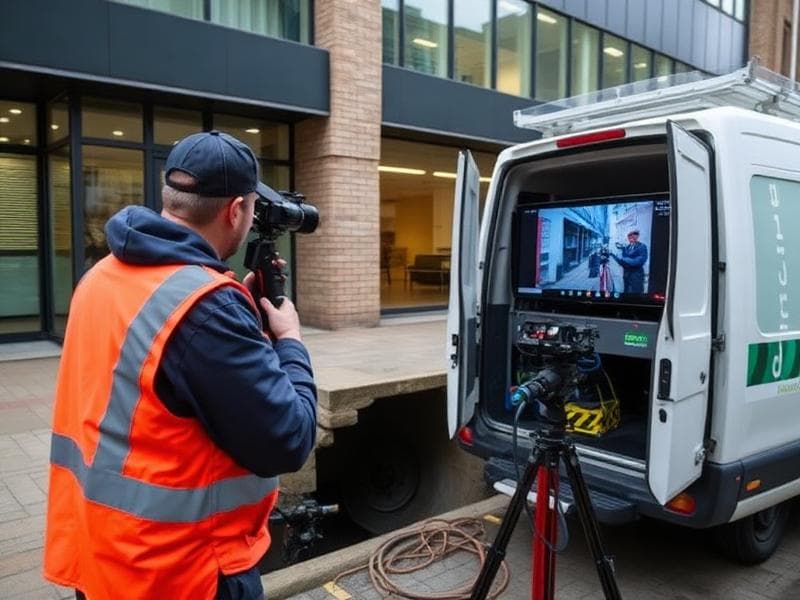
Highway Inspectors: attend staged inspections (formation, sub-base, binder, surface) and can withhold progression if layers or records are non-compliant.
The authority's decision is evidence-based: approved drawings, test results, as-built information and defect clearance — not the developer's view that works look complete.
Why Adoptable Roads Matter
Adoptable roads have direct commercial implications across a development lifecycle: mortgageability, occupation, asset value, maintenance risk, estate management, and funding and exits.
Lenders often require roads to be adoptable or subject to a formal adoption agreement. Some authorities or warranty providers may restrict occupation until access roads meet defined standards. Homes on adopted roads are typically more attractive to buyers.
Typical Components Of An Adoptable Road
Adoptable roads are more than just tarmac. They are integrated infrastructure systems.
Carriageways: structural layers designed for traffic loads. Footways and cycleways: built to specific widths and materials. Kerbs and edgings: define alignment and support drainage. Street lighting: must meet authority illumination and energy standards.
Road drainage: gullies, pipework, and outfalls tied to wider drainage strategy. Verges and landscaping: subject to visibility and maintenance considerations. Visibility splays: clear sightlines at junctions. Traffic signs and markings: compliant with TSRGD requirements. Shared surfaces: often used in residential layouts, but heavily scrutinised.
What Is An Adoptable Road Made Of?
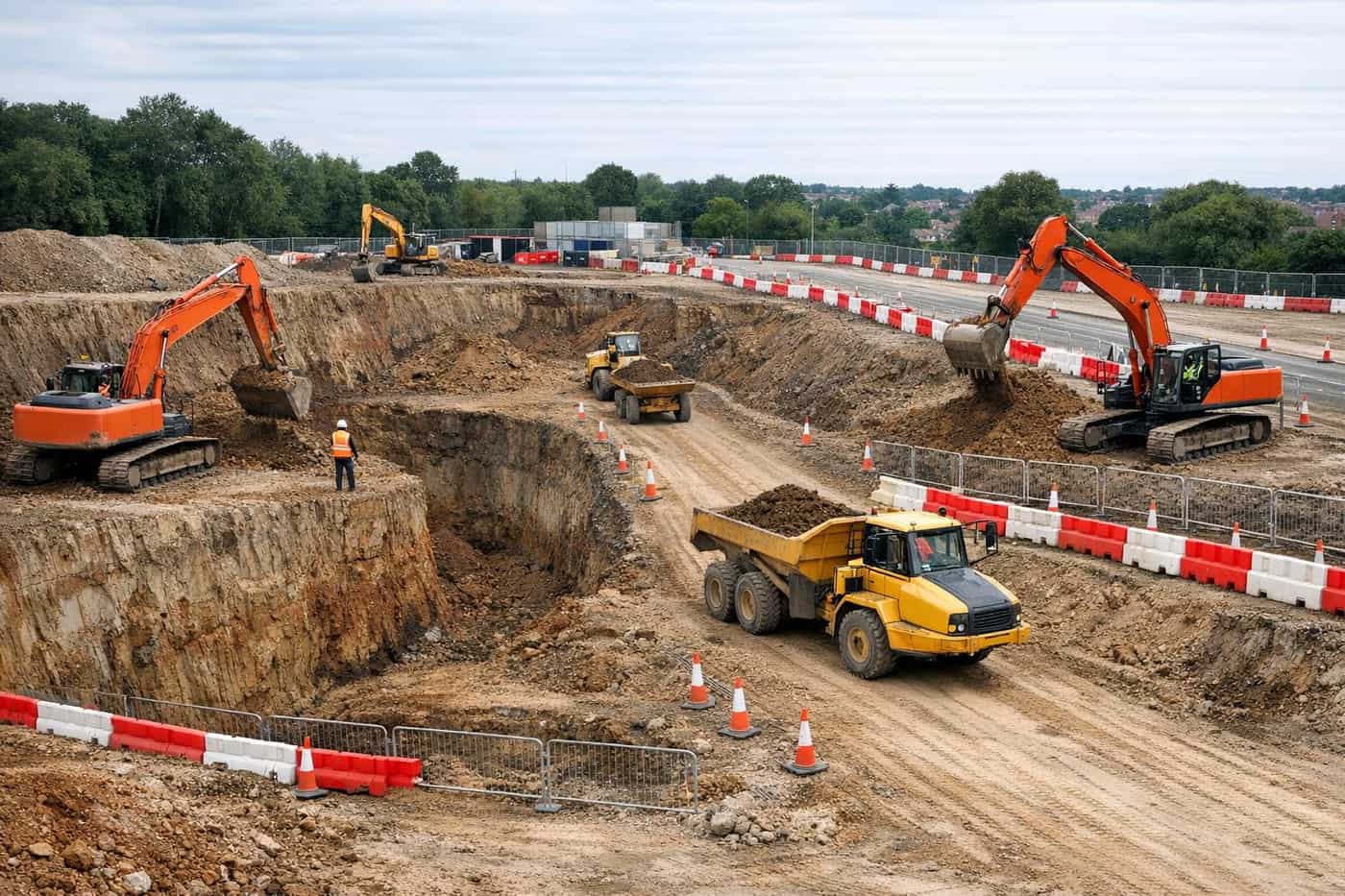
Authorities inspect pavement layers in sequence before allowing the next course or final surfacing. Understanding the layer stack helps developers and QSs see why hold points matter commercially.
- Surface course
- Binder course
- Road base
- Sub-base
- Formation layer
- Ground
Surface course: the finished riding surface. Binder course: structural asphalt layer below the surface. Road base: load-spreading layer. Sub-base: granular layer over formation. Formation layer: prepared subgrade. Ground: natural or improved ground bearing the formation.
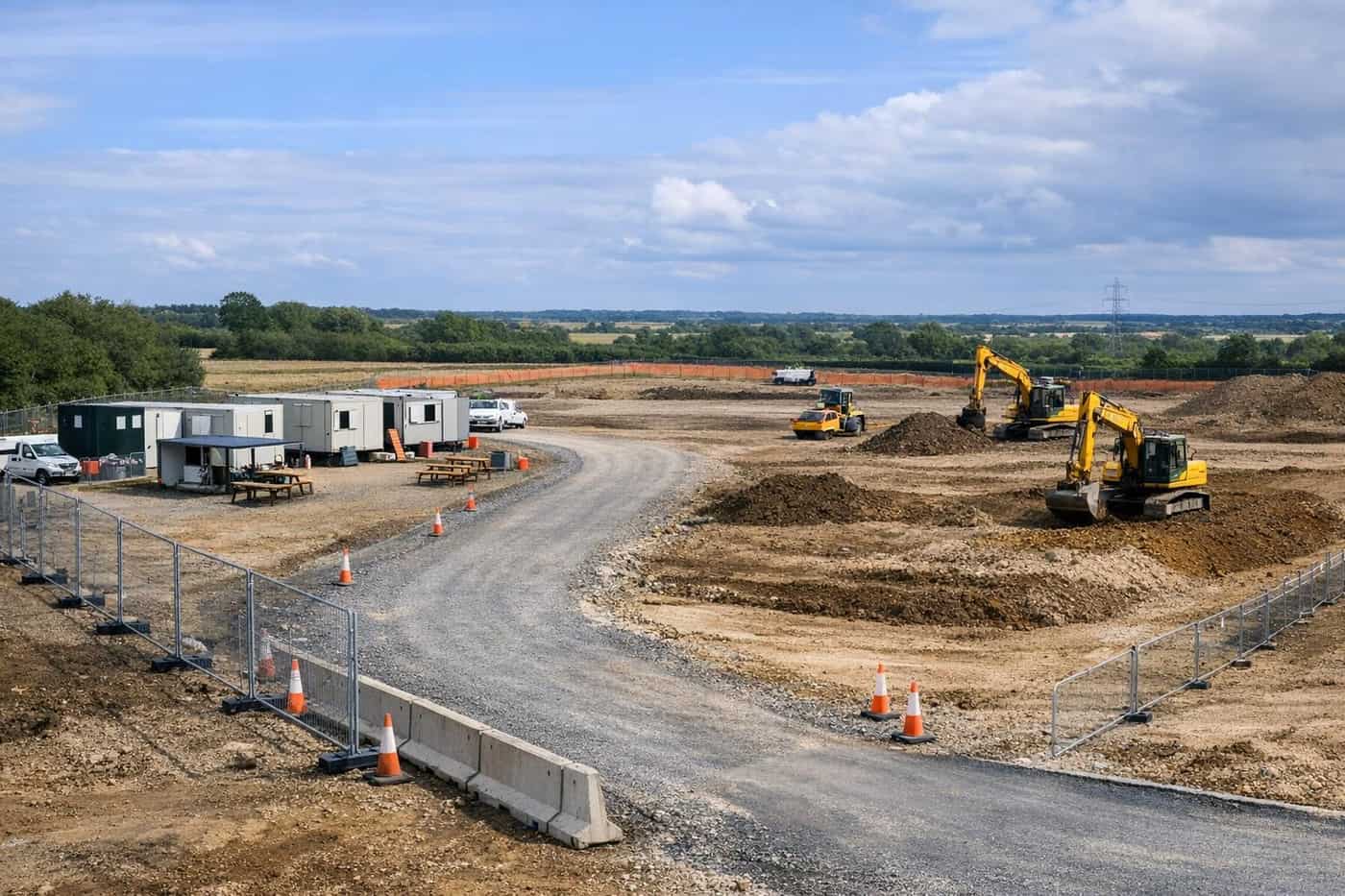
If formation or sub-base inspections are missed or poorly recorded, the authority may require opening-up or rework — delaying surfacing, plot access and bond reduction. Early site preparation services and geotechnical input from foundation contractors reduce formation risk where ground conditions are poor.
The Section 38 Adoption Process
The Section 38 (S38) process formalises how a road becomes adopted by the highway authority. It is sequential but often overlaps with construction and procurement.
Initial highway discussions: early engagement with the authority to align on standards and strategy. Technical design: detailed design covering geometry, drainage, lighting, and materials. S38 submission: formal submission including drawings, specifications, and calculations.
Technical approval: authority review and approval, often with iterations. Bond arrangements: a surety bond is put in place to cover completion risk. Construction: roads built in phases, often aligned with plot delivery.
Inspections: authority inspections at key stages (formation, sub-base, binder, surface). Maintenance period: typically 12 months after practical completion. Final adoption: issued once defects are resolved and documentation is complete.
Section 38 process overview:
- Planning
- Design
- S38 submission
- Technical approval
- Bond
- Construction
- Inspection
- Maintenance period
- Final adoption
For delivery strategy, see Section 38 contractors and the combined programme at S38 and S104 programme explained.
Typical Adoptable Road Timeline
The timeline below extends the S38 process into land acquisition and planning — showing where adoption planning should start relative to vertical build.
- Land acquisition
- Planning approval
- Highway design
- S38 submission
- Technical approval
- Bond
- Road construction
- Inspection
- Maintenance period
- Final adoption
Adoption milestones should sit in the master programme from land acquisition, not only from first road construction. Commercial groundworks contractors often maintain a live tracker against these stages when roads and drainage are procured together.
What Standards Must Adoptable Roads Meet?
Highway authorities set detailed standards, often based on national guidance but with local variations.
Core areas include geometry (road widths, junction radii, gradients), visibility splays, pavement construction layer depths, kerb details, turning heads for refuse and emergency access, drainage (gully spacing, pipe sizing, outfalls), and lighting (column spacing, lux levels, energy requirements).
A key trap is assuming that planning approval equals adoptable compliance. Planning focuses on layout acceptability, while S38 approval focuses on technical compliance. Designs often require revision post-planning to meet adoption standards.
How Section 278 And Section 38 Work Together
S278 deals with works to the existing public highway. S38 deals with new estate roads inside the development that are intended for adoption. Most housing schemes need both interfaces coordinated from concept stage.
S278 typically covers the permanent access junction, visibility splays on the public network, signals, crossings or highway widening. S38 covers spine roads, loops, footways and lighting within the site. Levels at the tie-in between them must match — a common source of redesign if each agreement is designed in isolation.
See S278 agreements explained for highway agreement detail and Section 278 contractors for delivery of the off-site package. Utility diversions on the public highway often gate S278 start — see utility diversions for development sites.
Common Reasons Roads Fail Adoption
Failures are rarely due to a single issue; they usually stem from coordination breakdowns.
Incorrect construction depths; drainage issues (poor falls, blocked gullies, inadequate capacity); failed inspections; utility conflicts; incomplete records; design changes not re-approved; surface defects; settlement in trenches; missing certificates for lighting, materials or compaction.
Commercial consequences include extended maintenance periods, delayed bond release, remedial costs, and in worst cases, refusal of adoption.
Adoptable Roads And Drainage
Roads and drainage are inseparable in both design and adoption.
Surface water drainage: roads are major collection routes for runoff. Attenuation systems: required to manage discharge rates — see attenuation systems. S104 agreements: drainage networks are often adopted by water companies under separate agreements — see Section 104 contractors. Outfall coordination: road drainage must align with site-wide strategies.
Poor coordination between S38 and S104 packages is a common cause of delay. Many developers procure integrated solutions — see commercial drainage contractors and roads and sewers.
Adoptable Roads And Utility Diversions
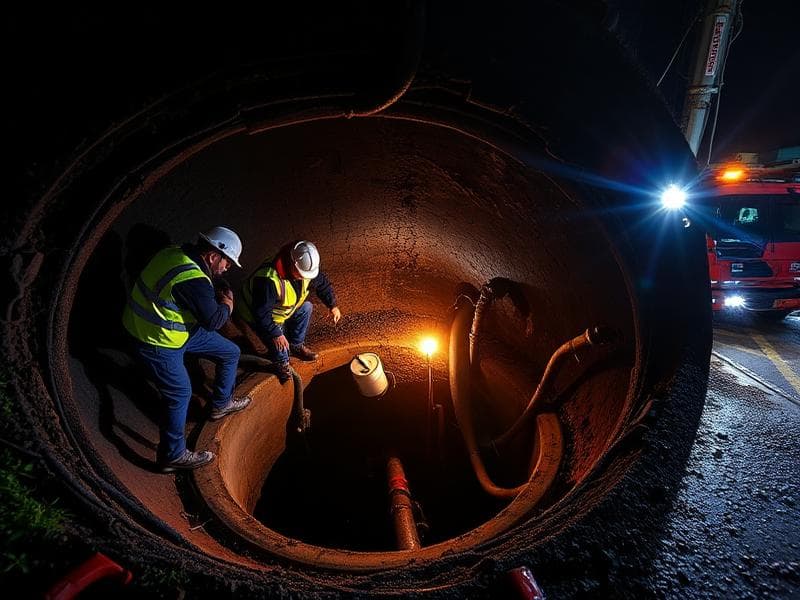
Utilities introduce significant constraints: statutory undertakers, service corridors that must align with road design, clashes from incorrect sequencing, and authority requirements for future maintenance access.
Utility diversions and installations should be planned alongside road design, not after. See utility diversions for development sites.
How Roads Affect Development Programme
Roads are often on the critical path, particularly for phased housing developments.
Access strategy: early delivery of spine roads unlocks later phases. Plot release: sales teams depend on accessible, compliant roads. Occupation: temporary surfaces may be allowed, but final surfacing often gates completion.
Infrastructure sequencing: roads, drainage, and utilities must align with site preparation services and enabling works. Inspections: missed inspections can halt progress. Bond release: tied to completion and defect resolution.
| Stage | Typical timing |
|---|---|
| Planning | Early stage |
| Road design | Pre-construction |
| Technical approval | Before construction |
| Road construction | Infrastructure phase |
| Maintenance period | Typically 12 months+ |
| Adoption | Final close-out |
A poorly sequenced road package can delay an entire development even if vertical construction is complete — particularly where commercial groundworks and vertical build are reported on different programme lines.
Why Roads Are Often The Last Thing To Be Adopted
A development can appear complete long before the road is actually adopted. Houses may be built and occupied while the highway authority still holds bond security and the maintenance period clock is running.
Defects period: snagging on carriageways, footways and lighting often continues after practical completion. Final surfacing timing: authorities may withhold top course until lower layers and services are signed off.
Utility reinstatements: trenches through new roads must meet reinstatement standards before adoption. As-built documentation: drawings, test sheets and lighting certificates are frequently incomplete when the site looks finished.
Inspection sign-off: a single missed hold point can block progression from binder to surface or from maintenance to adoption.
For QSs and development managers, this gap between practical completion and adoption drives retention, bond exposure and sales warranty risk — see infrastructure bonds and sureties.
Infrastructure Bonds And Adoptable Roads
S38 agreements typically require a bond to protect the authority if works are not completed.
Bond value is often set as a percentage of construction cost plus contingency (exact basis varies by authority). Sureties are provided by banks or insurers. Reduction can occur as works progress. Release is only after successful completion and maintenance period.
Bonds tie up capital and affect balance sheets, making efficient delivery critical. See infrastructure bonds and sureties explained for reduction and cash-flow detail.
What Influences Road Adoption Costs?
This section explains commercial cost drivers without publishing prices, which vary by authority, specification and ground conditions.
Road width and length: carriageway area drives pavement, kerb and drainage quantities. Pavement specification: authority standard layers and materials move cost materially.
Ground conditions: poor subgrade may need geotextiles, capping or deeper formation — link early foundation contractors and ground investigation to S38 design.
Drainage requirements: gullies, pipes, attenuation interfaces and outfalls. Street lighting: column count, supply and energy standards.
Utility diversions: services in carriageways before adoption. Highway authority fees: design review, inspections, legal and adoption charges.
Bond values: security ties up working capital. Inspection and legal fees: often under-allowed in early cost plans.
Procuring through commercial groundworks contractors with defined S38 scope usually produces clearer tender returns than late highway packages on incomplete design.
Adoptable Roads For Housebuilders
For housebuilders, roads are tightly linked to sales strategy: phasing must align with plot release; buyers expect finished infrastructure; NHBC and warranties require compliant access and drainage; handover quality affects customer satisfaction.
Integrated groundworks packages can reduce risk — see groundworks for housebuilders.
Adoptable Roads For Main Contractors
Main contractors must manage trade coordination (groundworks, utilities, lighting), programme ownership across phases, quality assurance against authority standards, and inspection management at all hold points.
Working with experienced specialists is critical — see groundworks for main contractors and commercial groundworks contractors.
Roads And Sewers Packages
Many developers procure roads and sewers together for efficiency: shared trenching, levels coordination, adoption alignment across S38 and S104, and cost efficiency from reduced duplication.
This integrated approach is covered in more detail at roads and sewers.
What Developers Should Ask Their Roads Contractor
What is your experience with S38 agreements? Which highway authorities have you worked with? How do you manage inspections and approvals? What is your approach to quality assurance? How do you coordinate with utility providers?
Can you manage both roads and drainage packages? How do you handle design changes during construction? What documentation do you provide for adoption? How do you manage programme risks? What is your experience with bond requirements?
Can you provide examples of successful adoptions? How do you manage defects during the maintenance period? What is your approach to communication with authorities? Do you offer early contractor involvement?
Procurement routes such as tenders and vetted contractors help when S38 scope, inspection windows and site preparation interfaces are defined before award — not after mobilisation.
Real Development Examples
Common Commercial Mistakes
Leaving adoption planning too late. Procuring contractors before design approval. Ignoring utility constraints. Missing inspection records. Poor contractor selection. Underestimating bond impacts.
These issues often compound, turning minor delays into major programme risks — especially where foundation contractors and road levels were not reconciled before earthworks pricing.
Road Adoption And Project Close-Out
Adoption timing directly affects how a scheme closes commercially, not only technically.
Final account implications: defects and remedial works during the maintenance period often drive final account negotiations long after the main contractor has demobilised.
Retentions: held against highway and infrastructure snagging until authority sign-off. Bond release: tied to adoption and defects clearance — affects lender covenants and group cash reports.
Investor exits and land sales: forward funders and purchasers expect clear adoption status or robust agreements. Management company handovers: private elements may transfer while roads remain in maintenance — affecting service charge messaging.
Developers who map close-out milestones when the S38 is signed — not when houses are complete — avoid discovering that adoption is the last open workstream on the project.
Related commercial services
- Section 38 Contractors
- Section 278 Contractors
- Section 104 Contractors
- Roads & Sewers
- Commercial Drainage Contractors
- Attenuation Systems
- Foundation Contractors
- Site Preparation Contractors
- Groundworks for Developers
- Commercial Groundworks Contractors
- Groundworks for Housebuilders
- Groundworks for Main Contractors
- Tenders
- Contractors
Related infrastructure guides
- S38 & S104 Programme ExplainedCombined adoption programme for roads and sewers.Read guide
- S278 Agreements ExplainedHighway works on the existing public network.Read guide
- Infrastructure Bonds & SuretiesS38 bonds, release and cash-flow exposure.Read guide
- Utility Diversions for Development SitesStatutory undertakers and carriageway conflicts.Read guide
- Commercial Drainage ExplainedS104 adoption and road drainage interfaces.Read guide
- Groundworks For HousebuildersPhased roads, sales and occupation.Read guide
Frequently asked questions
What is an adoptable road?
A road built to standards that allow it to be maintained by a highway authority.
What is a Section 38 agreement?
A legal agreement between a developer and a highway authority for road adoption. Delivered by experienced Section 38 contractors.
Who owns adoptable roads?
Once adopted, they are maintained by the local authority.
How long does road adoption take?
Typically 12–24 months including maintenance periods.
Can houses be occupied before adoption?
Yes, but often subject to conditions and temporary access arrangements.
Are bonds required?
Yes, usually as part of S38 agreements — see infrastructure bonds.
What standards apply?
Local highway authority standards, often based on national guidance.
What happens if roads are never adopted?
They remain private, with ongoing maintenance liabilities.
Can private roads become adopted?
Yes, but often requires significant upgrades to authority standards.
Who pays for adoption?
Developers fund design, construction, bonds and associated costs.
What is the maintenance period?
A period (usually 12 months) after construction to ensure performance before adoption.
What inspections are required?
Multiple staged inspections during construction, including pavement layers.
What is a bond reduction?
Partial release of bond value as works progress and milestones are met.
Do planning approvals guarantee adoption?
No. Technical S38 approval is separate from planning consent.
Can adoption be refused?
Yes, if standards are not met or records are incomplete.
Most adoption delays are not caused by road construction itself. They are caused by coordination failures between highways, drainage, utilities, inspections, documentation and programme management. The most successful projects treat adoption as a live delivery workstream from the earliest design stages rather than a close-out exercise once the houses are built.
Adoptable roads are not simply a construction package. They are a programme, compliance, and commercial workstream that directly affects occupation, adoption, cash flow, and long-term liability.
The projects that achieve smooth adoption are rarely the ones that treat roads as a late-stage activity. Instead, they integrate highways, drainage, utilities, and contractor expertise from the earliest stages, align design with authority expectations, and manage inspections and documentation rigorously throughout delivery.
If you approach adoptable roads as a coordinated infrastructure system rather than a standalone package, you significantly reduce risk—and improve the likelihood of achieving timely adoption and clean project close-out.
Discuss adoptable roads on your scheme
Share your S38 scope, programme and authority and we will advise on delivery and procurement options.