
What Is A Groundworks Tender?
A groundworks tender is the process of inviting contractors to price the enabling, infrastructure and external works required to make a development buildable and adoptable. In practice, it may happen as part of pre-construction, a formal enquiry pack, a negotiated pricing exercise, a competitive tender or an early contractor involvement process.
In a pre-construction setting, the client or main contractor is usually testing budget, delivery strategy and risk appetite before a full commitment to contract. In a competitive tender, the objective is usually to compare like-for-like offers across a defined package, although that only works well if the documents are complete and the scope is clearly aligned.
What Goes In The Pack?
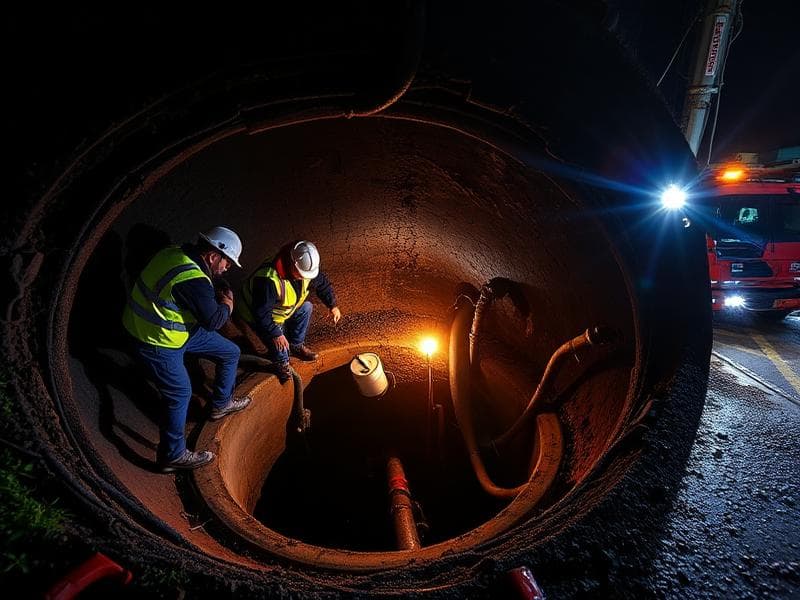
A good tender pack should include drawings, specifications, ground investigation reports, contamination reports, utility information, phasing plans, the programme and the proposed contract terms. For infrastructure packages, it should also clearly show adoptable road and sewer requirements, interfaces with statutory authorities and any relevant bond or adoption obligations.
Incomplete information causes bad pricing because contractors either include large risk allowances or exclude items they cannot accurately quantify. Ground conditions, contamination and utility conflicts are especially important because they can materially change excavation methods, disposal costs, remedial works and time on site.

Procurement Routes
Single stage tendering works best when the design is sufficiently developed and the client wants a direct commercial comparison before award. It is a common route for developers who want price certainty and a clear procurement decision, but it needs strong information and a disciplined scope review.
Two stage tendering is better when design is still moving or when early start is more important than complete price certainty. It allows the contractor to join earlier, help with buildability, utilities coordination and programme planning, then agree the final price later with better information.
Negotiated tendering suits repeat relationships, complex sites or urgent programmes where the client already knows the contractor’s capability. It can reduce friction and speed up start on site, but it demands careful benchmarking because the absence of competition can make commercial discipline weaker.
Frameworks work well when a developer or housebuilder has a pipeline of similar schemes and wants consistent commercial terms, quicker awards and a known delivery team. They are particularly relevant for repeatable infrastructure work such as estates, roads, sewers and plotworks.
ECI is useful when the biggest risks sit in ground conditions, utility interfaces, adoption strategy or phasing logic. It helps the client interrogate risk earlier, improve buildability and avoid a package being priced around the wrong assumptions.
Groundworks procurement routes at a glance
| Topic | Route | Best when |
|---|---|---|
| Single stage tender | Design sufficiently developed; direct commercial comparison before award | Strong pack, disciplined scope review, price certainty priority |
| Two stage tender | Design still moving or early start more important than full price at award | Buildability input, utilities coordination, final price with better information |
| Negotiated tender | Repeat relationships, complex sites or urgent programmes | Known capability — benchmark carefully to retain commercial discipline |
| Framework | Pipeline of similar schemes (estates, roads, sewers, plotworks) | Consistent terms, faster awards, known delivery team |
| Early contractor involvement (ECI) | Ground, utility, adoption or phasing logic dominates risk | Interrogate risk before mobilisation; avoid pricing wrong assumptions |
Single stage tender
- Route
- Design sufficiently developed; direct commercial comparison before award
- Best when
- Strong pack, disciplined scope review, price certainty priority
Two stage tender
- Route
- Design still moving or early start more important than full price at award
- Best when
- Buildability input, utilities coordination, final price with better information
Negotiated tender
- Route
- Repeat relationships, complex sites or urgent programmes
- Best when
- Known capability — benchmark carefully to retain commercial discipline
Framework
- Route
- Pipeline of similar schemes (estates, roads, sewers, plotworks)
- Best when
- Consistent terms, faster awards, known delivery team
Early contractor involvement (ECI)
- Route
- Ground, utility, adoption or phasing logic dominates risk
- Best when
- Interrogate risk before mobilisation; avoid pricing wrong assumptions
How Many Contractors To Invite?
A three-contractor strategy is usually the most focused and commercially efficient when the market is known and the project is reasonably well defined. It reduces tender administration and makes comparison easier, but only if the invited firms are genuinely capable and willing to bid — use the contractors directory to shortlist adoption-capable teams.
A five-contractor strategy can widen competition and improve pricing tension, especially on larger schemes or when market appetite is uncertain. The downside is that more bidders often means more inconsistency, more clarification queries and more time spent normalising returns.
An open-market approach may sound competitive, but it often generates non-comparable tenders, weaker responses and a higher risk of contractors pricing without proper diligence. For groundworks, quality of tender participation matters more than sheer volume.
How To Evaluate Contractors
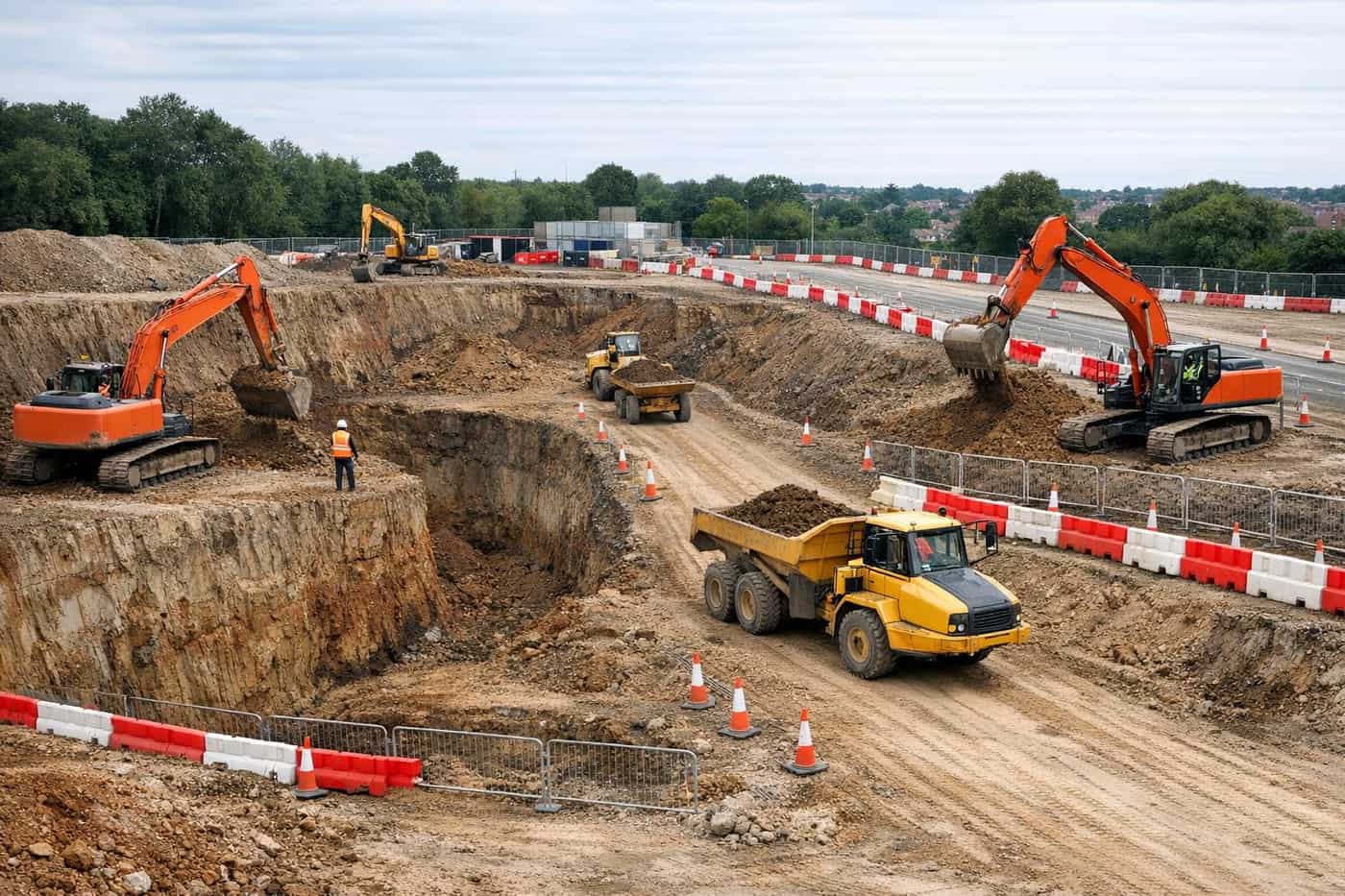
Evaluation should cover financial stability, relevant project history, highways experience, roads and sewers delivery, utility coordination, adoption experience, health and safety, and available resources. A strong groundworks contractor is not just cheapest; they must also have the management depth, plant, supply chain and local authority experience to deliver the package cleanly.
Previous project experience matters because groundworks is heavily site-specific. A contractor that performs well on simple enabling works may still struggle on adoptable infrastructure, deep drainage, complex phasing or constrained urban logistics.
Why Tender Returns Differ So Much
Groundworks tenders often vary widely because contractors make different assumptions about exclusions, preliminaries, provisional sums, programme logic, utilities and ground conditions. Some bidders will include items that others leave out, so two apparently similar prices can actually represent very different commercial positions.
Utility risk is one of the biggest drivers of variation. If one contractor assumes a clean site with straightforward connections while another assumes major diversions, the returned prices will not be directly comparable — see utility diversions.
Ground risk is just as important. Where information is limited, contractors may either load for possible adverse conditions or qualify the tender heavily, especially if the contract form leaves the risk unclear. Under JCT, site condition risk commonly sits with the contractor, while NEC takes a more structured approach to physical conditions — see NEC vs JCT.
Comparing Tender Returns Properly
Tender returns should be normalised before any award decision. That means stripping out obvious exclusions, checking the assumptions, aligning preliminaries, confirming programme basis and comparing risk allocation rather than simply ranking the bottom line.
| Comparison area | What to check | Why it matters |
|---|---|---|
| Price | Base tender, alternatives, provisional sums, dayworks rates | Confirms the real commercial offer, not just the headline figure |
| Programme | Start date, duration, phasing, key milestones | Shows whether the contractor can support the project schedule |
| Exclusions | Utilities, remediation, statutory fees, testing, surveys | Hidden exclusions often become later variations |
| Preliminaries | Site management, welfare, supervision, plant, traffic control | Low preliminaries can mean unrealistic delivery assumptions |
| Resources | Named team, plant, subcontractors, supply chain | Indicates whether the contractor can actually deliver the work |
| Risk allocation | Ground risk, utility risk, access risk, design development | Determines who pays when the package changes |
A good commercial review also tests whether each bidder has priced the same scope. In groundworks, the cheapest number is often the least reliable number unless the return schedule is fully standardised.
Tender Interviews
Tender interviews are where the client, QS, PM and technical team test whether the numbers are credible. The right people to attend usually include the project manager, quantity surveyor, technical lead, design manager, and the contractor’s estimator, contracts manager and operations lead.
Useful questions include: What assumptions sit behind your price? Which risks have you included, excluded or qualified? How have you allowed for utilities and service diversions? What is your approach to ground risk? How many live schemes are you running at the same time? Who is the day-to-day delivery lead? What would make your programme slip?
Red flags include vague answers, heavy reliance on exclusions, a weak understanding of the documents, unrealistic sequencing, or a contractor who appears overloaded. A tender interview should clarify the risk position, not just defend the headline price.
Common Procurement Mistakes
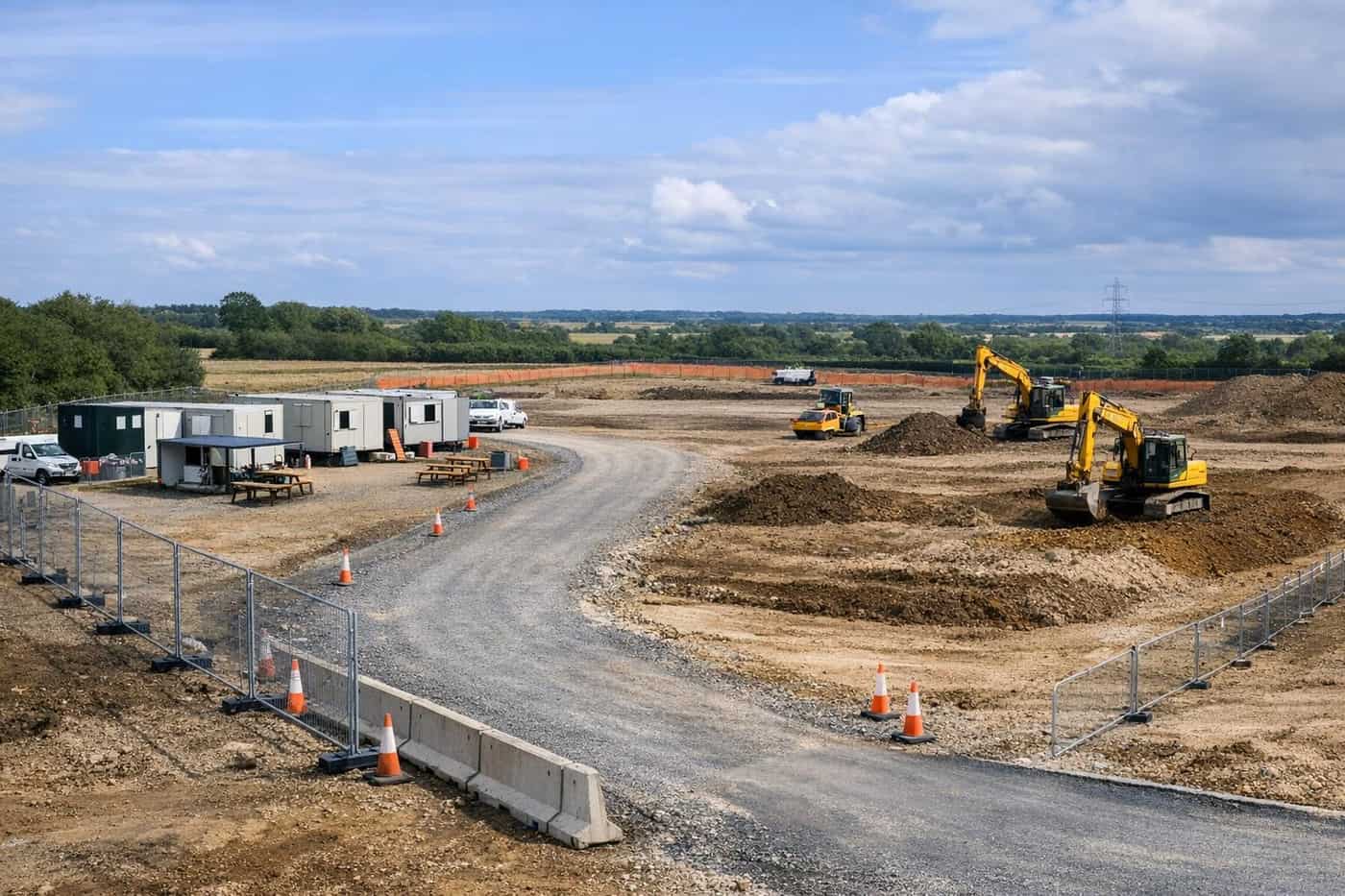
Buying on price alone is the most common mistake and usually the most expensive one. A cheap tender can turn into a costly final account if the contractor has underpriced risk, misunderstood the scope or intends to recover money through variations.
Other mistakes include poor information, unclear scope, ignoring programme, ignoring cashflow and failing to check contractor workload. If a contractor is already stretched across multiple sites, the price may look good but the operational risk can be significant.
A further mistake is treating roads, sewers, utilities and earthworks as separate silos when the package is commercially interdependent. On many schemes, one delay in adoption, diversion or drainage can stop the whole programme.
Roads And Sewers Packages
Roads and sewers packages need especially careful tendering because they usually involve adoption standards, inspection milestones and statutory coordination. Developers often need to align the package with Section 38 and Section 104 requirements, plus any related bonds, approvals and inspection hold points.
These packages should always be tendered with a clear understanding of the interface between the road, foul drainage, surface water drainage and utility connections. If that interface is vague, the contractor may price conservatively or exclude works that the client expects to be included.
For related delivery routes see roads and sewers, Section 38 contractors, Section 104 contractors and infrastructure bonds.
Commercial Groundworks Packages
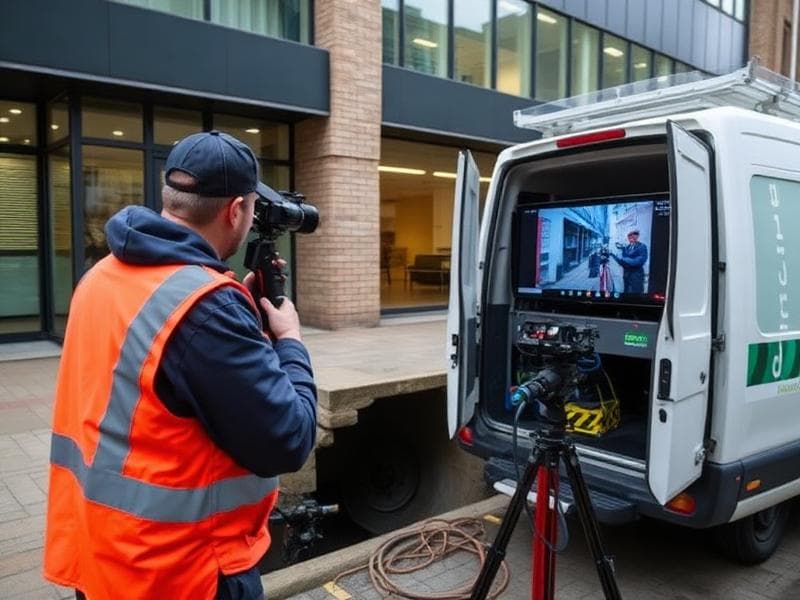
Commercial groundworks packages often include enabling works, bulk excavation, foundations, drainage, external slabs, hardstandings and access roads. These schemes can be more design-driven and logistics-heavy than housing sites, especially where interfaces with steel frames, logistics yards or phased occupation are involved.
Tendering these packages well means clarifying who owns interfaces with the wider build programme, temporary works, haul roads, cranage, and material deliveries. If those responsibilities are not defined, the contractor may either price in margin for uncertainty or issue claims later.
See commercial groundworks and commercial groundworks contractors for delivery models that align tender scope with occupation and fit-out programmes.
Related project scenarios
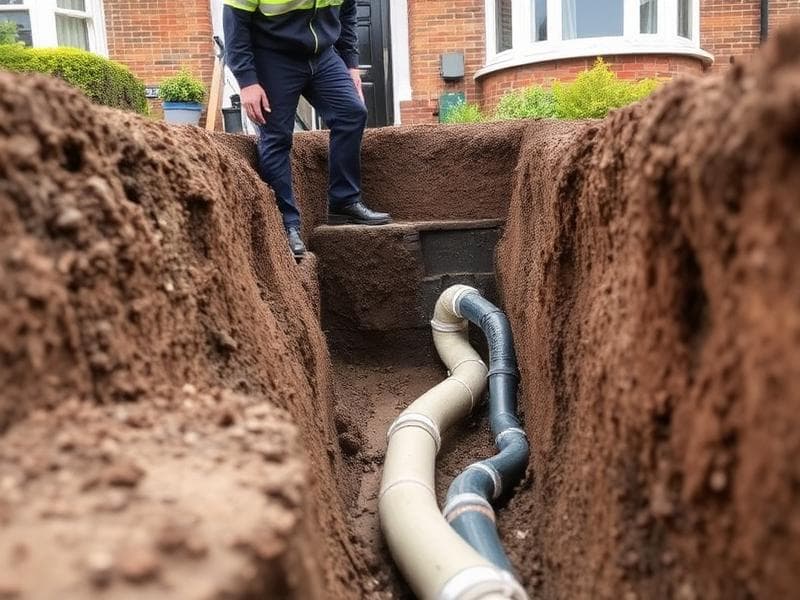
Residential development infrastructure package
Phased estate roads, plot drainage and adoption-led infrastructure across multiple land parcels.
Procurement challenge: Inconsistent tender returns because S38/S104 scope and utility assumptions were not aligned in the pack.
Commercial outcome: Normalised returns and a single adoption-ready contractor appointment protected plot release programme.
Commercial development groundworks package
Enabling works, bulk excavation, foundations and external works ahead of main build programme.
Procurement challenge: Lowest tender excluded haul routes, temporary works and logistics interfaces with the frame contractor.
Commercial outcome: Two-stage award with clarified interfaces reduced variations and kept occupation milestones achievable.
Roads & sewers procurement package
Adoptable estate roads, foul and surface water drainage with statutory inspection milestones.
Procurement challenge: Bidders priced different adoption, bond and utility diversion responsibilities.
Commercial outcome: Clarified S38/S104 interfaces before award avoided a six-figure post-mobilisation scope dispute.
Housebuilder Infrastructure
Housebuilder infrastructure packages typically need a strong balance between cost certainty, pace and repeatability. They often involve roads, sewers, plotworks, service coordination, plot drainage and adoption-related requirements across phased land parcels.
For housebuilders, the key procurement question is not only whether the contractor is cheapest, but whether they can keep pace with sales releases and handover milestones. A contractor that can support a phased delivery strategy is often worth more than a lower bid that cannot manage sequencing.
See groundworks for housebuilders when procuring phased estate infrastructure and plot release programmes.
Main Contractor Infrastructure
Main contractors usually need a groundworks partner who can coordinate tightly with the build programme, manage interfaces with other trade packages and respond quickly to design development. On larger projects, the groundworks contractor may be carrying major risk around access, logistics, temporary services and phased handovers.
That means procurement should assess not just price and experience, but also responsiveness, commercial transparency and the ability to work inside the main contractor’s reporting structure. A contractor who can be managed cleanly often creates more value than one that looks cheaper but is harder to control.
See groundworks for main contractors for subcontract procurement and interface management on larger civils-led packages.
NEC vs JCT During Tender Stage
Contract form affects how bidders price risk. Under NEC, programmes, early warning and compensation events are more structured, while JCT often leaves ground risk and site conditions in a more traditional risk allocation framework that tends to sit with the contractor unless the contract says otherwise.
That distinction matters during tendering because bidders will respond differently to the same risk depending on the proposed form of contract. If the contract strategy is unclear, tender comparisons can be misleading because one contractor may be pricing a shared-risk position while another prices a contractor-risk position.
Read NEC vs JCT for groundworks projects before fixing the form of contract in the tender pack.
Utility Risk During Tendering
Utility risk can include diversion uncertainty, unknown services, delayed connections, statutory undertaker coordination and cost exposure from third-party works. It is one of the most common reasons for tender qualification and post-award change.
Developers should be clear about who carries the cost and time risk for existing utilities, new service connections, and any diversions required to make the scheme deliverable. If all bidders assume the risk is someone else’s, the eventual dispute will usually arrive later in the programme.
See utility diversions for development sites for programme, undertaker and commercial risk during procurement.
Ground Risk During Tendering
Ground risk covers unknown or adverse soil conditions, contamination, groundwater, obstructions and discrepancies between the GI and what is actually found on site. It should be addressed explicitly in tender documents and contract drafting rather than left to assumptions.
Developers should expect bidders to react differently based on contract form and information quality. The better the information, the lower the contingency and the more useful the comparison between returns.
See ground conditions explained for development sites for investigation scope and tender-stage risk allocation.
Award Checklist
Project Examples
Related services
Related infrastructure guides
Frequently asked questions
What is the best tender route for groundworks?
The best route depends on design maturity and risk. Single stage works when the package is well defined, while two stage or ECI is better when ground or utility risk is still being developed.
How many contractors should a developer invite to tender?
Three to five is usually the practical range. Three creates focused competition, while five can broaden market coverage — but inviting too many bidders often reduces pricing quality on civils packages.
Why do groundworks tender prices vary so much?
They vary because bidders make different assumptions about scope, preliminaries, utilities, ground conditions and exclusions. Incomplete tender packs magnify that spread.
Should the cheapest groundworks bid win?
Not usually. The cheapest bid often becomes expensive once exclusions, claims and programme issues are added — award on normalised value and deliverability.
What documents matter most in a groundworks tender pack?
The most important items are drawings, specifications, GI reports, contamination information, utility records, phasing plans, programme and contract terms — plus S38/S104 detail for adoption packages.
What makes a contractor suitable for roads and sewers tendering?
Relevant adoptable infrastructure experience, statutory coordination ability, inspection discipline and a track record with Section 38 and Section 104 works.
How should utility risk be handled at tender stage?
It should be stated clearly in the tender pack and contract documents. If not, the risk is likely to be priced unevenly or disputed later — see utility diversions guidance for development sites.
What is the biggest red flag in a groundworks tender interview?
A contractor who cannot explain the basis of their price or who relies on vague exclusions is a major warning sign.
What is the biggest commercial mistake in groundworks procurement?
Buying on headline price alone. It usually shifts risk into the project rather than removing it.
When is negotiated tender appropriate for groundworks?
It works best for repeat schemes, urgent starts or highly complex packages where a known contractor can add value early — with independent benchmarking.
Does NEC change groundworks tender behaviour?
Yes. NEC’s structure around programme, early warning and compensation events can make bidders more explicit about risk and delivery assumptions than under JCT.
Does JCT put more ground risk on the contractor at tender?
For ground conditions, JCT commonly leaves more of the risk with the contractor unless the contract is amended — bidders will price accordingly.
Why are preliminaries important in tender comparison?
Because underpriced preliminaries can signal that the contractor has not realistically allowed for supervision, welfare, logistics or site management.
Should developers use frameworks for groundworks?
Yes, when they have repeat groundworks demand and want faster procurement, consistency and a known supply chain across estates and infrastructure phases.
What happens if the groundworks tender pack is incomplete?
Contractors will either price heavily, qualify the offer or leave out items that later become variations — delaying award is often cheaper than post-contract discovery.
Good procurement reduces risk before work starts. For developers, procurement managers and main contractors, the real objective is not to buy the lowest number but to secure a complete, comparable and deliverable groundworks package that protects programme, quality and final account position.
The strongest groundworks tenders are built on clear information, realistic risk allocation and disciplined comparison. When the pack is complete and the evaluation is commercial as well as technical, the project starts on a far stronger footing.
Need help procuring groundworks?
Share your package scope, adoption requirements or tender returns and we will advise on contractor selection, procurement strategy and infrastructure delivery.