
What This Guide Covers — and What It Does Not
This is a cost and feasibility guide. It explains which cost centres typically dominate roads and sewers allowances, why early appraisals understate them, and how information maturity changes what a number can honestly support.
It does **not** replace adoption process guidance. For programme, agreements and sequencing use the S38 & S104 programme explained. For road construction and adoption detail see adoptable roads explained. For sewer adoption process see drainage adoption process. For security mechanics see infrastructure bonds and sureties. For delivery packaging see roads & sewers contractors guide and the Roads & Sewers service page.
We do not publish invented £/m or £/plot rates here. Unit rates without drawings, standards and constraints are marketing, not feasibility. Use drawings-based quotes and treat calculator bands as indicative only via the groundworks cost calculator.
Why Roads and Sewers Cost Is a Bundle
A roads and sewers package is a bundle of earthworks, pavement, wet infrastructure, utilities interfaces, preliminaries, testing and commercial security. Pricing “roads” as asphalt area alone misses the trenches that set levels and the bonds that lock cash after houses look finished.
Adoptable standards usually cost more than private roads of similar length because of specification, inspection, records and maintenance-period exposure. That is a cost-centre fact, not a moral judgement about adoption.
On phased housing, cost is also a timing problem: security, inspections and surfacing stages do not land in the same month as bulk dig. Feasibility models that ignore phasing understate peak funding.
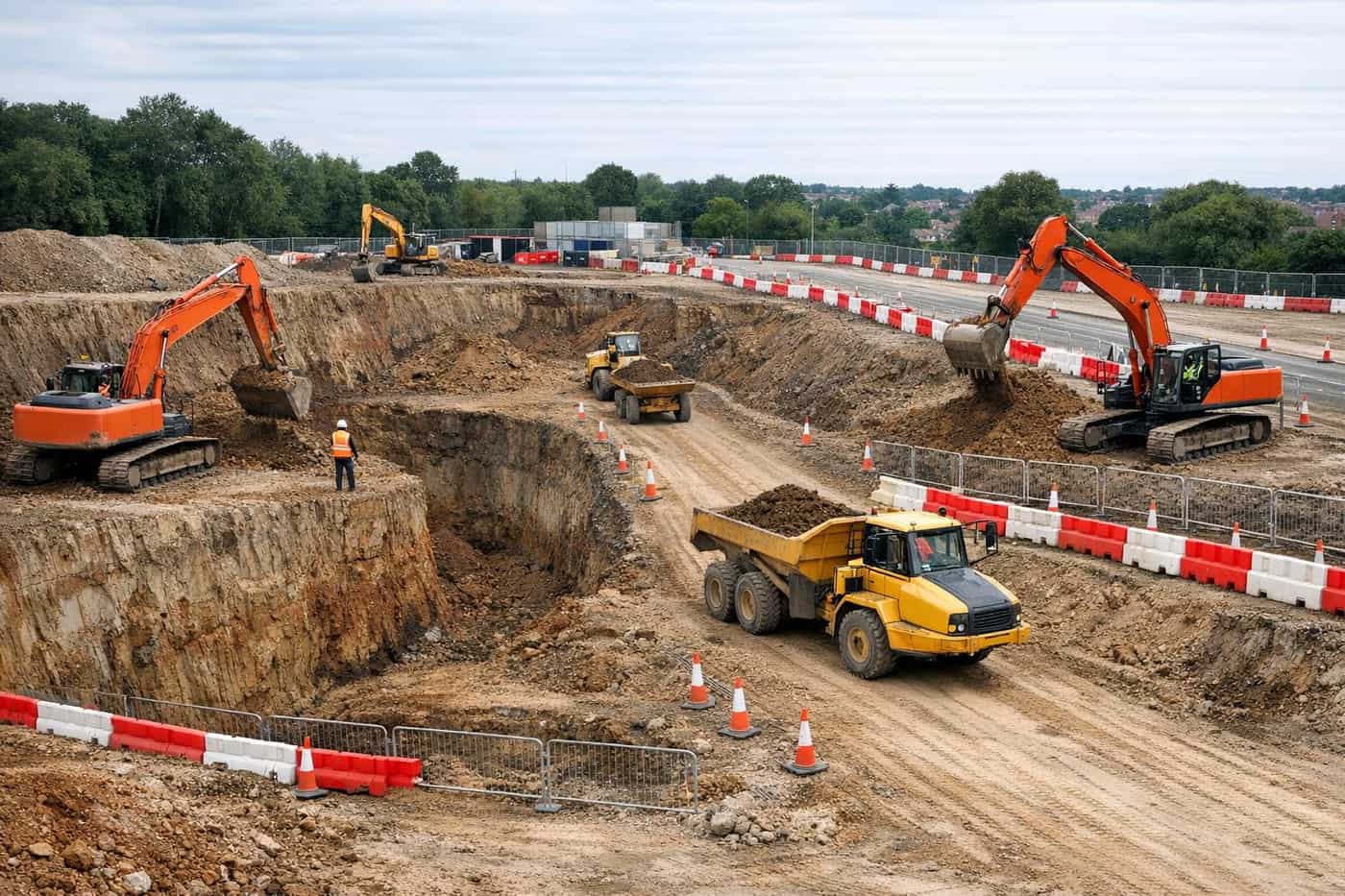
Cost Centre Deep Dive
Design and technical fees. Highway and drainage design iterations, authority comments and resubmissions consume fee and time. Complex pumping, attenuation or S278 interfaces increase design cost before a digger arrives. Under-allowing fees produces rushed submissions and expensive civils change later. Fee burn also correlates with programme: slow comment cycles extend prelims even when design rates look modest.
Earthworks and formation. Cut/fill balance, unsuitable material and import dominate early civils. GI quality and spoil strategy decide whether the earthworks allowance is a plan or a hope. Formation risk couples to both road build-up and plot platforms — a cheap earthworks line that ignores unsuitable material simply relocates cost into variations and plot delays.
Carriageway and pavement. Build-up thickness, shared surfaces, kerbs, lighting ducts and adoptable versus private standards drive quantities. Phased surfacing (binder then wearing course) spreads cost and protects works — but needs programme discipline and haul rules so construction traffic does not destroy the investment mid-phase.
Foul and surface water sewers. Length is rarely the whole story: depth, diameter, manhole count, rising mains and pumping assets move cost non-linearly. Invert depth also drives temporary works and dig risk. Two schemes with similar pipe length can sit in different cost worlds once depth and pumping appear.
Attenuation and SuDS. Volume, type (tank, basin, crate systems), land-take and maintenance regime matter. Ground conditions can kill infiltration assumptions and force costlier storage — see attenuation systems for developers. Feasibility models that lock a cheap infiltration story before GI confirmation understate cost.
Utilities in the corridor. Diversions, protections, trial holes and undertaker delays are classic appraisal blind spots. See utility diversions on development sites. Even “protection only” cases consume dig time and temporary works when services sit in the road box.
Preliminaries and traffic management. Duration, access constraints and live highway interfaces (often S278-related) set prelim burn rate. Constrained urban sites pay more for the same pipe length because logistics, not diameter, dominates.
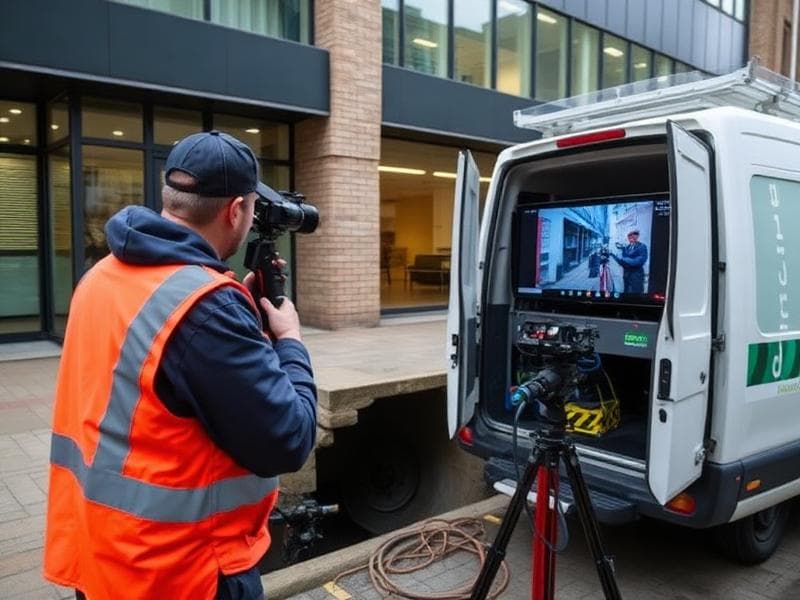
Testing, inspections and as-builts. CCTV, materials testing, inspection attendance and records coordination are real costs on adoption-led packages. Cutting them in VE is a false economy — see groundworks QA and inspection records.
Bonds and sureties. These are cash lock-up and facility-line items, not “civils rates.” Values and release timing vary by authority and agreement. Model them as cash-flow, and read infrastructure bonds and sureties for mechanics — do not invent universal bond percentages here.
Programme prolongation contingency. Authority lead times, weather and utility clashes extend prelims and delay sales release. Feasibility that assumes perfect adoption timing understates cost and overstates available float for plot production.
| Cost centre | What typically drives it | Information needed for a meaningful allowance |
|---|---|---|
| Design / technical fees | Highway & drainage design iterations, submissions, responses | Adoption intent, authority appetite, complexity |
| Earthworks / formation | Cut/fill, unsuitable material, import, formation level risk | Levels, GI, spoil strategy |
| Carriageway / pavement | Build-up, area, adoptable vs private standard | Layout, specification, phasing |
| Foul & surface water sewers | Length, depth, diameters, manholes, pumping | Long sections, inverts, adoption intent |
| Attenuation / SuDS | Volume, type, land-take, maintenance regime | Drainage strategy, ground conditions |
| Utilities in the corridor | Diversions, protection, trial holes, delays | Surveys, undertaker responses |
| Preliminaries & traffic management | Access, duration, live highway interfaces | Programme, S278 likelihood, constraints |
| Testing, inspections & as-builts | CCTV, materials testing, records coordination | Adoption / evidence expectations |
| Bonds / sureties (cash lock-up) | Security values and release timing — not “civils cost” | Agreement status — see bonds guide |
| Programme prolongation contingency | Authority lead times, weather, utility clashes | Realistic adoption programme assumptions |
Bonds as Cash Flow, Not a Unit Rate
Adoption bonds and related securities tie up cash or banking lines while works complete, defects close and vesting approaches. That cash is often still locked when marketing photos show finished streets.
Commercially, treat bond exposure as a funding line alongside civils. Release milestones depend on authority processes and record quality — variable by highway authority and water company. Some undertakers describe maintenance periods on the order of twelve months before vesting steps; treat that as typical process language, not a universal statute for every site.
Under-allowing bond cash is a common appraisal error on adoption-led estates. Over-precision is also an error when agreements are not yet drafted. Use ranges and triggers, then refine as agreements mature.
Feasibility Versus Process: Information Maturity
A feasibility allowance answers “what order of cost and which risks?” A process-ready design answers “what exactly will be built and adopted?” Confusing the two produces fixed prices on planning layouts.
Planning establishes hierarchy and drainage strategy in principle. It rarely provides adoptable construction detail. Budgeting as if planning drawings were S38/S104 construction issue is a maturity error.
As technical design advances toward adoption standards — often referencing Codes for Adoption / Design & Construction Guidance frameworks used across the water sector, with local practices still varying — cost certainty improves but comment risk remains until approvals and agreements catch up.
| Information stage | What a cost figure can support | What it cannot support |
|---|---|---|
| Feasibility / appraisal | Order-of-magnitude allowances by cost centre; risk flags | Fixed-price award; bond-precise cash planning |
| Planning layout + drainage strategy | Better quantity drivers; still provisional on adoptable detail | Assumption that planning = adoptable design |
| Technical design toward S38/S104 | Tenderable civils packages with clearer specs | Ignoring remaining authority comment risk |
| Agreements, bonds, inspection regime known | Cash-flow model for security and close-out | Treating process as “done” because pipes are in |
Hypothetical: 100-Plot Appraisal Understatement
A hypothetical 100-plot greenfield appraisal prices estate roads by area, sewers by length, and a single “infrastructure contingency.” It omits deep surface water runs to an off-site outfall, understates attenuation after infiltration is rejected, ignores a likely utility diversion on the access, and treats bonds as a minor legal fee.
At tender, returns exceed appraisal because depth, attenuation type, diversion and prelim duration dominate. The developer’s funding model had assumed earlier bond reduction and earlier sales release than the adoption programme can support. The gap is not “greedy contractors” — it is cost-centre blindness. Patterns like this are common; this is not a Mainline case study.
Recovery means rebuilding the allowance by cost centre, aligning with a realistic adoption programme from the S38 & S104 programme explained, and deciding whether private infrastructure or phased adoption changes the commercial strategy.
What Moves Budgets Most
Invert depth and temporary works on sewers.
Attenuation volume and type after ground reality lands.
Adoptable versus private standards on roads.
Utility diversions and trial-hole risk in the corridor.
Prelim duration driven by authority and inspection programmes.
Bond cash lock-up and release timing.
Remedial and prolongation risk where information was immature at award.
Interfaces With S278 and Off-Site Works
Where access works hit the existing public highway, S278 packages add traffic management, highway authority process and often a separate security line. Cost them as their own centre, not as a rounding error on estate roads. Process context: S278 agreements explained.
Off-site sewer reinforcement or diversion can dwarf on-site pipe cost. Flag capacity and diversion risk at feasibility even when design is incomplete.
Building a Staged Cost Model as Design Matures
Treat roads and sewers cost as a staged model, not a single number that freezes at appraisal. At feasibility, flag risk centres. At planning, improve quantities. At technical design, tender civils. At agreement stage, refine bond cash-flow. Jumping from a planning sketch to a fixed price skips maturity gates.
Each stage should state what is quantified versus risk-flagged. Quiet conversion of flags into “firm” lines without new information is how appraisals lie to funding committees.
Coordinate the cost model with programme reality from the S38 & S104 programme explained. Prelims and bond lock-up follow time; time follows authority and inspection behaviour, not only dig productivity.
When VE challenges cost centres, re-score against adoption and programme — groundworks value engineering — rather than deleting lines that sit on vesting.
Talking to Funders About Infrastructure Allowances
Funders and investment committees often see a single infrastructure allowance. Translate it into cost centres and maturity language so understatement is visible before land or build commitments harden.
Be explicit that bond cash is lock-up, not optional soft cost, and that release timing varies by authority. Over-precise bond figures before agreements exist can be as misleading as omitting bonds entirely — infrastructure bonds and sureties.
Separately identify S278 / off-site risks so they are not hidden inside estate road area rates. Off-site surprises routinely dwarf on-site pipe length assumptions.
Keep calculator bands indicative only via the groundworks cost calculator; drawings-based quotes remain the award basis.
Common Budgeting Mistakes
Using area and length only.
Ignoring bonds as cash-flow.
Assuming planning detail equals adoptable detail.
Omitting testing and records.
Forgetting prelim burn during authority wait time.
Inventing unit rates from blogs and treating them as quotes.
Cutting cost centres in VE without adoption and programme appraisal — see groundworks value engineering.
Questions for Your QS and Engineer
Which cost centres are quantified versus risk-flagged?
What adoption intent is assumed for roads and sewers?
What bond and fee cash is modelled, and on what release assumptions?
What utility and attenuation unknowns remain?
Is the number a feasibility allowance or a tender-ready budget?
From Allowance to Tender: Handover Rules for the Cost Model
When the cost model hands to procurement, state which centres are firm enough to compete and which remain provisional. Competing provisional centres as firm lines recreates appraisal understatement inside the tender.
Require tenderers to expose assumptions on depth, attenuation type, utility status and prelim duration. Silent assumptions are not risk transfer; they are future variations.
Align the tender programme narrative with adoption milestones so prelims are not priced on fantasy durations — the S38 & S104 programme explained.
Keep bonds on the cash-flow schedule even if they sit outside the civils form of tender. Omitting them from the commercial story understates funding need.
Feasibility Cost-Centre Checklist
1. Design / technical fee allowance matched to adoption complexity.
2. Earthworks driven by levels and GI, not hope.
3. Pavement quantities by standard (adoptable vs private).
4. Sewer model includes depth, manholes and pumping risk flags.
5. Attenuation volume and type stress-tested against ground.
6. Utilities corridor risk flagged with survey status.
7. Prelims/TM duration linked to programme reality.
8. Testing/records allowance present for adoption-led works.
9. Bonds modelled as cash lock-up with variable release caveats.
10. Prolongation contingency explicit — not hidden in a single vague %.
Related commercial services
Related infrastructure guides
- S38 & S104 programme explainedAdoption sequencing and programme risk.Read guide
- Infrastructure bonds & suretiesSecurity, release milestones and cash flow.Read guide
- Adoptable roads explainedRoad construction and adoption standards.Read guide
- Drainage adoption processS104 process context for sewer cost drivers.Read guide
Frequently asked questions
Why won’t you publish £/m rates for roads and sewers?
Because depth, standards, utilities, prelims and bond cash vary too widely. Rates without drawings and constraints mislead appraisals. Use drawings-based quotes.
Are bonds part of the civils tender price?
Not always in the way teams expect. Bonds are often a developer security/cash-flow item linked to agreements. Model them explicitly — see the infrastructure bonds guide.
Is this the same as the S38/S104 programme guide?
No. That guide explains adoption programme and sequencing. This guide explains cost centres and feasibility budgeting. They should be read together.
What usually blows early appraisals?
Deep drainage, attenuation changes after ground reality, utility diversions, prelim duration and bond cash lock-up.
When is a roads and sewers budget tender-ready?
When technical design, specifications and adoption intent are clear enough for like-for-like competition — not when only a planning layout exists.
Price roads and sewers as a set of cost centres with honest information maturity. Leave process depth to the adoption flagships — and never mistake a blog rate for a funded delivery plan.
Budgeting roads and sewers on a development?
Share layouts, drainage strategy and programme assumptions and we can discuss which cost centres usually dominate — without treating a calculator band as a quote.