
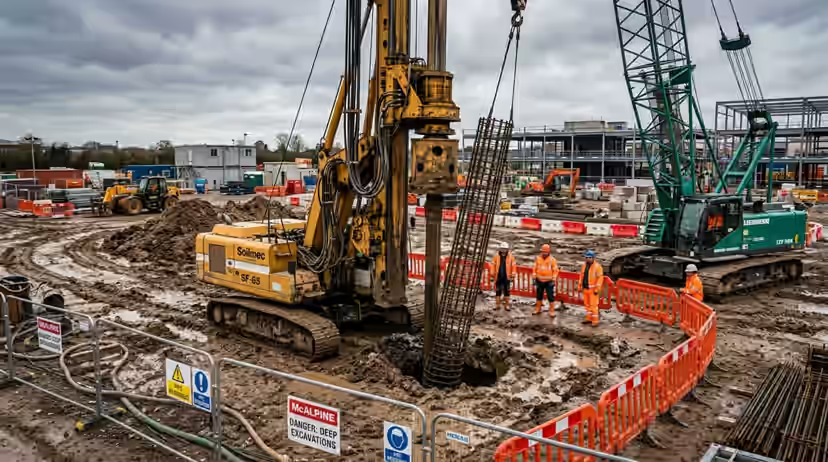
Piling Contractor
Piling for new builds, extensions and structural works on difficult or tight sites.
- Fully Insured
- Commercial & Site Work Specialists
- 5 Star Rated
- Emergency Callout
Piling solutions for residential and commercial projects, including new builds, extensions and structural works. We choose approaches around ground conditions, access constraints and what the structure needs — not a one-size-fits-all rig on every job.
How piling contractors is engineered and delivered
A piling contractor should translate structural loads and geotechnical information into an installable foundation system. Method selection must balance capacity, settlement, vibration, noise, spoil, working platform, testing and the connection between completed piles and the ground-beam or pile-cap package.
Engineering workflow
Stage 1
Ground model and load review
Review boreholes, strata, groundwater, obstructions, pile loads, tolerances and neighbouring sensitivities before selecting the installation method.
Output: Method proposal with design assumptions and information gaps.
Stage 2
Design coordination and preconstruction
Coordinate pile layout, platform design, rig access, service clearances, testing and interfaces with caps, beams, lift pits or retaining structures.
Output: Approved pile design, programme and inspection plan.
Stage 3
Production piling
Install piles under controlled parameters, recording depth, material use and method-specific data while managing spoil, concrete, reinforcement and site movements.
Output: Daily production and pile installation records.
Stage 4
Testing and structural handover
Complete specified testing, trim piles and release verified as-built information so caps and ground beams can proceed without ambiguity.
Output: Test reports, as-built schedule and handover dossier.
Planning, constraints and ground risk
Planning considerations
- Driven, bored, CFA and mini-pile methods have different effects on vibration, spoil, noise and programme.
- A suitable working platform and safe rig access are design and programme prerequisites.
- The pile layout must coordinate with caps, beams, drainage, lift pits and underground services.
- Testing scope and acceptance criteria should be fixed before production, not negotiated at handover.
Site constraints
- Vibration or noise sensitivity beside occupied or fragile structures
- Overhead restrictions and limited rig delivery routes
- Concrete supply, reinforcement handling and spoil removal
- Interfaces with crane bases, basements, retaining walls and live services
Ground conditions
- Weak near-surface soils may require load transfer to deeper strata.
- Variable fill, buried obstructions and former foundations affect productivity and method risk.
- Granular strata and groundwater influence bore support and concrete control.
- Compressible layers and settlement criteria can govern pile length and testing.
Procurement and project preparation
Issue a piling enquiry with loads, geotechnical data, design responsibility, layout, platform information and testing requirements. Tender comparisons should normalise pile quantity and depth assumptions, mobilisation, preliminaries, spoil, concrete, testing and downstream cap interfaces.
Tender checklist
- Geotechnical report, pile loads and settlement criteria
- Design responsibility matrix and review periods
- Working-platform certificate and rig access plan
- Testing quantities, method and acceptance criteria
- Obstructions, spoil, attendance and pile-trimming scope
Prepare before mobilisation
- Freeze structural loads and issue the current geotechnical report.
- Coordinate pile positions with services and substructure openings.
- Design and construct the working platform for the selected rig.
- Book testing, concrete supply and reinforcement deliveries around the production sequence.
Scope clarity and handover
Commercial deliverables
- Pile design calculations and coordinated layout where included
- Method statement, platform requirements and installation sequence
- Pile logs, concrete records and reinforcement certificates
- Integrity and load-test reports as specified
- As-built pile schedule and release for caps or beams
Typical exclusions to resolve
- Ground investigation and structural load derivation unless commissioned
- Unknown obstruction removal and abnormal tooling
- Working-platform construction unless included
- Pile caps, ground beams and pile trimming unless scheduled
Project examples
Representative scenarios with a direct method or package connection to this service family.
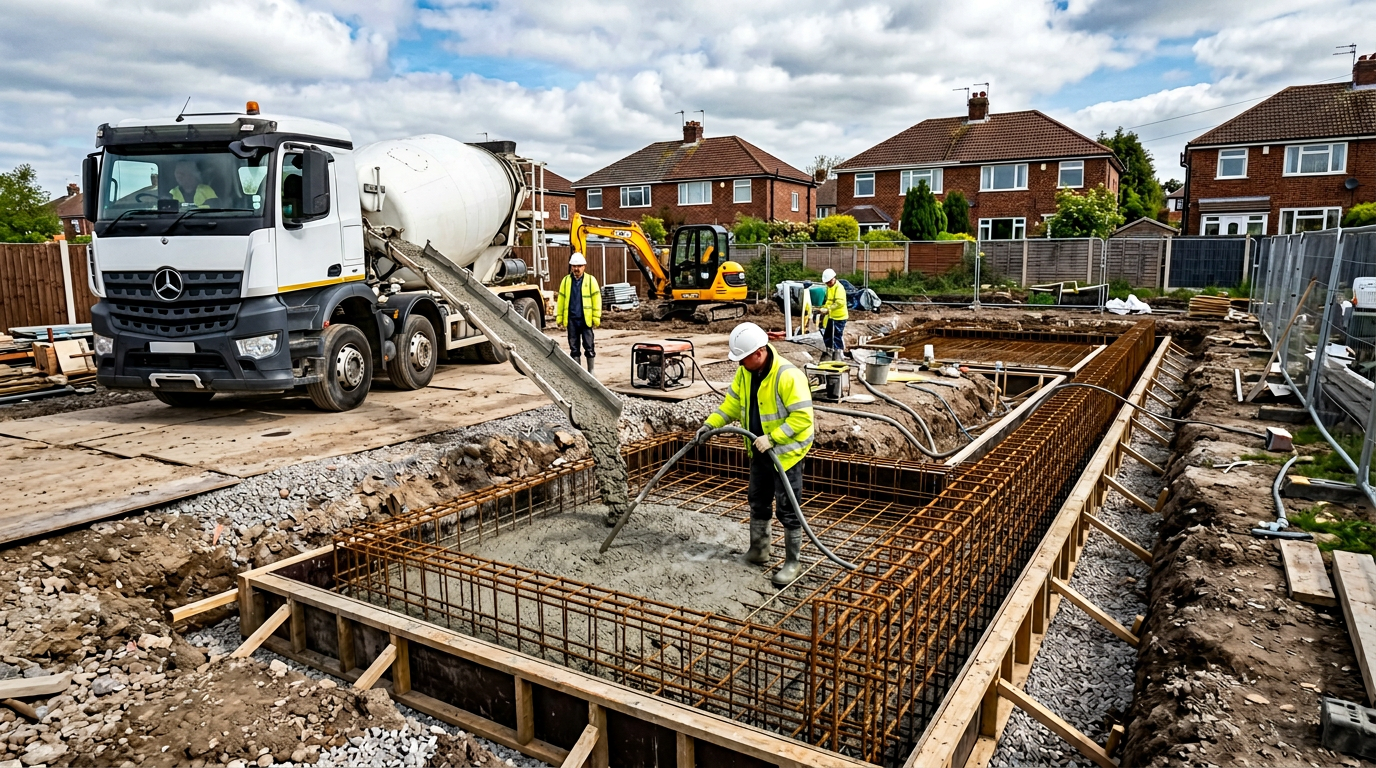
Restricted-Access Piling for an Infill Site
This scenario covers restricted-access piling on a Chiswick infill plot where frontage and headroom shape the install method as much as the ground model. A typical package would match rig choice and pile sequence to what the site can physically accept.
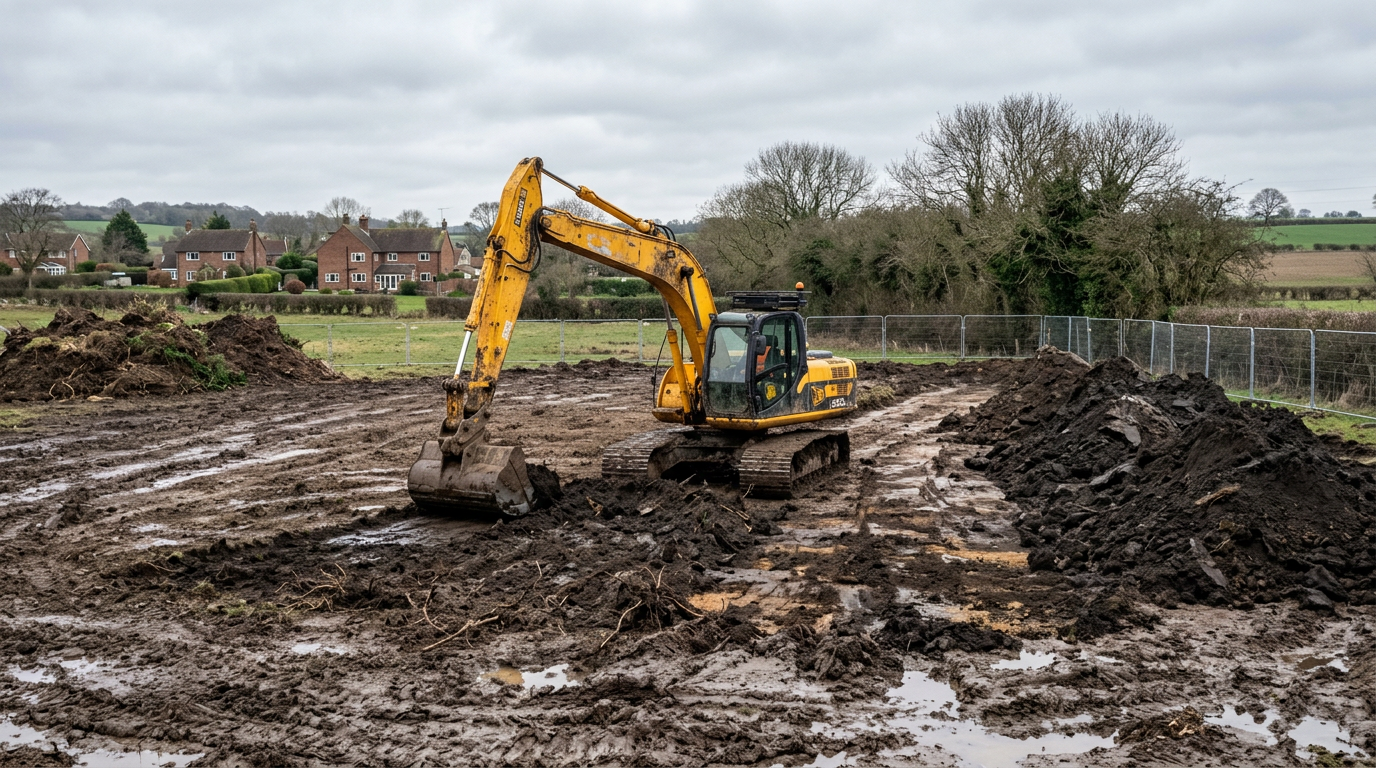
CFA Piling on a Noise-Sensitive Site
This scenario looks at CFA piling where neighbour sensitivity makes vibration and noise control part of the method decision. A typical package would plan installation around available working windows while still meeting the ground support requirements.
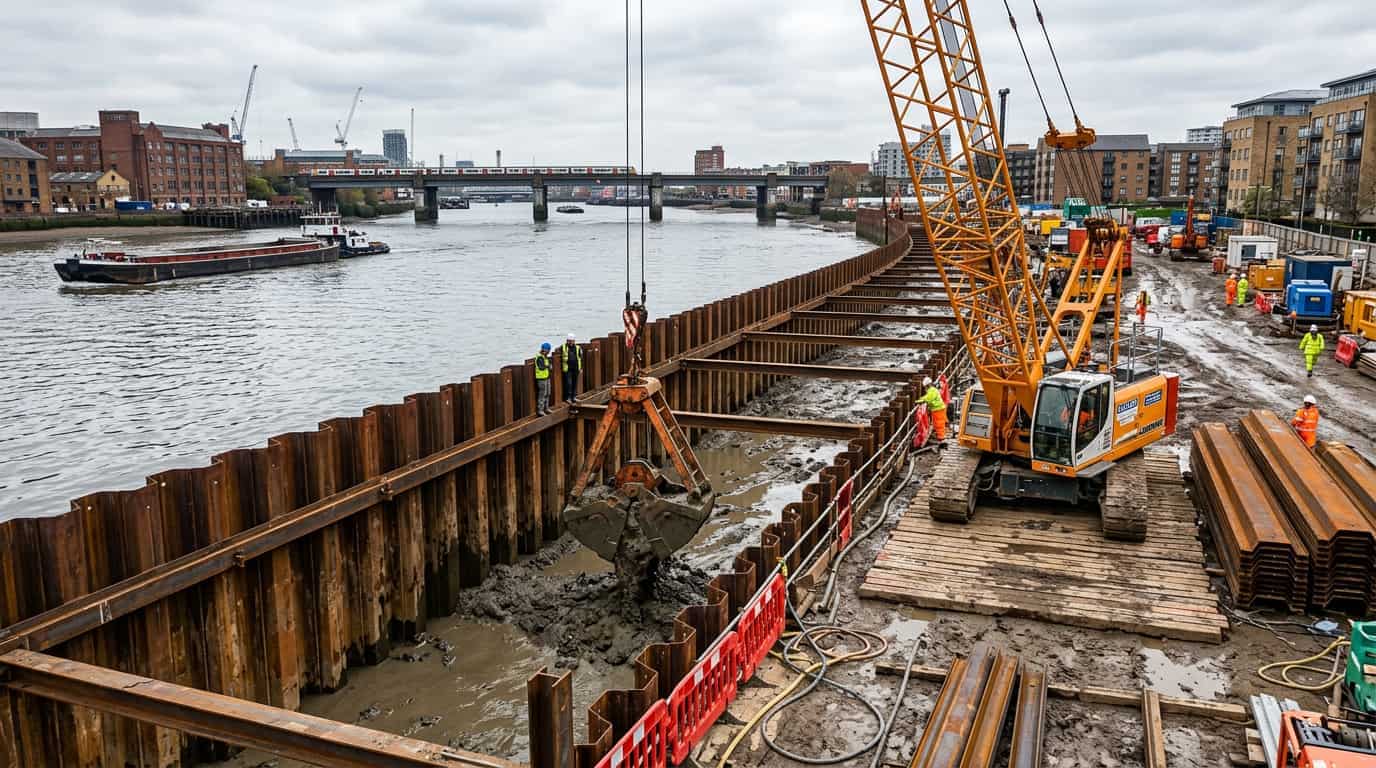
Piled Foundations on Poor Ground
This scenario covers piled foundations where poor near-surface ground rules out relying on shallow bearing alone. A typical package would coordinate pile installation with caps, ground beams and formation so the structure sits on the designed load path.
Related commercial resources

Where Piling Contractor is used
Groundworks projects often involve several specialist disciplines depending on the requirements of the development. Contractors may focus on excavation, piling, drainage installation or foundation construction, often working together to prepare a site for structural works.
- Driven piles
- Bored piles
- Sheet piles
- Design coordination
Early stage, pricing, or procurement question? Share the scope and we will help you work out the right route for the project.
Discuss Your ProjectUseful next steps
Signs you may need Piling Contractors
If you notice these signs, acting early usually keeps costs down and reduces operational disruption.
Industries We Work With
We work with developers, main contractors and clients across commercial and residential construction. Our groundworks teams have experience on housing, offices, warehouses, schools, healthcare and industrial sites throughout the UK.
- Hospitals
- Data centres
- Warehouses
- Office buildings
- Manufacturing sites
- Commercial property
What to expect
A single point of contact for groundworks simplifies coordination and accountability. Packages are delivered to programme with documented site controls, appropriate insurance and practical handover documentation.
- Handles complex soil conditions
- Suitable for restricted access
- Tailored foundation solutions
Related Groundworks Services
Groundworks projects often involve several specialist disciplines depending on the size and complexity of the development. In addition to general groundworks contracting, clients frequently require services such as piling, excavation or foundation installation.
Groundworks Contractors
Full-service groundworks for commercial and residential construction.
Groundworks for Developers
Developer-led groundworks packages: enabling works, foundations, drainage interfaces and adoption-ready civils.
Groundworks for Housebuilders
Plot-led groundworks for housebuilding phases: foundations, services, drainage and phase handovers.
Groundworks for Main Contractors
Subcontract groundworks for principal contractors: live-site sequencing, interfaces and package accountability.
Commercial Groundworks Contractors
Commercial and infrastructure groundworks contractors for developments, yards and civils packages.
Earthworks Contractors
Cut, fill, regrading and formation works for commercial and infrastructure sites.
Roads and Sewers Contractors
Roads, sewers and adoptable infrastructure groundworks for development schemes.
Section 278 Contractors
Section 278 highway works and off-site connection groundworks for developments.
Piling Contractors areas we cover
We deliver groundworks and related services across the UK. Select an area below for local information and contact options.
5 regions · 5 locations across the UK
Ready to move this package forward?
Tell us about the scope, drawings and programme and we will help define the right package, sequencing and next commercial step.
Discuss Your ProjectDiscuss your groundworks project requirements
Share your site details and goals. We will recommend the right scope and provide a clear quote.
Speak to our team about your plansRelated Groundworks Services
Areas We Cover
Key towns and cities — see service areas for full coverage.
Expert guidance
Practical guides for teams planning piling contractor packages — from the topics below, or the full guides & resources hub.
Ground Risk & Site Investigations
Ground investigation, foundation strategy, soil conditions and construction risk.
- Ground Conditions ExplainedGI scope, unforeseen ground risk, foundation strategy, NEC/JCT allocation and commercial contingency.Read guide
- Ground Investigation RequirementsDesk study, trial pits, boreholes, reporting and tender-stage investigation scope.Read guide
- Trial Pits vs BoreholesChoosing investigation methods for foundations, drainage and earthworks packages.Read guide
- Contaminated Land AssessmentsInvestigation interfaces with remediation strategy and groundworks packages.Read guide
- Groundwater & Water Table RiskDewatering, excavation stability, foundation strategy and programme contingency.Read guide
- Managing Groundworks Risk on Brownfield SitesMade ground, obstructions and commercial controls on brownfield packages.Read guide
- Soil Bearing Capacity ExplainedBearing pressure, settlement, shallow vs piled foundations and design implications.Read guide
- Foundation Design StrategyShallow, raft and piled options — how ground risk shapes commercial decisions.Read guide
Areas we cover
Regional coverage across the UK. Open a region for towns we cover, or a county heading for commercial hub context.
Frequently Asked Questions
How should piling tenders be compared?
Compare the same pile loads, assumed depths, quantities, design scope, testing, platform attendance, spoil, obstruction risk and pile-cap interfaces. A low unit rate is not comparable if depth or attendance assumptions differ.
Who decides which piling method is used?
Method selection is coordinated between the piling designer, structural engineer, geotechnical information and contractor buildability input. Capacity is essential, but access, vibration, spoil and programme can rule methods in or out.
What is required before a piling rig arrives?
The project needs approved design information, service clearance, a suitable working platform, a safe rig route, agreed testing and practical arrangements for concrete, reinforcement, spoil and washout.
What records should a piling contractor provide?
Typical records include pile logs, material information, design documents where applicable, testing results and an as-built pile schedule. Contract requirements should define the exact handover pack.
When is piling required?
Piling is required when the ground cannot support conventional strip or pad foundations — for example on made ground, soft soils or where loads are high. A structural engineer will specify piling from the ground investigation.
Ready to move this package forward?
Tell us about the scope, drawings and programme and we will help define the right package, sequencing and next commercial step.