
Who This Guide Is For
This guide explains payment applications and interim valuations on UK groundworks and infrastructure packages — how cash moves from site progress to certified payment, and where disputes usually start. It is written for commercial teams managing civils cashflow, not for generic accounts payable process.
Developers and employers need predictable payment administration that matches inspection and adoption milestones without either overpaying unproven work or starving delivery through late notices and disputed reductions.
Quantity surveyors and contract administrators run the valuation engine: measured quantities, variation status, retention, contra charges and notice deadlines. On groundworks, weak measurement rules create expensive arguments once pipework is buried.
Procurement managers should align contract payment terms, assessment dates and valuation rules with how the package will actually be built — sectional completion on roads and sewers packages is different from a single lump-sum handover.
Project managers need progress cut-off discipline, buried-works inspection before backfill, and a live calendar of application, notice and payment dates.
Housebuilders with phased infrastructure need valuations that track plot-enabling works without waiting for whole-estate adoption — cashflow on early phases often determines whether follow-on plotworks mobilise.
Main contractors and civils subcontractors must treat each application as a cash forecast, not an administrative chore. Late or thin applications forfeit leverage under both NEC and JCT routes.
This guide links to NEC vs JCT, Groundworks Tendering, Ground Conditions, Utility Diversions, S38 & S104 Programme, S278, Infrastructure Bonds, Groundworks Costs, ECI and Roads & Sewers Contractors where payment interfaces affect wider delivery.
How The Payment Process Works
A payment application is usually the contractor's stated amount for work done to date, submitted for an interim payment cycle under the contract. Under UK construction payment legislation, the payer must then issue the required payment notice by the contractual deadline, and if they want to reduce the amount they must serve a valid pay less notice in time. If the payer misses those notice deadlines, the notified sum becomes payable, even if the valuation later looks too high.
On a groundworks project, the application is typically built from measured progress on site, agreed rates, materials on site and sometimes off site if the contract allows, plus variations and any agreed adjustments. That means the application is both a commercial claim and a cash collection tool, so its accuracy and timing matter as much as the physical work itself.
| Step | Who acts | Commercial risk if missed |
|---|---|---|
| Valuation date / cut-off | Both parties | Disputed quantities if progress after cut-off is included or excluded inconsistently |
| Payment application | Contractor | Late or weak application delays cash; may become default notice if contract allows |
| Payment notice | Payer / CA / PM | Missed deadline — notified sum generally payable under Construction Act framework |
| Pay less notice | Payer | Invalid or late notice — full notified sum due; true-value dispute deferred |
| Final date for payment | Payer | Cashflow pressure, supply chain default, project slowdown |
The Construction Act framework underpins the notice regime on most UK construction contracts. Parties cannot contract out of the core payment notice requirements in regulated agreements. Commercial teams should know the exact dates in their contract — not approximate month-end habits.
Payment administration is separate from final account. Interim cycles should capture progress and instructed change as it happens. Letting value accumulate in a final account negotiation is a common source of contractor insolvency pressure on long civils packages.
Interim Valuations
An interim valuation is the professional assessment of the value of work completed at a given point in the cycle. In JCT-style administration, it may be based on the contract administrator's or employer's valuation and then reflected in an interim certificate, while in NEC it is linked to the assessment of the amount due at each assessment date.
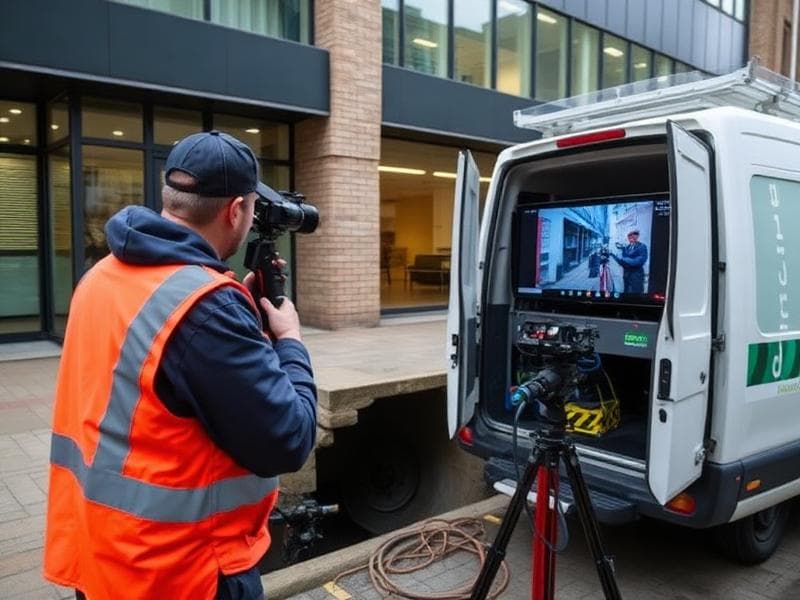
For groundworks, interim valuations tend to focus on progress that can be measured and evidenced: excavation completed, muck away, drainage laid, manholes installed, attenuation tanks, road sub-base, kerbs, service ducts, and tested ducting or chambers. The commercial challenge is that much of the value is hidden below ground, so photos, marked-up drawings, setting-out records, delivery notes, test results, and site records become critical.
Valuations should reflect work that is complete per the contract definition — not merely started. On adoption-led works, agree whether testing, backfill, as-built submission or inspection sign-off is a condition of valuation.
Interface with drainage adoption and S38/S104 programme milestones: holding back value for incomplete inspection records is legitimate; holding back all drainage value until vesting is usually commercially destructive.
Monthly Valuation Cycles
Most groundworks packages run on a monthly cycle, though some heavily phased packages may use four-week or milestone-based cycles. The commercial point is that the valuation should be cut off cleanly at the agreed valuation date, with a disciplined deadline for submitting the application, checking the employer's notice, and resolving pay less items before the final date for payment.
Monthly cycles help both sides forecast cashflow, but they also create pressure because costs hit early while receipts lag by several weeks. That lag is especially painful in groundworks where labour, plant, tipper hire, aggregate, fuel, testing, and specialist subcontractors are often paid before the next valuation is certified.
Live payment calendars should show: valuation date, application due, payment notice due, pay less notice due, final date for payment, and retention deducted. Both parties benefit from the same calendar — disputes often start when dates are interpreted differently.
Phased housing and infrastructure jobs may mix monthly assessments with milestone gates for mobilisation, utility completion or adoption-ready sections. Procurement should document which items are milestone-valued versus measured monthly.
Employers model retention and certification lag in project cashflow. Contractors model the same in working capital facilities. Underestimating the gap between spend and certified receipt is a common feasibility error — see groundworks pricing calculator.
Applications Vs Certificates And Notices
An application for payment is usually the contractor's own statement of what is due, while a certificate or payment notice is the payer's formal response confirming what they consider payable. Under JCT, the terminology varies by contract form, but the same practical issue remains: the document that controls the payment timetable must be valid and on time.
This distinction matters because a contractor's application can become the default payment notice if the contract allows it and the payer does not issue a valid notice. That is one of the most important cashflow protections in UK construction, and it often decides whether the contractor gets paid the full amount or has to wait for a later true-value dispute.
Pay less notices must comply with contract form and Construction Act framework requirements — sufficient detail, correct timing, correct recipient. Informal emails reducing value are not a substitute.
Contractors should monitor three outcomes each cycle: valid payment notice issued; valid pay less notice issued in time; or neither — in which case the notified sum from the application may be due in full.
True-value disputes can run after payment. The notice regime decides what is paid now; adjudication or negotiation may adjust later periods.
Measured Works
Measured works are the backbone of groundworks valuation. The quantity surveyor or commercial manager will usually value excavation by m³, disposal by m³ or tonne, fill by m³, concrete by m³, ducting by metre, kerbs by metre, paving by m², and manholes or chambers by item, subject to the bill of quantities or agreed schedule of rates.
The valuation should track measured installed work, not just theoretical design quantities, so the team needs robust site measurement and agreed rules for what counts as complete. On roads and sewers jobs, this often means partial valuation of completed sections, with holdback or reduced valuation where testing, backfilling, tie-ins, surfacing, or adoption-related obligations are still outstanding.
| Work item | Typical measure | Valuation note |
|---|---|---|
| Excavation / muck away | m³ or tonne | Measure installed cut; agree disposal tickets and haul routes |
| Fill / import | m³ | Compaction and layer records support quantity sign-off |
| Drainage pipework | metre | Value laid and tested lengths; hold back untested sections |
| Manholes / chambers | item | Photograph and inspect before backfill for evidence |
| Road sub-base / paving | m² or m³ | Partial sections valued when layers tested and complete |
| Kerbs / ducting | metre | Agree what counts as complete vs snagging holdback |
Agree rules at mobilisation: how partial pipe runs are measured; whether manholes are valued at base install or after benching and testing; how haul routes and tip evidence support muck-away quantities.
Setting-out records and as-built mark-ups should match application quantities. QS teams cannot value confidently from contractor percentages alone on civils work.
Variations And Adjustments
Variations are a major source of valuation movement in groundworks because underground conditions rarely follow the tender drawings exactly. Typical examples include deeper excavations, additional import or disposal, rock breaking, groundwater control, redesign of drainage runs, utility diversions, extra concrete, or changes to road construction build-ups.
Commercially, the key is to separate instructed variation value from normal progress value, and to update the application promptly rather than waiting for a final account. Early valuation of variations improves cashflow and reduces the risk of them being treated as pending agreement for months, which is a common source of contractor-financing pressure.
Ground conditions and utility diversions are the most frequent variation drivers on civils packages — Stage 1 or tender risk allocation should not become silent final-account items.
Under NEC, compensation events should appear in the assessment breakdown each cycle where notified and assessed. Under JCT, variation valuation principles agreed at instruction speed up certification.
Retention And Contra Charges
Retention is a deduction made from payments to protect the client against defects or incomplete work, and in UK construction it is commonly 3% to 5%, although the exact rate depends on the contract. For contractors, retention is a direct hit to working capital because part of each monthly valuation is withheld until practical completion and sometimes beyond the defects period.
Contra charges are deductions for costs the payer says it has incurred because of the contractor's default, such as remedial works, delays, damage, waste removal, or third-party call-backs. In groundworks, contra charges often arise from failed levels, damaged services, insufficient compaction, defective reinstatement, or temporary works failures, and they should be fully evidenced and contractually justified before being deducted.
Retention release should be tied to defined completion and defects milestones — align with adoption and bond release on infrastructure jobs via Infrastructure Bonds & Sureties.
Challenge contra charges promptly with records. Deductions for remedial works need instruction trail, cost backup and contractual basis — not generic set-off.
Employers: retention is not a substitute for performance security on high-risk packages. Contractors: model retention cumulatively across multiple civils subcontracts on the same development.
NEC Payment Process
Under NEC, the contractor submits an application for payment before each assessment date, and the amount due is based on the Price for Work Done to Date plus other amounts and less amounts to be paid or retained. If the contractor does not submit an application on time, the Project Manager still assesses the amount due, but the contractor may lose leverage and can easily suffer a cashflow delay.
NEC is highly process-driven, so the assessment date, notice timing, and breakdown of the application matter. For commercial teams on groundworks and infrastructure jobs, that means keeping a live assessment calendar, issuing a clear substantiation pack, and ensuring every variation, compensation event, and deduction is visible before the assessment date.
| Element | NEC | JCT |
|---|---|---|
| Contractor submission | Application for payment before each assessment date | Application for interim payment per contract timetable |
| Payer response | Project Manager assesses amount due at assessment date | Interim certificate or payment notice; pay less notice if reducing |
| Value basis | Price for Work Done to Date plus other amounts less deductions | Valuation of work done and agreed variations per contract form |
| Late contractor application | PM still assesses — contractor may lose leverage and cashflow timing | Depends on contract; notice mechanics still govern payer position |
| Variations / change | Compensation events visible in assessment breakdown | Valued as variations; timing and notice rules per form |
| Commercial discipline | Live assessment calendar and substantiation pack each cycle | Strict application and notice deadline monitoring |
Read NEC vs JCT for Groundworks Projects for wider risk allocation — payment process quality depends on the same early warning and record discipline as programme management.
Substantiation packs should include: measured quantity sheets, photos, test results, delivery tickets, variation/compensation event register, and prior period adjustments explained.
JCT Payment Process
Under JCT, payment mechanics depend on the form of contract, but the common pattern is a monthly interim valuation followed by an interim certificate or payment notice, with the employer able to issue a pay less notice if it wants to reduce the amount due. JCT contracts also require careful attention to the exact payment timetable, because missing a notice deadline can force payment of the full notified sum.
For groundworks contractors, the practical JCT lesson is to make the application deadline non-negotiable and to monitor whether the employer's notice is valid, late, or missing. Courts have repeatedly treated timing failures seriously, so the commercial team should not assume a rough valuation discussion is enough to protect the payer's position.
Contract administrators must issue documents in the correct form and sequence. Employers relying on informal reductions without pay less notice risk paying the notified sum.
Two-stage and ECI routes need clear Stage 1 fee assessments separate from Stage 2 PWDD — do not mix preconstruction and construction values in one ambiguous application.
Cashflow Management
Cashflow is usually the main commercial battleground in groundworks because the contractor funds labour, plant, materials, tipping, testing, and subcontract support long before all of that value is certified. Even a well-priced job can become financially painful if the valuation lags behind progress, if retention is high, or if variations are left out of the monthly application.
Best practice is to treat every valuation as a forecast of recoverable cash, not just a record of work done. That means building in a valuation timetable, maintaining a cost-to-complete view, issuing variation notices early, tracking materials orders, and escalating overdue notices before they damage the payment chain.
Developers should align payment cycles with contractor preliminaries and bond obligations. Late payment on civils can stall S38/S104 inspection readiness when the contractor cannot fund testing and remedials.
Use groundworks pricing calculator to stress-test how certification lag and retention affect total cost-to-deliver versus headline tender price.

Groundworks-Specific Valuation Issues
Groundworks valuation is harder than many above-ground trades because much of the work disappears after inspection. If the team does not capture it immediately, it becomes difficult to prove the quantity, quality, and date of completion later on.
Typical groundworks-specific issues include: hidden works buried before inspection or valuation; temporary works that support permanent works but are not easy to price; weather delays that affect productivity and muck away; interface risk with utilities, highways authorities, and adoptable networks; and design change from utility clashes, drainage revisions, or levels adjustments.
Temporary works may need explicit valuation rules — working platforms, sheet piles, dewatering — especially where they extend across multiple months.
Weather impact on productivity is a programme and commercial issue. Document stand-down and lost output if contract mechanisms address prolongation; do not rely on valuation meetings to retrospectively invent narrative.
Adverse ground conditions discovered during excavation should trigger variation notification and same-cycle valuation where instructed — not burial in final account.
Roads, Sewers And Utilities
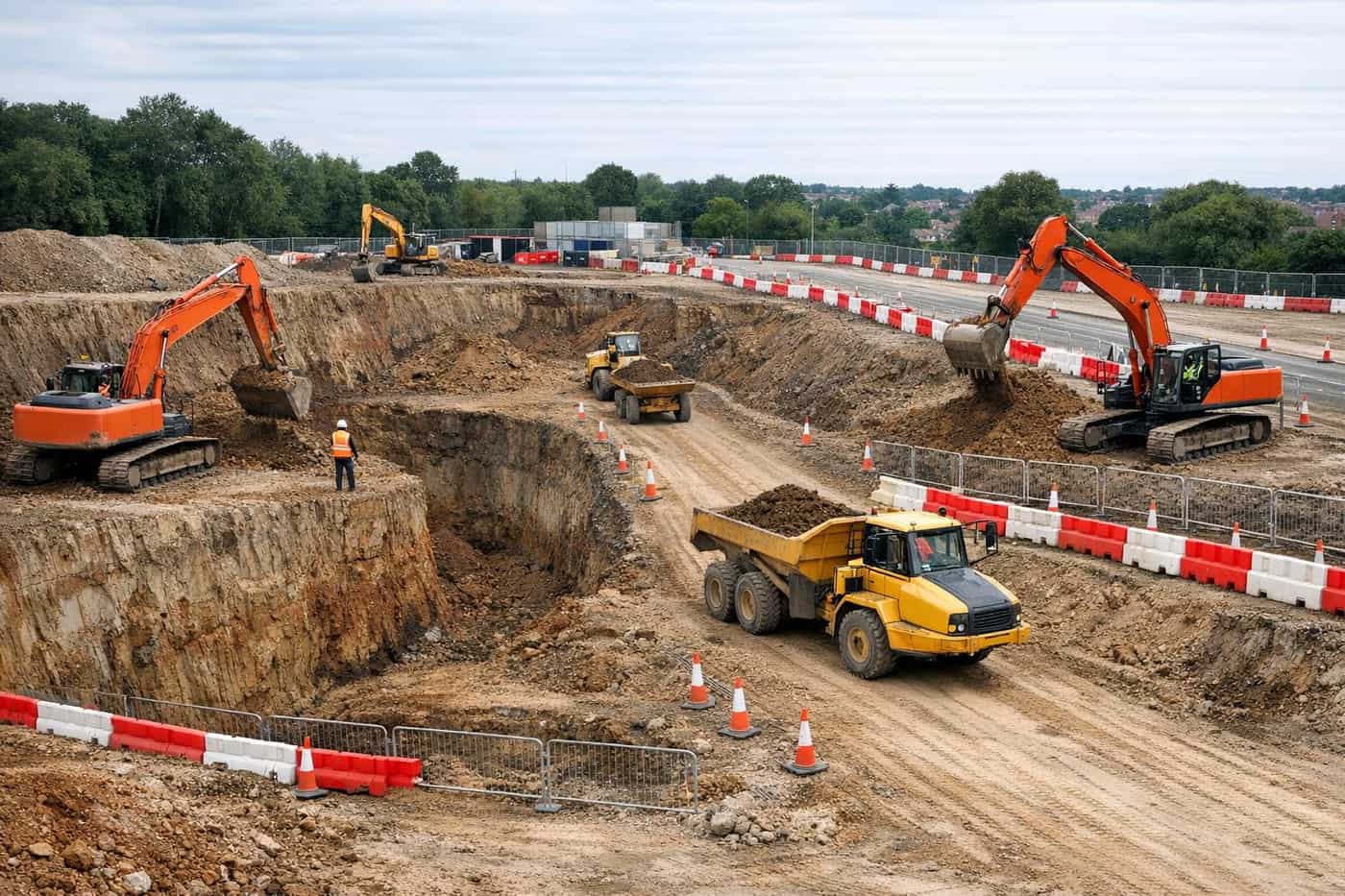
Roads and sewers packages are especially sensitive because progress is often sequential and interdependent. A short delay on drainage, for example, can hold up road construction, testing, surfacing, and adoption, which in turn suppresses the next valuation and can create a false impression of underperformance.
Utility works bring their own valuation issues, including open-cut crossings, service protection, statutory undertaker interfaces, permits, testing, and reinstatement standards. On infrastructure jobs, the commercial team should value completed sections as soon as they are physically and contractually complete, rather than waiting for whole-plot or whole-network milestones that push cash receipt too far into the future.
The Roads & Sewers Contractors Guide and Utility Diversions guide describe delivery sequencing — valuation rules should mirror sectional completion on those workstreams.
S278 streetworks and reinstatement often cross monthly cut-offs — agree whether completed bays are valued before full junction completion.
Adoption inspections failed at month end may justify holdback on specific lengths — not withholding valuation of unrelated completed drainage elsewhere on site.
Common Disputes
The most common disputes are usually about scope, timing, and proof. Contractors argue they have done more work than the client has valued; clients argue quantities are overstated; both sides argue about whether a variation was instructed; and everyone argues about whether a notice was valid and in time.
Other frequent dispute points include retention release, contra charges, losses from disrupted sequencing, omitted preliminaries, materials off site, and whether a hidden item was actually complete at the valuation date. In groundworks, disputes often escalate because once the work is covered up, the evidential fight becomes much harder and more expensive.
Notice timing disputes are among the most expensive relative to the amount in issue — pay the notified sum and argue true value later, or serve a valid pay less notice on time.
Preliminaries undervaluation on prolonged utility or adoption delay is a recurring theme. Tie prolongation claims to contract mechanisms (NEC vs JCT) rather than informal monthly reductions.
Materials off site valuation needs contract entitlement and evidence of order, payment and identification.
Best Practice For Clients And Employers
Clients should lock down the valuation rules before site start and make sure the contract documents are consistent. They should also keep the monthly process disciplined, with clear deadlines for applications, valuations, notices, and payment so that the commercial team is not relying on informal emails or late approvals.
For groundworks packages, clients should insist on clear measurement rules and marked-up progress records; early agreement of variation valuation principles; timely inspection of buried works; a robust retention policy and transparent release process; and properly evidenced contra charges only where there is a real contractual basis.
Align valuations with inspection and adoption milestones on S38/S104 packages — underpaying tested drainage because surfacing is incomplete may be contractually valid; withholding all civils value until adoption is not.
Tender evaluation under Groundworks Tendering should include payment terms, cashflow assumptions and commercial resource — not only headline price.
Best Practice For Contractors
Contractors should submit a complete, evidence-led application every cycle and never leave hidden works undocumented. The stronger the backup, the harder it is for the payer to justify a reduction, delay, or wait-and-see approach.
A good contractor process should include daily records of quantities installed and areas completed; photographic evidence before backfill or cover-up; copies of delivery tickets, test results, permits, and inspection requests; separate registers for variations, provisional items, and contra-charge disputes; and a live payment timetable showing application, notice, and final payment dates.
Nominate one commercial owner per package who owns the application, substantiation and notice response each cycle.
Escalate missing or late employer notices immediately — contractual rights expire quickly.
Train site supervisors to understand valuation cut-off — work done after cut-off belongs to next month; work done before cut-off must be recorded now.
Developer And Commercial Checklist
Use this checklist before mobilisation and at each monthly cycle on groundworks packages.
Related project scenarios
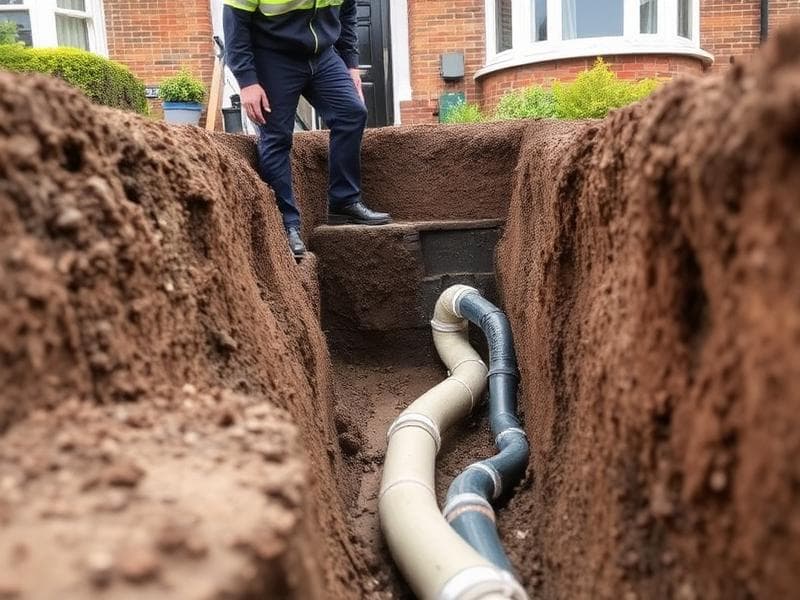
Housing estate roads and sewers — month four valuation
Phased adoptable drainage and estate road sub-base on a residential scheme, with surfacing and S104 vesting still ahead.
Procurement challenge: Contractor completed measured drainage runs and manholes but waited to value until the whole estate was ready for adoption sign-off. Cash lagged four weeks behind plant, tipper and labour spend.
Commercial outcome: Programme: no slip on physical works, but subcontractor payment pressure threatened drainage gang continuity. Cost: financing cost on uncertified work; retention compounded the gap. Procurement: contract allowed sectional measurement — earlier award would have clarified valuation rules. Delivery: restructured applications to value tested drainage and road sections monthly; cashflow stabilised without waiting for whole-estate completion.
Commercial utility diversion package
Open-cut crossings, service protection and reinstatement on a constrained urban plot with deeper-than-tender excavation.
Procurement challenge: Extra obstructions and deeper excavation arose from utility clashes. Contractor logged variation verbally but left value out of the next three monthly applications pending engineer agreement.
Commercial outcome: Programme: diversion completion on track but contractor cash negative on the package. Cost: variation finally valued at month five with haulage tickets and photo evidence — earlier application would have improved month-two cash. Procurement: NEC contract supported compensation event visibility; weak substantiation delayed assessment. Delivery: separate variation register and same-cycle valuation restored payer confidence.

Infrastructure enabling works — pay less notice dispute
Bulk earthworks, deep drainage and S278 interface works with monthly NEC assessments and high preliminaries burn rate.
Procurement challenge: Employer served a late pay less notice after informal valuation discussions. Contractor argued the notified sum was payable; employer relied on understated measured muck-away quantities.
Commercial outcome: Programme: dispute absorbed commercial management for six weeks; follow-on drainage slowed. Cost: adjudication exposure and legal spend on both sides; true-value argument continued after payment. Procurement: measurement rules and cut-off dates were not locked at mobilisation. Delivery: marked-up progress records and weighbridge tickets from month one would have narrowed the dispute — lesson: protect the payment timetable with evidence, not emails.
Related commercial services
Related infrastructure guides
- NEC vs JCT for Groundworks ProjectsPayment mechanics, notices and risk allocation.Read guide
- Groundworks Tendering GuidePayment terms and commercial evaluation at award.Read guide
- Early Contractor InvolvementStage 1 fees and Stage 2 assessment conversion.Read guide
- Roads & Sewers Contractors GuideSectional completion and adoption interfaces.Read guide
- Utility Diversions for Development SitesValuing diversion and reinstatement progress.Read guide
- Ground Conditions ExplainedVariation drivers from unexpected ground.Read guide
- S38 & S104 Programme ExplainedInspection milestones and valuation holdbacks.Read guide
- S278 Agreements ExplainedStreetworks completion and interim value.Read guide
- Drainage Adoption ProcessTesting and records supporting certification.Read guide
- Infrastructure Bonds & SuretiesRetention, bonds and cashflow together.Read guide
- Groundworks pricing calculatorWorking capital and cost-to-complete planning.Read guide
Frequently asked questions
What is the difference between a payment application and a valuation?
The application is the contractor's claim for payment. The valuation is the assessed amount of work and changes that should be paid for that cycle, reflected in certificates or payment notices.
How often are valuations done on groundworks projects?
Most groundworks projects use monthly valuations, although some contracts use different assessment dates or milestone cycles.
Can the client reduce my application without notice?
Usually not. If the payer wants to pay less than the notified sum, it must serve a valid pay less notice in time under the contract and the Construction Act framework.
What happens if the payer misses the notice deadline?
The notified sum is generally payable, even if the payer later believes the true value is lower. True-value disputes may continue separately.
How should hidden groundworks be valued?
Record them before cover-up using photos, inspections, measurements, test results and contemporaneous site records. Value them in the cycle when complete per contract definition.
Why is cashflow so difficult in groundworks?
Contractors pay labour, plant, materials, disposal and subcontractors early, while certified payment often arrives weeks later and may be reduced by retention or deductions.
What is the biggest commercial mistake on payment cycles?
Failing to protect the payment timetable — late or unsupported applications, or invalid notice processes, create avoidable disputes and cashflow damage.
What is a pay less notice?
A formal notice served by the payer in time to pay less than the sum stated in the payment notice or application. It must comply with contract and Construction Act framework requirements.
How does NEC assess payment?
The contractor applies before each assessment date. The Project Manager assesses the amount due based on Price for Work Done to Date plus other amounts less deductions. Late applications can delay cashflow.
How does JCT interim payment work?
Typically monthly interim valuation, interim certificate or payment notice, and pay less notice if reducing. Exact dates and forms depend on the JCT contract used.
When should variations appear in applications?
In the next application after instruction and evidence are available — not at final account. Early variation valuation improves contractor cashflow.
What retention is typical in UK groundworks contracts?
Commonly 3% to 5% depending on the contract, deducted from interim payments until practical completion and often partly until defects period ends.
What are contra charges?
Deductions for costs the payer claims due to contractor default — remedials, damage, waste, delays. They need contractual basis and evidence before deduction.
Can I value roads and sewers before full adoption?
Yes for measured completed sections that meet contract completion criteria. Waiting for whole-estate adoption often delays cash unnecessarily — see roads and sewers delivery guides.
What evidence supports muck-away valuation?
Haulage tickets, weighbridge records, agreed haul routes, daily quantity records and marked-up cut volumes tied to valuation cut-off.
Does late contractor application affect NEC payment?
The Project Manager still assesses amount due, but the contractor may lose leverage and suffer cashflow delay if applications are habitually late or incomplete.
How do utility diversions affect valuations?
Value completed crossings, protections and reinstatement sections as they finish. Waiting for whole diversion network completion pushes cash receipt too far forward — see utility diversions guide.
Should materials off site be included?
Only if the contract allows and items are properly evidenced — orders, payment, identification and delivery status per contract terms.
How do adoption inspections affect certification?
Failed or incomplete inspection records may justify holdback on specific adoptable works. Unrelated completed work should still be valued per measurement rules.
What should employers fix before site start?
Measurement rules, variation principles, retention release, notice deadlines, buried-works inspection process and alignment with contract form — see NEC vs JCT guide.
Payment applications and valuations are where groundworks commercial reality meets site progress. A contractor can be ahead on programme and still in cash crisis if applications are late, buried works unrecorded, variations parked for later, or employer notices mishandled. An employer can be paying fairly and still face adjudication if pay less notices are informal or late.
For developers, quantity surveyors, procurement managers, project managers, housebuilders and main contractors, the discipline is the same: agree the rules at mobilisation, measure what is installed, certify on time, and treat the notice calendar as non-negotiable. On civils packages, evidence before backfill is worth more than any retrospective QS estimate.
Groundworks payment is harder than above-ground trades because value disappears into the ground. The teams that manage it well run monthly cycles like a controlled commercial process — registers, photos, tickets, tests, sectional measurement on roads and sewers, and variations in the same cycle they are instructed.
Use the checklist and related guides to align payment administration with adoption, utilities and contract form. Then monitor every deadline — because under the UK payment notice regime, timing failures often matter as much as the measured quantity.
Mainline Groundworks delivers measurable, record-backed civils progress on residential, commercial and infrastructure schemes — supporting valuations that stand up to payer scrutiny on roads and sewers, utilities and enabling works. Share your contract route and programme and we will advise on delivery structures that support clean interim certification.
Discuss payment and delivery on your civils package
Share your contract form, programme and adoption milestones — we will advise on measurable progress and record-backed delivery.