
What A Section 278 Agreement Is
A Section 278 agreement is a legal agreement between the developer and the highway authority that allows works to be carried out to an existing public highway. The purpose is to make sure the highway works are designed, approved, built, inspected, and handed over to the required standard, while protecting the public interest and the network as a whole.
In most cases, the agreement is tied to a planning consent or a planning condition that requires highway improvements to support the development. The agreement is not simply a licence to dig up the road; it is a controlled process with technical approval, bond requirements, pre-commencement conditions, inspections, and completion sign-off.
For development teams, the key point is this: an S278 affects both design and delivery. If the works are on the public highway, the programme must allow time for approvals, utility checks, traffic management, statutory undertaker coordination, and the highway authority's inspection process. Where the wider scheme includes adoptable estate roads or drainage, see how this fits alongside the S38 and S104 programme on the same development.
Highways Act Background
The statutory basis for S278 is section 278 of the Highways Act 1980. The Act is the core piece of legislation governing highway authority powers and agreements relating to highways in England and Wales. In practice, section 278 is the route that lets a developer fund and carry out alterations or improvements to an existing public highway where the works are associated with development.
The important commercial point is that the highway authority remains responsible for the highway network, but the developer takes on the duty to deliver the scheme in accordance with the approved design and agreement. That means the developer bears the operational burden even though the works benefit the network and the wider public.
The legislation also sits alongside other highway provisions that allow work affecting roads, crossings, junctions, and related infrastructure to be managed by agreement or order. For project teams, this matters because S278 does not exist in isolation; it sits inside a wider framework of highway, planning, and adoption requirements that often need to be sequenced together.
When S278 Is Required
S278 is usually required when a development needs permanent works to the existing adopted highway outside the red line of the site, or where the scheme changes how the public road network operates. The trigger is not just road works in the abstract; it is whether the public highway needs to be altered to accommodate access, capacity, safety, or traffic movement associated with the development.
Typical examples include new or changed access into a development site; bell mouths, priority junctions, roundabouts, or signalised junctions; new or altered pedestrian crossings; right turn lanes or ghost island layouts; visibility improvements; highway widening or local realignment; bus stops, lay-bys, or passenger infrastructure; associated drainage, signing, lining, street lighting, and tie-ins; and works needed because of utility diversions or statutory undertaker constraints.
The exact requirement depends on the local highway authority, the planning consent, and the impact assessment for the development. In some schemes, the highway authority may require S278 works as a condition of occupation or as a pre-commencement item, which is why the agreement needs to be brought into the programme early — often in parallel with site preparation and enabling works planning.
Typical Works Under S278
S278 works are often broader than many development teams first assume. They are not limited to cutting a new access bell mouth; they can involve major junction redesign, traffic signal installation, carriageway widening, footway reconstruction, drainage tie-ins, kerbing, signage, lining, lighting, and landscaping in the highway corridor.
Common scheme types include new development access roads tying into the existing public highway; junction improvements where additional turning capacity is needed; signalised junctions; roundabout works; pedestrian crossings; visibility improvements; highway widening; bus infrastructure; and utility diversions or protection measures needed to enable the highway build.
For commercial and delivery teams, the practical issue is that each element can have a different lead time and specialist subcontractor requirement. A simple access junction may be relatively straightforward, while a signalised junction with diversions, traffic management, and multiple utility interfaces can become a long-lead item that dictates the start date for the wider scheme — work that specialist Section 278 contractors are appointed to manage.
How S278 Works In Practice
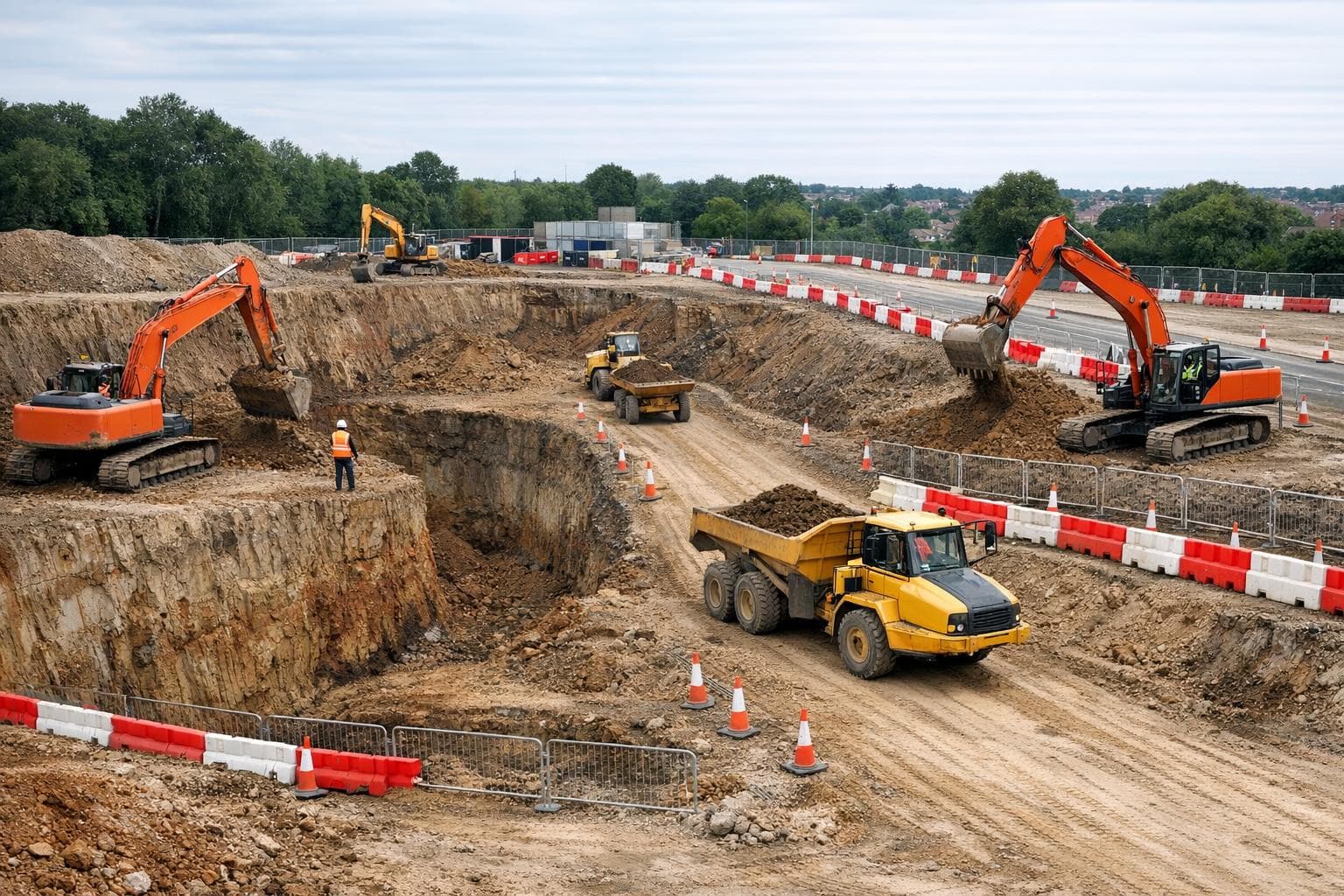
In most authorities, the process starts with concept design and an initial discussion with the highway authority or its technical approval team. The design then moves through review, comment cycles, technical approval, and agreement drafting before the developer can begin works on the public highway.
A useful way to think about it is that S278 combines design management, legal approval, and construction control. The developer cannot usually treat the works like a normal private groundworks package because the highway authority will control standards, sequencing, inspections, and completion requirements.
Most authorities will also require a bond or security, which is intended to protect the highway authority if the developer or contractor fails to complete the works properly. That means commercial teams need to allow for bond costs, legal fees, authority fees, survey costs, and the potential effect on working capital — themes covered in more detail under cost drivers below.
How S278, S38 and S104 Work Together
Many developments need all three agreements to be coordinated properly: S278 for works to the existing highway, S38 for adoption of new roads, and S104 for sewer adoption. The mistake many projects make is treating them as separate workstreams with separate priorities, when in reality they are tightly linked in design, drainage, and programme terms.
The interaction matters because road levels, drainage falls, kerb lines, utility corridors, lighting columns, and commuted sum positions often affect all three agreements at once. A design change that improves the S278 junction can also alter the S38 road geometry or create a conflict with S104 drainage runs. Our roads and sewers delivery model is built around managing that interface on live sites.
S278 vs S38 vs S104 — comparison at a glance:
| Agreement | Purpose | Authority | Infrastructure covered | Typical trigger | Who adopts | Common risks | Programme impact |
|---|---|---|---|---|---|---|---|
| S278 | Works to the existing public highway | Local highway authority | Junctions, signals, access tie-ins, widening, crossings, bus infrastructure | Development affects adopted highway outside site red line | Highway authority retains network; works completed to authority standard | Utility clashes, traffic management, bond delays, authority comment cycles | Site access, enabling works, start on superstructure |
| S38 | Adoption of new roads | Local highway authority | Estate roads, footways, verges, lighting within development | New adoptable highway on site | Highway authority after maintenance period | Design revisions, inspection failure, incomplete records | Road opening, plot access, sales release |
| S104 | Adoption of sewer assets | Water company / sewerage undertaker | Foul and surface water sewers, manholes, pumping assets | New drainage network on development | Sewerage undertaker after testing and sign-off | Hydraulic redesign, failed testing, security/bond queries | Plot drainage, attenuation, phased occupation |
A practical delivery sequence is usually: S278 defines the tie-in works to the public highway; S38 defines the new internal roads intended for adoption; S104 defines the drainage strategy and adoption boundary; then highway and drainage designs are coordinated so they do not conflict in construction or adoption.
On live projects, this coordination is critical. If the S278 design assumes an access level or tie-in point that later changes, the S38 road geometry and S104 drainage gradient can both be affected, leading to redesign, delay, and cost growth. The S38 and S104 programme guide sets out adoption sequencing in more depth; commercial drainage contractors input is often needed where wet infrastructure crosses the highway corridor.
Typical S278 Programme Timeline
A typical S278 programme should be planned from the earliest project stage, not after the main contractor is already mobilised. The approval process can be lengthy because it depends on design development, highway authority review cycles, bond agreement, and pre-commencement compliance.
| Stage | What happens | Commercial risk |
|---|---|---|
| Land acquisition | Site secured; highway constraints identified | Late identification of obligations can affect viability |
| Planning | Highway impacts assessed; conditions set | Poor assumptions create redesign after consent |
| Design | Preliminary and detailed highway design developed | Scope changes cascade through infrastructure package |
| Technical approval | Highway authority reviews and comments | Multiple cycles can move start date significantly |
| Bond | Performance security agreed and arranged | Bond delays prevent signing and starting works |
| Construction | Approved contractor delivers works on highway | Traffic management and utilities disrupt productivity |
| Inspections | Authority inspects at agreed stages | Snagging or non-compliance delays completion |
| Completion | Works signed off and released | Final approvals affect occupation milestones |
The key commercial lesson is to treat the S278 timeline as a critical path item. If access works are required before superstructure starts, then the whole development programme can depend on how quickly the S278 is progressed — particularly on groundworks for developers and groundworks for main contractors schemes where access gates plot starts.
Typical S278 Costs and Budget Considerations
S278 schemes are commercially sensitive because cost is driven by scope, authority process, and third-party interfaces — not by a single civil unit rate. The guidance below explains typical cost drivers without quoting prices, so commercial teams can structure allowances and procurement realistically.
Design fees cover concept through detailed highway design, swept path analysis, visibility, drainage coordination, signing and lining, lighting, road safety audit responses, and resubmissions after authority comments. Late design change is one of the largest indirect costs because it retriggers review cycles.
Highway authority fees include application, technical approval, inspection, and completion charges that vary by authority and scheme type. Programme risk sits in comment cycles and re-review where scope shifts after initial submission.
Bonds and security tie up working capital or facility headroom until completion and sign-off. Bond wording, value, and release conditions should be in the master programme from feasibility — not added when construction is imminent.
Traffic management is a first-order cost driver on busy networks. Temporary signals, lane closures, pedestrian management, and possession windows affect productivity, subcontractor pricing, and the authority's acceptance of the method of working.
Utility diversions often sit outside the highway contractor's direct control but inside the developer's commercial risk. Statutory undertaker lead times, trial holes, protection, and diversion construction can dictate when the S278 physically starts.
Surveys including topographical, utility records, trial pits, and as-built requirements feed both design and close-out. Under-scoped survey allowance often appears later as variation.
Construction covers earthworks, drainage tie-ins, kerbing, surfacing, signals, lighting, lining, landscaping in the highway, and specialist subcontractors. Complexity of junction type and night working assumptions move cost materially.
Legal costs for agreement drafting, landowner interface, and bond documentation are often underestimated relative to civils spend but gate the start date.
For procurement, aligning commercial groundworks contractors and Section 278 contractors under one coherent scope definition — or with clear interface schedules — usually produces more reliable tender returns than packaging highway works late on incomplete information.
Common Causes Of S278 Delays
S278 delays are often predictable if you know where to look. The biggest issues are usually not the visible highway works themselves, but the coordination, approvals, and third-party dependencies around them.
Utility diversions are a major risk because statutory undertakers may need significant lead time, and their works can be outside the developer's direct control. If a cable, gas main, water asset, or telecoms route sits inside the proposed highway works area, the S278 start date may be pushed back until the diversion strategy is agreed.
Design revisions also create programme drag, especially where planning conditions, road safety audit comments, or authority technical queries require rework. The later a revision is introduced, the more likely it is to affect the contractor's pricing, the authority's approval cycle, and the traffic management plan.
Highway authority comments can be iterative and time-consuming because the authority must be satisfied that the scheme is safe, buildable, and maintainable. Traffic management adds another layer because temporary orders, lane closures, and possession windows must be planned around highway operations and local constraints.
Bond delays are a frequent commercial issue because the agreement often cannot be signed until the security is in place. Procurement issues also matter because specialist highway contractors, signal installers, and utility diversion teams may have long lead times or limited availability.
Common S278 Mistakes Made By Developers
Starting design too late. Teams that treat S278 as a post-planning task often discover access geometry, visibility, or drainage conflicts after the wider site layout is frozen — triggering redesign across S38 and S104 as well.
Underestimating utility diversions. Assuming utilities can be resolved on site during construction routinely extends the programme. Diversion strategy, records, trial holes and undertaker programmes should run in parallel with highway design, not after tender.
Treating S278 separately from S38/S104. Separate consultants, separate contractors and separate programme lines without a single coordination lead is a common source of level clashes, trench conflicts and inspection failures.
Incomplete traffic management planning. Methods that look viable on drawings may be unacceptable to the authority or impractical on site. Traffic management should inform design choices, not follow them.
Delaying bond arrangements. Legal and security processes can take longer than civils mobilisation if not started when technical approval is underway. A signed agreement without bond in place still does not unlock the highway.
Procuring on incomplete information. Fixed-price awards against draft highway design invite qualifications, provisional sums and later claims. Early contractor involvement or a structured tender with defined approval milestones reduces that friction.
On commercial groundworks schemes, these mistakes often surface in the same reporting period as delayed plot starts — because access was assumed, not secured through a completed S278 route.
Who Is Responsible For Delivering A S278 Scheme?
Responsibility for a S278 scheme is shared, but the developer normally carries overall delivery responsibility. That means the developer is accountable for funding, appointing the right team, securing approvals, coordinating construction, and ensuring the works are completed to the highway authority's satisfaction.
The practical takeaway is that the developer cannot outsource accountability just by appointing a contractor. Even where a specialist S278 contractor is engaged, the developer still needs to manage design approval, bond arrangements, authority correspondence, and completion conditions.
For principal contractors and commercial managers, this means the S278 package should be treated as a formal workstream with clear ownership, not as a late-stage enabling job. On larger schemes, it is sensible to assign a named lead for highway authority coordination, utility interface management, and programme risk control.
| Party | Main role |
|---|---|
| Developer | Overall responsibility, funding, appointment, and delivery |
| Engineer | Design, technical approval coordination, comment responses |
| Principal contractor | Site delivery, programme, health and safety, interfaces |
| Groundworks / highway contractor | Physical highway works, traffic management, inspections |
| Highway authority | Review, approve, inspect, and sign off works |
| Utilities | Diversions, protection, statutory apparatus coordination |
What Developers Should Ask Their S278 Contractor
Selecting the right contractor is critical because S278 work combines civil engineering, local authority interface, traffic management, and completion discipline. A contractor that is good at general groundworks may not necessarily be strong at highway authority procedures, approvals, or inspection management.
Questions to ask include: Have you delivered comparable S278 schemes for this highway authority? Who will manage technical approval comments and design revisions? How will you handle utility diversions and service searches? What traffic management approvals will be needed? What is your lead time for programme mobilisation? How will bond and legal conditions be managed? Which subcontractors will deliver signals, lighting, surfacing, or lining? How do you manage hold points, inspections, and as-built information? What is your approach to road safety audits? How do you manage interface with S38 and S104 packages?
These questions help separate contractors who can genuinely deliver a compliant highway package from those who are simply bidding on price. For commercial teams, the most expensive contractor is often the one who looks cheap at tender stage but causes delay, variation, or non-compliance later.
A practical tip is to request an outline programme with authority review periods, utility lead times, and inspection windows built in. If the contractor cannot explain how the scheme will move from approval to completion, the bid is probably underdeveloped.
S278 Checklist Before Construction Starts
Use this checklist as a commercial control document before any works affect the public highway. It does not replace authority-specific requirements, but it reflects what most projects need in place to avoid an illegal or non-compliant start.
- Technical approval issued (or clearly defined outstanding items with agreed resolution dates)
- S278 agreement signed
- Bond or security in place and acknowledged by the highway authority
- Pre-commencement conditions discharged
- Utilities reviewed — records, trial holes, diversion programmes and protection agreed
- Traffic management plan approved (including any temporary orders)
- Road safety audit actions closed or scheduled with authority agreement
- Master programme integrated — S278, S38, S104 and plot delivery aligned
- Contractor appointed with inspection and record-keeping responsibilities defined
- Inspection strategy and hold points agreed with the highway authority
- As-built and handover documentation requirements understood
If any line item is open, treat the highway start date as at risk. On integrated packages, our Section 278 contractors and roads and sewers teams typically maintain a live tracker against this list through technical approval and construction.
Design And Technical Approval
Technical approval is a major milestone in the S278 process, but it is not the same as permission to start work on site. The highway authority will normally require the agreement to be signed, the bond to be in place, and all pre-commencement requirements to be satisfied before works affecting the highway can begin.
The design process should normally include concept drawings, detailed highway geometry, drainage coordination, visibility splays, swept path analysis, signing and lining, pedestrian accessibility, street lighting, and traffic management strategy. Depending on the scheme, road safety audits may also be required at one or more stages.
For project managers and quantity surveyors, design approval is not just a technical checkpoint. It is the stage that locks the commercial scope. Every revision after technical approval risks additional cost, delay, and possible authority re-review.
Construction And Inspections
Once approvals are in place, the contractor can mobilise under the agreed method and traffic management arrangements. Construction usually needs staged inspections because the highway authority must confirm that the works are being built to the approved standard before final completion.
The inspection process is important because defects identified late can become expensive to correct. Sub-base levels, kerb lines, drainage falls, finishes, tactile paving, signal equipment, lighting columns, and visibility requirements all need to align with the approved design.
Commercially, this stage is where poor sequencing causes the most pain. If the contractor builds the wrong layer at the wrong time or misses a hold point, the authority may refuse to proceed to the next stage until the issue is corrected. That can affect not only the S278 package, but the wider site programme.
Bus Infrastructure And Accessibility
Many development schemes now include bus infrastructure as part of the highway mitigation package. That can mean new bus stops, raised kerbs, shelters, pull-in lay-bys, or localised carriageway works to improve accessibility and public transport operation.
From a planning and commercial perspective, this is increasingly relevant on mixed-use, residential, and commercial developments where modal shift and sustainable transport are part of the planning case. The S278 agreement is often the mechanism that secures the delivery of these works within the adopted highway.
Where bus infrastructure is included, design coordination matters. Bus kerb heights, stop positioning, waiting space, pedestrian routes, and drainage levels can all affect compliance and buildability. A project that ignores these details early often pays for them later through redesign and construction friction.
Utility Diversions And Interfaces
Utility diversions are one of the biggest risks on any S278 scheme because existing apparatus may sit exactly where the new highway works need to go. Electricity, gas, water, telecoms, drainage, and other statutory assets can all require protection, diversion, or detailed coordination before the main works proceed.
The challenge is that utilities are often controlled by separate organisations with their own standards, notice periods, and approval requirements. That means even a well-designed S278 package can stall if the utility strategy is not started early enough.
This is why experienced developers and contractors treat utility searches, records checks, trial holes, and diversion negotiations as part of the S278 preconstruction phase rather than a separate task. If the utilities are not clear, the highway programme is not secure — a topic covered in more detail in our guide to utility diversions for development sites.
Commercial Risk And Procurement
S278 schemes are commercially sensitive because they can unlock access, improve site value, and support occupation, but they can also expose the project to delay and cost growth. The key risks are scope creep, approval lag, traffic management constraints, bond requirements, and third-party dependencies.
For procurement, the best approach is to package the works with enough definition to attract competitive pricing, but not so late that the programme loses its critical path value. Many developers benefit from early contractor involvement or preconstruction support so the technical and commercial pieces are aligned before the full tender is issued through our contractors and tenders routes.
QS teams should also consider risk allowances for authority review cycles, utility interface work, traffic management changes, temporary works and phasing, road safety audit actions, as-built and handover documentation, and bond and legal fees.
Practical Delivery Tips
A well-run S278 package usually has three traits: early coordination, clear ownership, and disciplined approvals management. The developer, engineer, and contractor need to work from the same programme and understand which decisions are locked and which are still flexible.
Start highway discussions before the design is frozen. Build utility searches and trial holes into the preconstruction plan. Treat technical approval as a live process, not a single submission. Include the bond process in the master programme. Make traffic management a first-order design issue, not an afterthought. Coordinate S278, S38, and S104 together from the outset — using the S38 and S104 programme guide as the adoption reference point.
On larger schemes, it is usually worth maintaining a live tracker for comments, actions, approvals, and hold points. That single control document often prevents the kind of rework that creates the most expensive delays.
Related commercial services
Related infrastructure guides
- S38 & S104 Programme ExplainedRoads adoption, sewer adoption and how S278 fits the wider infrastructure programme.Read guide
- Infrastructure Bonds & SuretiesBonds, security and working capital on highway and drainage agreements.Read guide
- Adoptable Roads ExplainedS38 adoption, estate roads and highway standards for developers.Read guide
- Utility Diversions for Development SitesStatutory undertakers, diversion lead times and S278 interfaces.Read guide
- Commercial Drainage ExplainedS104 adoption, attenuation and drainage coordination with highway works.Read guide
Frequently asked questions
What is a Section 278 agreement?
It is a legal agreement under section 278 of the Highways Act 1980 that allows a developer to fund and carry out works to an existing public highway. See also how this relates to the S38 and S104 programme on the same site.
When is a S278 needed?
It is usually needed when a development requires changes to the public highway, such as a new access, junction improvement, crossing, widening, or traffic signal work.
Is technical approval enough to start work?
No. Technical approval is not permission to begin works. The agreement must be signed, the bond agreed, and the pre-commencement requirements satisfied first.
Who signs the S278 agreement?
The developer signs the agreement with the highway authority, although the exact legal parties and wording can vary by authority.
Who pays for the works?
The developer normally funds the design, legal process, bond, and construction of the S278 works.
Can a contractor start before the agreement is signed?
No. Work affecting the highway should not begin until the required approvals are in place.
What does a S278 contractor do?
A S278 contractor carries out the approved highway works and usually manages phasing, traffic management, quality control, and completion to the authority's requirements. Section 278 contractors with adoption experience reduce inspection and close-out risk.
How does S278 differ from S38?
S278 is for works to an existing public highway. S38 is for new roads that are intended to be adopted as highway maintainable at public expense.
How does S278 differ from S104?
S104 is a sewer adoption agreement for drainage infrastructure, while S278 deals with highway works. Commercial drainage contractors often coordinate the wet infrastructure interface.
Are utility diversions part of S278?
They can be. Utility diversions or protection works often need to be coordinated alongside the S278 package, even if separate undertakers carry out the work.
How long does S278 approval take?
It varies by scheme complexity and authority response times, but the process can take months rather than weeks once design, bond, and comments are included.
Why do highway authorities require a bond?
The bond provides security so the highway authority is protected if the works are not completed properly or the contractor defaults.
Can S278 cover a roundabout?
Yes. Roundabout works are a common form of S278 project where development affects the existing highway network.
Can S278 cover a signalised junction?
Yes. Signalised junctions and crossings are common examples of works covered by S278.
Does S278 cover pedestrian crossings?
Yes. New or altered pedestrian crossings are commonly delivered through S278.
Who is responsible for design?
The developer is normally responsible for the design process and for ensuring the works are designed to the authority's satisfaction.
What happens if the contractor does not meet the standard?
The highway authority can withhold completion, require remedial works, or refuse sign-off until the works are compliant.
Do I need S278 if the works are only on private land?
Usually not. S278 is for works affecting the public highway, not purely private land within the site boundary.
Discuss your S278 or wider infrastructure programme
Share your junction, access or highway scope and we will advise on programme, approvals and delivery options.