
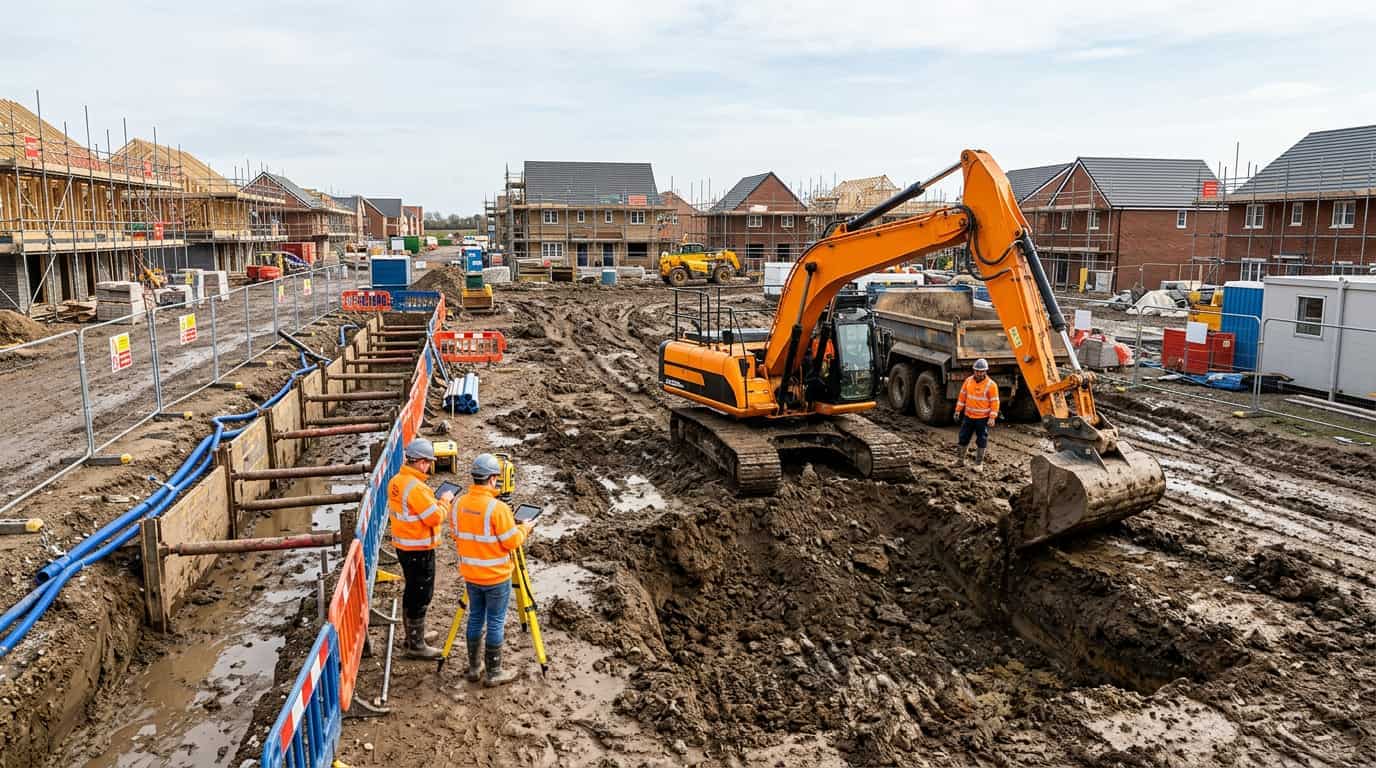
Project at a glance
- Type
- Basement formation groundworks
- Sector
- Urban redevelopment
- Location
- London
- Package
- Formation, excavation and early drainage
- Constraints
- Tight access, neighbour proximity, limited holding
- Stage
- Early works / basement formation stage
Project scenario
On a constrained central London footprint, basement formation is rarely just a dig-and-pour exercise. Neighbouring walls, limited holding areas and narrow plant routes mean excavation depth, temporary works and muck-away timing have to be planned together from the first assessment.
The package usually sits at the front of the build programme. Assessment usually starts with access geometry, temporary support strategy and how early drainage will land relative to formation levels so follow-on trades are not waiting on unfinished interfaces.
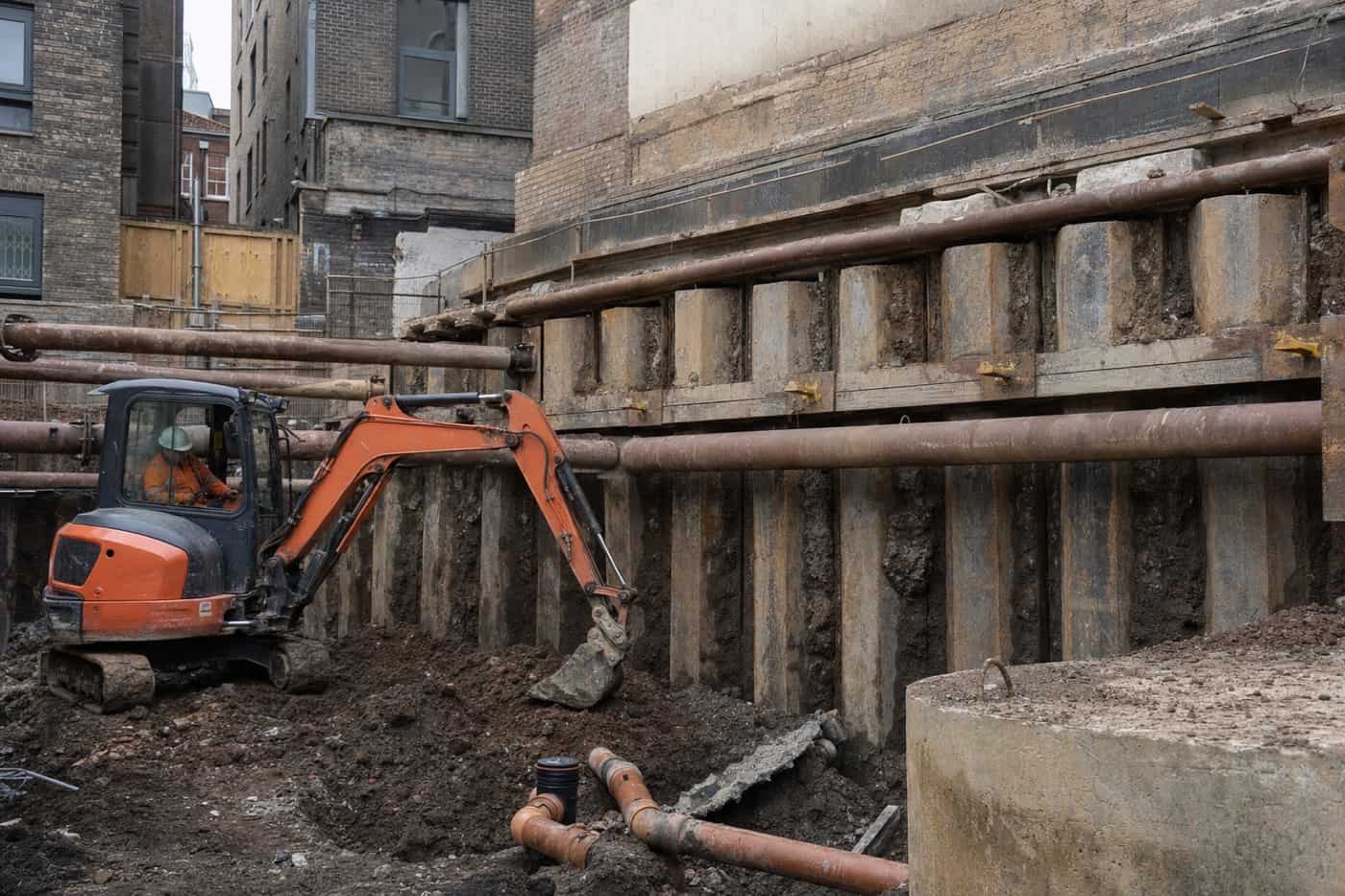
Site constraints
Plant access
Narrow frontage and limited turning space usually dictate plant size and dig increments.
Neighbour proximity
Close structures shape temporary support, vibration control and working windows.
Material holding
Little on-plot storage means deliveries and muck-away must be tightly timed.
Drainage interfaces
Early drainage must land at formation without blocking structural set-out.
Likely scope of works
- Controlled excavation to basement formation levels
- Temporary works interfaces for neighbouring structures
- Formation preparation and blinding where specified
- Early drainage runs and invert set-out
- Muck-away sequencing through restricted street access
- Handover levels and as-set records for follow-on trades
A typical package would be scoped through groundworks contractors in London, with excavation method and formation prep sized to the actual logistics rather than an open-site sequence. Controlled dig increments, temporary support interfaces and early drainage set-out are usually confirmed before plant arrives.
Where the dig volume or haul strategy is the main risk, coordination with excavation contractors in London helps keep muck-away windows realistic against street constraints and neighbour proximity.
How the package could be sequenced
- 1
Constraint survey
Confirm access geometry, neighbour interfaces and temporary works assumptions.
- 2
Dig strategy
Agree excavation increments, haul windows and holding arrangements.
- 3
Formation works
Bring the footprint to design levels with controlled preparation.
- 4
Early drainage
Install early runs and check inverts against formation.
- 5
Handover
Record levels and residual constraints for the next structural stage.
Information we would need
- Excavation depth and volume
- Temporary works complexity
- Muck-away distance and street constraints
- Formation and blinding specification
- Early drainage extent
- Working-hour and neighbour constraints
- Access plant limitations
- As-set survey and handover records
Interfaces with other trades
Risks and decisions to resolve
| 1 | Unresolved temporary support assumptions before excavation starts |
| 2 | Haul routes that cannot support the dig programme |
| 3 | Drainage inverts conflicting with formation levels |
| 4 | Insufficient holding space causing idle plant |
What the package should leave ready
The package should leave formation levels, early drainage connections and a clear temporary-works handover so the next structural trade can occupy the footprint without reopening finished zones.
Handover records typically cover as-set levels, drainage invert checks and residual access notes for follow-on plant.
When this kind of package is needed
This kind of package usually arises when a restricted urban site needs basement formation and early drainage coordinated as one early-works stage rather than separate trades fighting for the same footprint.
If you are assessing basement formation and early drainage on a restricted footprint on a tight central london redevelopment plot, share the information you have and we can help identify the right next step.
Discuss a Similar ProjectRelated services and technical reading
For comparable urban packages, start with groundworks contractors in London, then review excavation contractors in London where dig logistics dominate, or foundation contractors in London once the package moves into structural support.
Similar project types
Have a similar project?
Have a similar project? Send us the location, drawings or scope and programme information you have. We can review the requirement and identify the appropriate next step.