
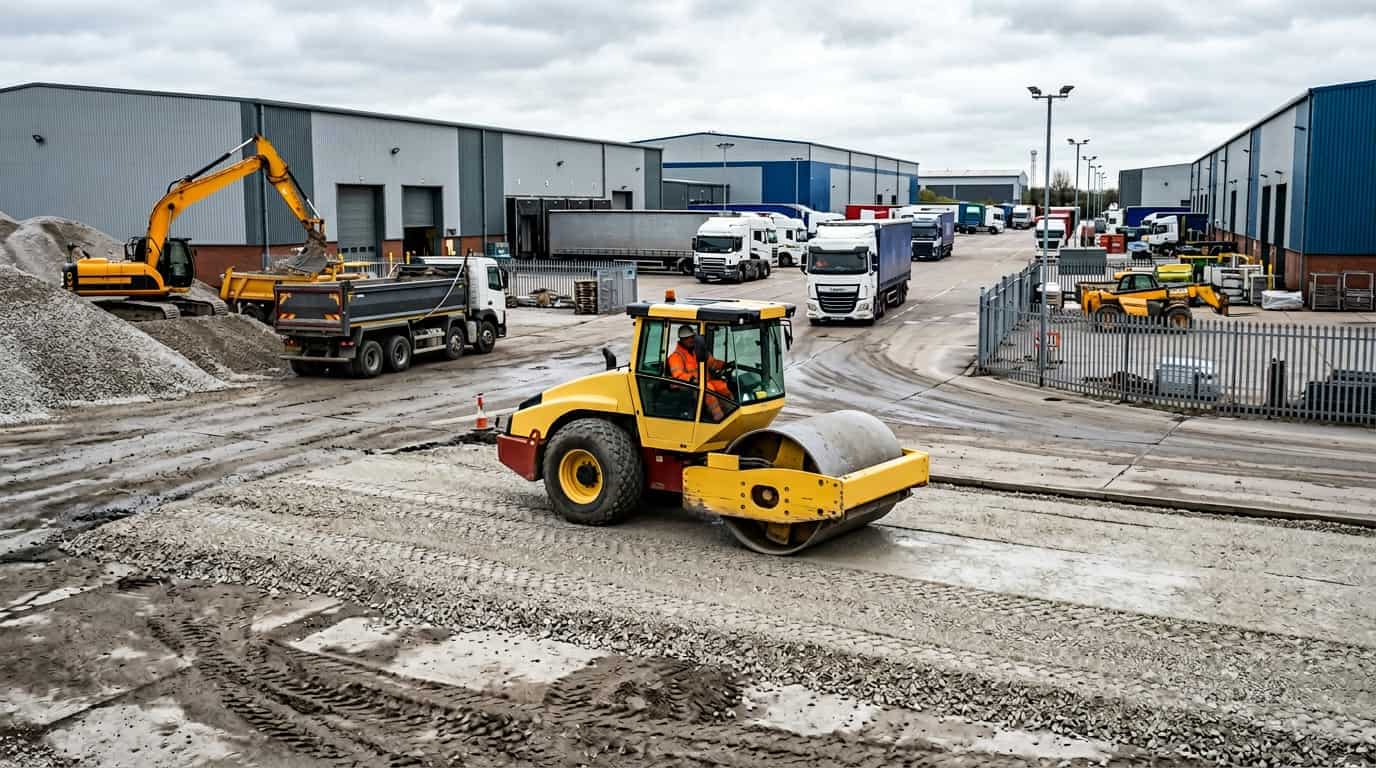
Project at a glance
- Type
- Industrial yard hardstanding
- Sector
- Commercial / industrial
- Location
- Essex
- Package
- Heavy-duty pavement and drainage falls
- Constraints
- HGV loads, falls, phased operational access
- Stage
- External hardstanding construction stage
Project scenario
Industrial yards take repeated heavy axle loads, so hardstanding is a structural pavement problem as much as a surfacing one. Falls to gullies, edge restraint and construction make-up all have to work together.
Assessment usually starts with design loadings, existing ground CBR, drainage layout and whether the yard must stay partially open during the works.
Likely scope of works
- Excavation and formation for pavement
- Sub-base and capping as designed
- Yard drainage and gullies
- Edge restraints
- Binder / surface course as specified
- Phased access for continuing operations
A typical package would be planned under commercial groundworks in Essex, sequencing excavation, sub-base, drainage and surfacing layers to the pavement design.
Where the yard ties into public highway works, section 278 contractors in Essex coordination keeps entrance geometries and levels consistent.
Site constraints
Axle loadings
Pavement make-up must match HGV and plant design loads.
Drainage falls
Standing water accelerates pavement failure.
Live operations
Yards often need partial access throughout the works.
Entrance ties
Levels must meet highway or slab thresholds cleanly.
How the package could be sequenced
- 1
Pavement design check
Confirm loadings, make-up and drainage layout.
- 2
Excavation
Dig and prepare formation in phases if needed.
- 3
Drainage
Install gullies and connecting runs.
- 4
Pavement layers
Place sub-base and bound layers to design.
- 5
Handover
Prove falls and leave access notes for operations.
Interfaces with other trades
Information we would need
- Yard area and pavement make-up
- Excavation and disposal
- Drainage gullies and runs
- Edge restraint detailing
- Phased working / traffic management
- Surfacing specification
- Testing and as-built levels
What the package should leave ready
The package should leave hardstanding at the specified construction stage — often binder or finished surface — with falls proven to drainage and edges restrained.
Risks and decisions to resolve
| 1 | Under-designed make-up for actual axle loads |
| 2 | Falls that leave ponding at doors or entrances |
| 3 | Phasing that isolates operational access |
| 4 | Highway threshold levels unresolved |
When this kind of package is needed
This package usually applies when industrial or logistics yards need heavy-duty hardstanding rather than light domestic paving construction.
If you are assessing heavy-duty hardstanding build-up for hgv and plant traffic on a industrial yard / service area, share the information you have and we can help identify the right next step.
Discuss a Similar ProjectRelated services and technical reading
See commercial groundworks in Essex, section 278 contractors in Essex for highway interfaces, and commercial drainage contractors in Essex for yard drainage upgrades.
Similar project types
Have a similar project?
Have a similar project? Send us the location, drawings or scope and programme information you have. We can review the requirement and identify the appropriate next step.