
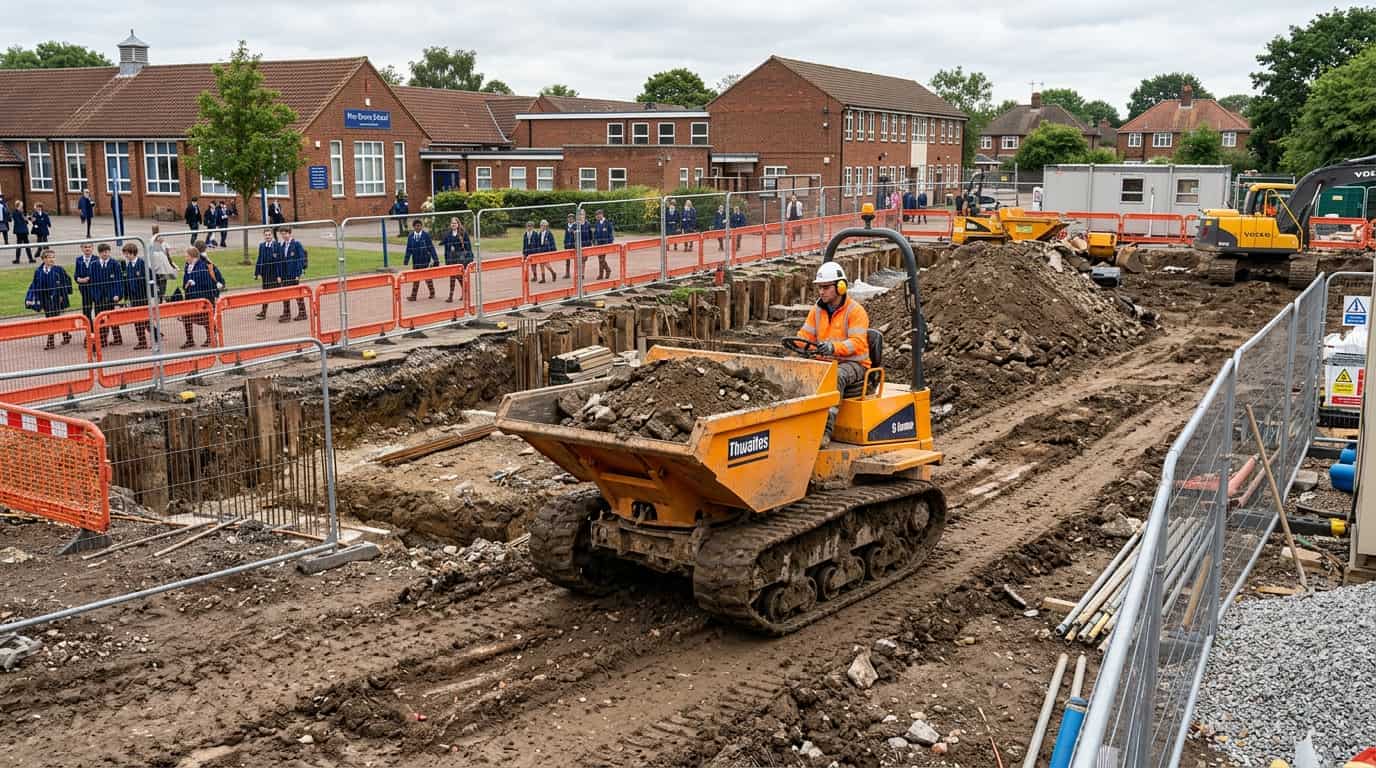
Project at a glance
- Type
- Attenuation tank / crate installation
- Sector
- Drainage infrastructure
- Location
- Kent
- Package
- On-site stormwater storage system
- Constraints
- Depth, groundwater, cover loads, network ties
- Stage
- Attenuation installation stage
Project scenario
Attenuation systems sit below roads, yards or landscaping and must survive construction and long-term loadings. Position, formation, geotextiles and flow controls all have to match the drainage strategy.
Assessment usually starts with tank depth, groundwater, structural cover requirements and how upstream and downstream drainage will connect without trapping silt in the wrong place.
Likely scope of works
- Excavation to tank formation
- Bedding and geotextile installation
- Tank / crate assembly
- Inlet, outlet and flow control connections
- Backfill and protection to design
- Access chambers and as-built records
A typical package would be scoped through attenuation systems in Dartford, with excavation, bedding and installation sequenced to the manufacturer and engineer’s details.
Network connections usually align with commercial drainage contractors in Dartford or roads and sewers in Dartford depending on whether the system sits on private or adoptable drainage.
Information we would need
- Tank / crate volume and type
- Excavation depth and groundwater control
- Bedding and structural backfill
- Flow control chambers
- Connection pipework
- Protection against construction loading
- Testing and as-built survey
- Temporary works around deep excavations
How the package could be sequenced
- 1
Design confirmation
Lock tank position, depth and flow controls.
- 2
Excavation
Dig and prepare formation, managing groundwater as needed.
- 3
Install
Bed, assemble and connect the attenuation system.
- 4
Backfill
Place structural backfill and protection layers.
- 5
Records
Issue as-builts for drainage and adoption packages.
Interfaces with other trades
Site constraints
Groundwater
Deep excavations may need temporary control during install.
Cover loads
Roads or yards above the tank dictate structural design.
Network ties
Inverts must match upstream collection and downstream discharge.
Construction traffic
Early loading over a new tank can damage the system.
Maintenance access
Chambers and access routes must remain usable.
Risks and decisions to resolve
| 1 | Tank position conflicting with other buried services |
| 2 | Cover design inadequate for planned surfacing loads |
| 3 | Inverts misaligned with connecting drainage |
| 4 | Construction traffic routed over unprotected tanks |
What the package should leave ready
The package should leave the attenuation system installed, connected and protected, ready for surrounding backfill, surfacing or adoption testing as required.
When this kind of package is needed
This package is usually required when planning or SuDS design demands on-site stormwater storage rather than unrestricted discharge.
If you are assessing attenuation tank or crate system installation to suds design on a development requiring on-site stormwater storage, share the information you have and we can help identify the right next step.
Discuss a Similar ProjectRelated services and technical reading
Review attenuation systems in Dartford, section 104 contractors in Dartford where adoption applies, and commercial drainage contractors in Dartford for connecting networks.
- Attenuation System Contractors
- Groundworks Contractors in Dartford
- Groundworks for Developers in Dartford
- Groundworks for Housebuilders in Dartford
- Attenuation systems for developers
- Drainage adoption process
- Drainage installation cost
- Planning drainage for new housing developments
- Build over drains and sewers
Similar project types
Have a similar project?
Have a similar project? Send us the location, drawings or scope and programme information you have. We can review the requirement and identify the appropriate next step.