
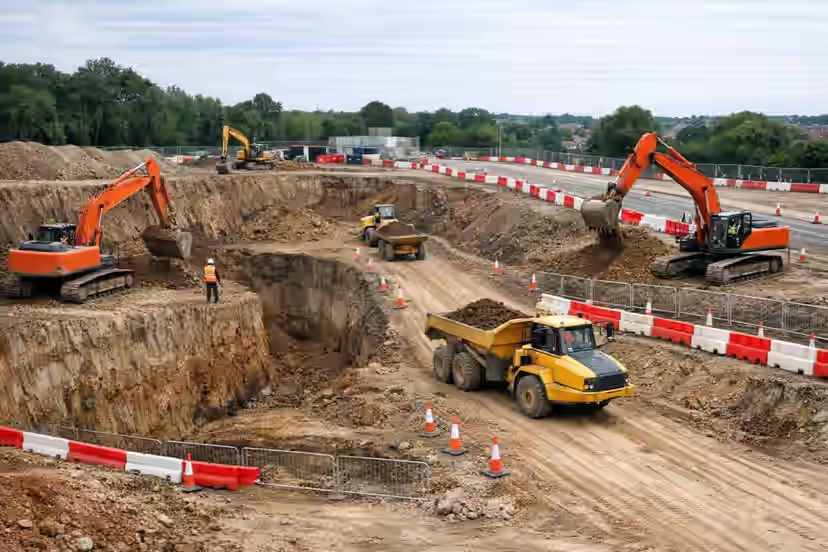
Earthworks Contractor in Bournemouth
Trusted earthworks contractor serving Bournemouth and Dorset.
- Fully Insured
- Commercial & Site Work Specialists
- 5 Star Rated
- Emergency Callout
We cover the wider South West area, including Dorset.
Earthworks in Bournemouth, Poole and Christchurch are usually scoped for residential, commercial and infrastructure sites where cut/fill balance, formation quality and soil reuse decide programme more than plant hours. Across BCP and east Dorset the useful local question is how the ground behaves when it is moved: free-draining terrace gravels and Branksome sands, moisture-sensitive Poole Formation clays, and soft alluvium in the Stour and Avon valleys can sit within one site, so levels, haul routes, compaction and spoil strategy need to follow the ground investigation rather than a generic volume rate.
Teams typically want a clear scope, realistic sequencing, and a delivery route that fits site constraints.
It is used when work needs to be planned clearly, delivered safely, and aligned with practical constraints such as access, sequencing, or condition.
The outcome is a dependable solution with fewer repeat issues and clearer next steps for owners, project teams, and facilities managers.
We provide earthworks contractor across South West, including Bournemouth and the wider Dorset area, for typical residential and commercial project requirements.
Bournemouth is part of Dorset in South West; local work often spans mixed housing stock, commercial premises, and sites with varied access conditions.
Related services
Compare service overviews that are often scoped alongside this work.
Local coverage around Bournemouth
Projects in Bournemouth and the wider Dorset area often include logistics yards and industrial pads where hardstanding levels are critical. Most programmes hinge on managing moisture, spoil segregation and plant movements so formation stays stable through follow-on works. This often includes work around Poole, Christchurch, Ferndown.
Nearby areas we cover include:
- Dorchester
- Poole
- Weymouth
- Salisbury
- Southampton
- Winchester
- Portsmouth
- Yeovil
Where Earthworks Contractor is used
Typical earthworks contractor scopes include planned works, urgent priorities, and multi-stage projects where delivery needs to stay coordinated.
- Planned works where early technical advice improves decision making
- Repair and renewal projects requiring clear options and sequencing
- Compliance-led scopes with documented process and handover
- Mixed-use properties needing coordination across multiple priorities
What affects cost and scope
Cost and complexity are shaped by site access, work scale, and technical constraints in Bournemouth. Programme certainty also depends on local logistics, sequencing with other trades, and any compliance or operational requirements that affect delivery windows.
Project context in Bournemouth
Projects in Bournemouth and the wider Dorset area often include logistics yards and industrial pads where hardstanding levels are critical. Most programmes hinge on managing moisture, spoil segregation and plant movements so formation stays stable through follow-on works. This often includes work around Poole, Christchurch, Ferndown.
Ground context around Bournemouth (screening only)
The BGS Bournemouth sheet memoir (sheet 329) describes a district dominated by Palaeogene (Tertiary) sands and clays, with about half of it covered by drift — chiefly river terrace sand and gravel — and floodplains floored by alluvium, locally with peat, plus extensive blown sand along the coast. BGS recognises up to fourteen terrace levels, from about 0.5 m to 71 m above the alluvial plain; the higher spreads are the old "Plateau Gravels", much of which is now built over.
Beneath that cover, the BGS Lexicon describes the Poole Formation as stacked cycles of medium- to coarse-grained, cross-bedded sands and clay units, with laminated clays dominant in the Bournemouth–Poole area, and the overlying Branksome Sand Formation as interbedded cross-bedded sands with lenticular pipeclay, organic-rich clay and lignite — its type section is the cliff line between Poole Head and Boscombe Pier. The same memoir flags landslips, extensive areas of landfill, solution hollows near the Chalk margin and former underground clay extraction as hazards to screen for. For earthworks that means material type can change over a few metres; suitability, moisture condition and any made ground must come from the site GI and earthworks specification, not a town-wide assumption.
Cut, fill and formation on mixed sands and clays
Clean terrace gravels and Branksome-type sands generally drain and compact well when graded correctly, but they are erodible, can lose fines in wet weather and raise dust on exposed coastal sites. Laminated and organic clays behave very differently: they soften quickly when wet, may fail moisture-content limits for engineered fill, and lignite or organic layers are not suitable fill. A buildable Bournemouth earthworks package separates those materials early, so acceptable sands and gravels are reused in structural fill or capping while clays are either treated, placed in landscape zones or removed under the correct regime.
Formation acceptance should be tied to the design: target levels and tolerances, compaction method and testing frequency, and what happens if soft spots, made ground or groundwater are found. Where a formation cannot be achieved by earthworks alone, the foundation or ground-improvement decision belongs with the structural or geotechnical engineer — the earthworks scope should flag that risk early rather than absorb it as an unpriced variation.
- Map sands, gravels, clays and made ground from the GI before fixing the cut/fill balance
- Agree material classes, moisture limits and compaction testing against the earthworks specification
- Plan stockpile protection and temporary drainage so sands are not washed out and clays are not softened
- Hold a clear route for soft spots, organic layers or unexpected fill found at formation
Soil reuse, water and planning constraints in BCP
Reusing excavated soils on site is usually the biggest cost lever. CL:AIRE's Definition of Waste: Development Industry Code of Practice (DoW CoP) lets suitable excavated materials be reused on their site of origin, or moved between sites in defined cases, without full waste regulation — provided a Materials Management Plan is prepared, a registered Qualified Person submits a Declaration before reuse, and a Verification Report closes out the project. CL:AIRE notes the site of origin can be defined by the planning permission boundary or other regulator-agreed parameters, so phasing and site boundaries are worth settling before muck-away is priced.
Water management varies across the conurbation. BCP's Level 1 Strategic Flood Risk Assessment (2024) covers the whole of Bournemouth, Christchurch and Poole, with separate Level 2 assessments for Christchurch and Poole, where tidal and fluvial risk is higher; the Stour and Avon meet at Christchurch Harbour. Christchurch SFRA guidance asks sites to confirm infiltration will not worsen groundwater flooding and notes soakaways are discouraged near cliffs, which matters for temporary and permanent drainage on cliff-top or valley-floor earthworks. Residential schemes close to the protected Dorset Heathlands may also carry restrictions or mitigation under the Dorset Heathlands Planning Framework, so planning conditions and ecology requirements should be checked before the earthworks programme is fixed.
- Decide early whether DoW CoP reuse, waste exemptions or muck-away apply to each material
- Check flood-zone, groundwater and cliff-proximity constraints before relying on infiltration
- Review planning conditions for ecology, heathland or construction-management requirements
What to send for a Bournemouth earthworks quote
Useful tender information includes existing and proposed levels (or a cut/fill model), the ground investigation with material descriptions and groundwater observations, the earthworks or formation specification, any remediation strategy or Materials Management Plan, access and haul-route limits, and planning conditions affecting working hours, dust or ecology. For Bournemouth, Poole, Christchurch and Ferndown sites, photographs of access and existing ground help, but levels, GI and a clear reuse strategy are what confirm volumes, method and programme risk.
When you might need Earthworks Contractor
People usually request this service when a property or site needs dependable performance, when repairs become more frequent, or when a planned project requires the right groundwork before later stages begin.
It is equally relevant where structural movement, access limits, or planning expectations make a straightforward fix unrealistic without a proper assessment first. In decision-stage terms, this is often where teams move from broad options into method selection, sequencing, and budget alignment.
In practice, a clear plan from the start gives owners, facilities teams, and contractors a safer path to completion with fewer surprises during delivery.
How the service works
Delivery is structured so scope, dependencies, and sign-off stay clear from the first assessment through to handover.
Step 1: Levels and volume appraisal
What this step delivers: This step keeps earthworks contractors delivery predictable and aligned to project requirements.
Step 2: Sequence, access and haul planning
What this step delivers: Delivery scope, method, and sequencing are agreed before operational work starts.
Step 3: Cut/fill execution and compaction
What this step delivers: This step keeps earthworks contractors delivery predictable and aligned to project requirements.
Step 4: Formation checks and sign-off support
What this step delivers: This step keeps earthworks contractors delivery predictable and aligned to project requirements.
Our earthworks teams deliver cut and fill operations, site regrading, and engineered formation works for commercial and infrastructure projects. We plan volumes, haul routes, and compaction so follow-on drainage, slabs, and structural packages can progress on stable formation.
We Also Cover
Poole, Christchurch, Ferndown, Westbourne and surrounding areas in Dorset.
Common Property Types in Bournemouth
Victorian villas, Edwardian houses, 1930s bungalows and modern apartments
Why choose us for earthworks contractor in Bournemouth?
When you need earthworks contractor locally, you need clear advice, dependable delivery, and a team that understands the practical constraints in Bournemouth and Dorset.
Trusted Earthworks Contractor in Bournemouth
We focus on clear communication, reliable delivery, and practical outcomes from first contact through completion.
- Years of experience in Dorset
- Fully insured and accredited
- Programme-led delivery
- Quality assured and certified
What to plan before starting this work
Before work begins, confirm access constraints, programme expectations, and how this scope fits with any related works so delivery can stay efficient.
Need guidance before starting earthworks contractor work?
Share your site details and priorities in Bournemouth; we will recommend the right scope, likely timeline, and practical next step.
Get Project QuoteNeed earthworks contractor in Bournemouth?
Tell us what you need and we will advise on the right approach, timeline, and next step for your property.
Get Project QuoteGet a Free Quote
Contact us for a no-obligation quote or to discuss your project. We'll advise on the best approach and provide clear pricing.
Get Project QuoteGet a quote
Get Project Quote- Years of experience in Dorset
- Fully insured and accredited
- Programme-led delivery
- Quality assured and certified
Helpful guidance related to this service
These guides explain common issues, planning considerations, and practical decisions related to this service.
Frequently Asked Questions
What information do you need to price earthworks in Bournemouth?
We normally need the levels strategy, drawings, any volume estimates, access constraints and programme milestones so haul routes, spoil handling and compaction requirements can be priced accurately.
What is included in an earthworks package?
Earthworks typically includes cut/fill, regrading, muck shifting, working platforms, formation prep, and compaction to meet the design levels for follow-on construction.
What affects the programme for earthworks delivery?
Programme is driven by volumes, haul routes, plant access, ground conditions and weather windows, plus coordination with drainage, services and foundation interfaces.
Do you provide earthworks contractor in Bournemouth?
Yes. We provide earthworks contractor in Bournemouth and across Dorset, pricing from drawings/specs and confirming scope against access, sequencing and interfaces.
How long should I allow for earthworks contractor in Bournemouth?
Allow enough time for initial assessment and delivery planning, as programme length varies with site complexity and logistics.
Nearby Areas We Serve
Compare our Earthworks Contractors in nearby areas.
Need Earthworks Contractor in Bournemouth?
Contact us today for a free, no-obligation quote.
Get Project QuoteGet your project moving
Share your drawings, scope or programme and we will point you to the right next step.